A resume is often the first opportunity to make a positive impression on a potential employer. In the United States, recruiters may receive hundreds of applications for a single position. As a result, they often have limited time to review each resume and identify candidates who match the job requirements.
Even qualified professionals can miss valuable opportunities because of avoidable resume mistakes. Poor formatting, irrelevant experience, spelling errors, and a lack of measurable achievements can make it difficult for employers to understand a candidate’s value. Additionally, many companies use applicant tracking systems (ATS) to organise applications and identify resumes that match specific job requirements.
Understanding these common mistakes can help job seekers improve their applications, communicate their qualifications effectively, and increase their chances of reaching the interview stage.
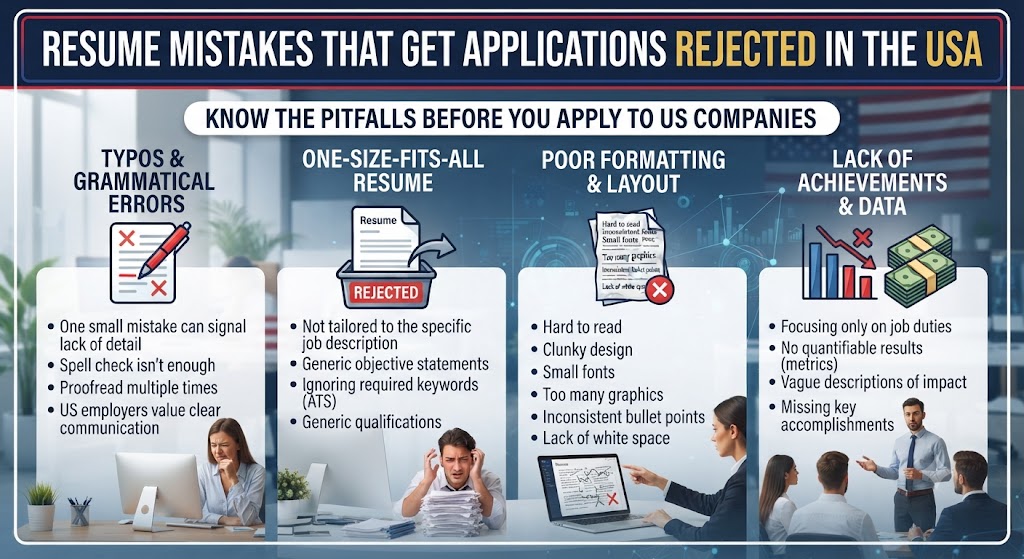
1. Using a Generic Resume for Every Job Application
One of the most common resume mistakes is sending the same document to every employer. Although this approach saves time, it may reduce the relevance of an application.
Employers want to understand how a candidate’s experience, skills, and qualifications relate to the specific position. A generic resume may contain relevant information, but important details can become difficult to identify when the document does not reflect the job description.
For example, a marketing professional applying for a digital marketing position should highlight campaign management, SEO, analytics, and content strategy experience when these skills are relevant to the role.
To improve your resume:
- Read the job description carefully before applying.
- Identify the essential skills and qualifications requested by the employer.
- Prioritise relevant work experience and achievements.
- Adjust your professional summary to reflect the position.
- Remove unrelated details that do not strengthen your application.
However, customising a resume does not mean copying the entire job description. Instead, demonstrate how your actual experience matches the employer’s needs. This makes your application more relevant while keeping it authentic.
2. Ignoring Applicant Tracking System (ATS) Compatibility
Many employers in the USA use applicant tracking systems to manage recruitment. These systems help recruiters organise applications and, depending on the software and employer settings, search or evaluate resumes using relevant information.
An ATS does not automatically reject every resume with unusual formatting. Nevertheless, complicated layouts can make some documents harder to parse, while missing qualifications or unclear terminology can make relevant experience less visible.
For a more ATS-friendly resume, follow these practices:
- Use a clean, single-column layout whenever practical.
- Choose standard section headings such as Work Experience, Education, Skills, and Certifications.
- Include relevant terms from the job description when they accurately describe your qualifications.
- Avoid placing essential information inside graphics, images, or complex text boxes.
- Use a readable font and consistent formatting.
- Follow the employer’s requested file format and application instructions.
For instance, if a position requires project management experience, describe your actual project management responsibilities clearly instead of relying on vague phrases such as “handled various tasks.”
Most importantly, write for both the software and the recruiter. A readable, relevant resume is more useful than one filled with repeated keywords.
3. Listing Responsibilities Instead of Achievements
A resume should explain what you accomplished, not simply describe what your previous job involved. Many applicants list routine responsibilities without showing how their work benefited an organisation.
Consider the difference between these examples:
Weak: “Responsible for managing social media accounts.”
Stronger: “Managed three social media accounts and increased audience engagement by 28% over six months.”
The second example communicates the scope of the work and provides a measurable result. However, candidates should only include figures they can reasonably support.
When possible, demonstrate your contributions through:
- Revenue generated or costs reduced.
- Sales growth or customer retention.
- Projects completed within deadlines.
- Improvements in productivity or operational efficiency.
- Customer satisfaction or engagement results.
- Team size, workload, or project scope.
Not every achievement needs a percentage or financial figure. For roles where numerical results are unavailable, explain what improved because of your work.
For example, “Introduced a new employee onboarding checklist that standardised training across the department” shows initiative and impact without requiring invented statistics.
Employers want to understand the value you can bring to their organisation. Therefore, achievement-focused statements can help your resume stand out from applications that contain only job descriptions.
4. Including Unnecessary Personal Information
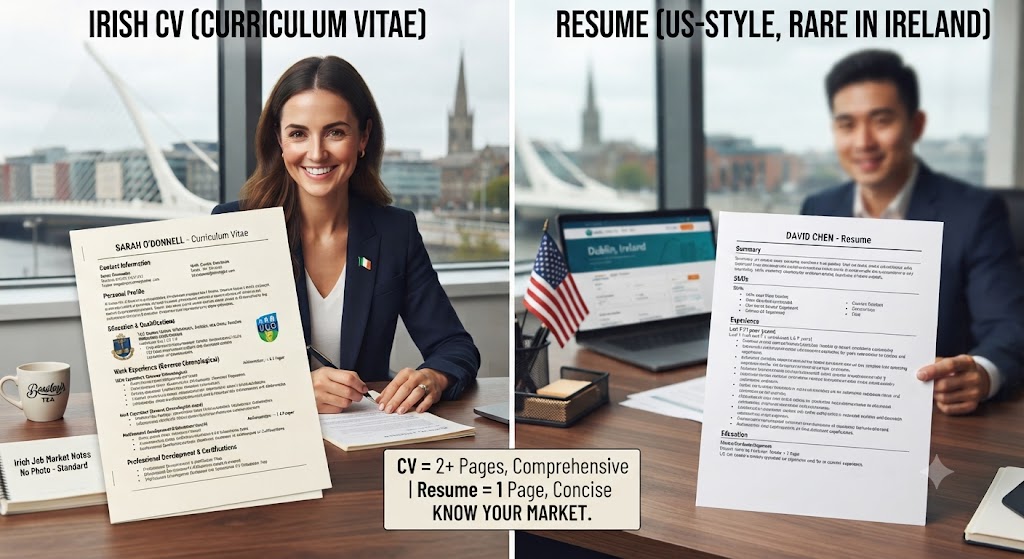
Resume conventions in the United States differ from those in some other countries. Applicants sometimes include personal information that is unnecessary for American employers and takes attention away from their professional qualifications.
For most US job applications, candidates generally do not need to include:
- A photograph.
- Date of birth or age.
- Marital status.
- Religion.
- National identification numbers.
- Personal details unrelated to the position.
A professional resume should usually focus on your name, phone number, professional email address, location at an appropriate level, and relevant professional profile or portfolio links.
For example, listing “Chicago, IL” is generally sufficient when the employer wants to understand your location. A complete home address is rarely necessary on an initial resume.
Work authorisation requires a more careful approach. If an employer asks whether you are authorised to work in the United States or whether you will require sponsorship, answer accurately through the application process. Do not assume that adding personal immigration details to the resume itself is necessary.
Keeping personal information relevant protects your privacy and allows recruiters to focus on your professional suitability.
5. Making Spelling, Grammar, and Formatting Errors
Small errors can weaken an otherwise strong application. Recruiters may interpret repeated spelling mistakes, inconsistent dates, or poorly structured sentences as signs of insufficient attention to detail.
For example, confusing “managed” with “manged” or using inconsistent job titles can make a resume appear unfinished. Similarly, changing font sizes throughout the document may distract readers from your qualifications.
Before submitting your application, review the following areas:
- Spelling, grammar, and punctuation.
- Consistent verb tense across current and previous roles.
- Employment dates and job titles.
- Alignment, spacing, and bullet-point formatting.
- Consistent capitalisation and date formats.
- Correct phone number, email address, and professional links.
Use present tense for ongoing responsibilities and past tense for completed roles and achievements. Additionally, make sure the formatting remains readable when the document is opened on another device.
Grammar-checking tools can help identify errors, but they should not replace a final human review. Read the resume slowly or ask someone you trust to review it before submitting it.
Accuracy matters because recruiters need to understand your experience quickly and confidently.
6. Making the Resume Too Long or Too Short
Resume length is another area where job seekers make avoidable mistakes. Some candidates include every responsibility they have held since the beginning of their careers. Others provide so little information that employers cannot assess their qualifications.
In the United States, a one-page resume is often suitable for students, recent graduates, and professionals with limited experience. A two-page resume can be appropriate for experienced candidates with substantial relevant accomplishments. Senior professionals may need additional space when their career history genuinely warrants it.
The goal is not to reach a particular page count. Instead, every section should help demonstrate your suitability for the position.
To manage resume length effectively:
- Prioritise recent and relevant experience.
- Summarise older positions when detailed descriptions add little value.
- Remove repetitive responsibilities.
- Keep bullet points concise and specific.
- Include certifications and technical skills relevant to the target role.
- Avoid adding unnecessary references or lengthy personal statements.
For example, a recent graduate may benefit from including internships, academic projects, volunteer experience, and practical skills. An experienced manager should prioritise leadership achievements, business outcomes, and relevant industry expertise.
A well-organised resume makes important information easy to find without overwhelming the reader.
7. Failing to Show Relevant Skills and Career Progression
Another common mistake is assuming that employers will automatically recognise transferable skills or understand career progression from job titles alone.
Recruiters need clear evidence that a candidate can perform the responsibilities of the advertised role. A resume that lists positions without explaining relevant skills may leave important questions unanswered.
For example, someone moving from customer service into sales should highlight communication, customer relationship management, negotiation, problem-solving, and experience meeting performance targets where applicable.
Similarly, candidates changing industries should connect their previous experience to the requirements of the new position.
Consider these practical steps:
- Include technical and professional skills that match the role.
- Explain promotions, expanded responsibilities, or leadership opportunities.
- Highlight relevant training and recognised certifications.
- Describe transferable skills using specific examples.
- Address career gaps briefly when doing so helps clarify your experience.
- Keep job titles and employment dates accurate.
Career gaps do not automatically disqualify candidates. If you took time off for education, caregiving, personal reasons, or a career transition, you can decide whether a brief explanation is useful. Avoid providing private details that are not necessary.
Likewise, do not exaggerate your qualifications or claim expertise you cannot demonstrate during an interview. Employers may ask you to explain your experience, provide examples, or complete a skills assessment.
A clear and honest account of your professional development can help recruiters understand both your capabilities and your potential.
How to Review Your Resume Before Applying in the USA
Once you have corrected the major mistakes, review your resume against the specific job advertisement. This final check can help you catch missing information and ensure that your application communicates your value clearly.
Use this checklist before submitting your next application:
- My resume reflects the requirements of the target role.
- My most relevant skills and achievements are easy to identify.
- My work experience includes specific contributions rather than responsibilities alone.
- My formatting is simple, consistent, and readable.
- My contact information is correct and professional.
- I have removed unnecessary personal information.
- My employment dates, job titles, and qualifications are accurate.
- I have checked spelling, grammar, and punctuation.
- My document follows the employer’s submission instructions.
- My resume contains only truthful, relevant information.
You can also ask a trusted professional to review your resume or compare it with the job description to identify missing qualifications. If you use AI tools to improve your writing, verify every suggested change and ensure that the final document accurately represents your experience.
Conclusion
Resume mistakes can prevent qualified candidates from communicating their value effectively in the US job market. Generic applications, poor ATS compatibility, responsibility-focused bullet points, unnecessary personal details, formatting errors, and unclear career progression can all weaken an application.
Fortunately, these problems are often easy to correct. Tailor your resume to each role, focus on measurable achievements, use clear formatting, and ensure that every statement is accurate. In addition, review the employer’s application instructions and make your most relevant qualifications easy to find.
A strong resume does not need complicated design or excessive keywords. It needs to show clearly why your experience matches the position and what you can contribute to the organisation.
Before your next application, take time to review your resume and make targeted improvements. You can also use a best job tool to explore relevant opportunities, compare job requirements, and focus your applications on positions that match your skills and career goals.





Leave a Reply