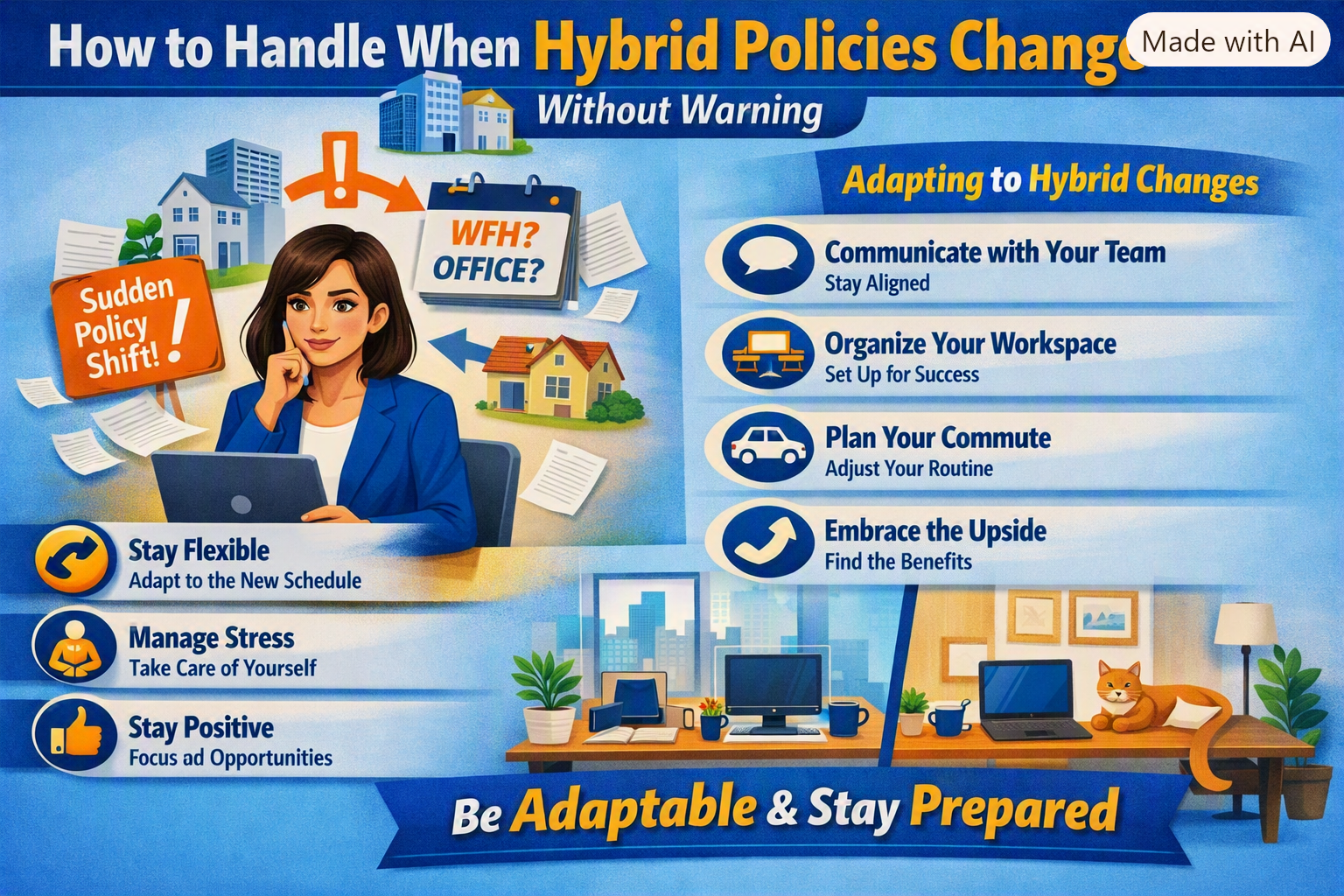
Introduction: Hybrid Policies
Hybrid policies are becoming the standard for the modern workplace. Some days you may be at home while other days you might have to come into the office. Though it can be incredibly inconvenient for some people, it can serve as a nice middle ground between all employees. Though, sometimes these policies might change faster than you can deal with, making your day to day grind much harder. You may be at breaking point, but knowing how to act professionally in these situations can make a huge difference.
How to Handle When Hybrid Policies Change Without Warning?
1. Make Sense of the New Policy
The first thing for you to do after a drastic change to a hybrid policy is understand the nature of this change. This might not feel extremely important at first, but asking yourself these questions are the first step to getting past the change successfully.
- Does it limit how many days you can work from home?
- Is there an assigned office now?
- Are you required to come in every Monday and Thursday without question?
- Does this apply to you?
- Will there need to be a new method of getting to and from the office?
- Do you still need a ride?
These questions might seem a little childish, but the last thing you want is a misunderstanding of office rules. If this is the case, you can always ask your manager or read the email they sent out
2. Give Yourself Some Time
Though it might seem a little unprofessional at first, you want to give yourself some time to adjust to the change. You may have to make some sacrifices to your daily routine or work style. You should spend some of your time thinking about what exactly will need to change in order to accommodate to the new, stricter hybrid policy.
For instance,
if you used to normally work from home three days weekly and now need to begin coming into the office for four, make a budget that can support any extra spending that might come from it.
This small task can help you stay organized and prepared for the change of policy.
3. See if There’s Any Room for Negotiation
Even at new office rules, there might some wiggle room for your own work schedule. Even if the new policy states specific office dates for all employees, there’s still a chance of temporary or case to case basis exemptions. Though it all depends on the company and the reason for your exemption, knowing when and how to ask for it is also important. When talking to your manager, remember to remain professional and try to put yourself in their position. It’s okay to feel frustrated, but do try not to focus on your discomfort but rather the problem and its solution.
4. Say something more along the lines of
“I understand the struggle at work but my personal situation at the moment would make this rather difficult. Is it possible for a temporary exemption?”
and not
“I don’t want to do this”.
Putting the idea across clear and concisely will allow for a much more productive discussion with your manager.
5. Don’t Focus All Your Energy Onto Worrying
In times like these, where so little control is given to employees, it’s very easy slip onto the path of complaining to coworkers all day, everyday. Though it might be the easiest way to go about it, doing so will make you far less likeabled compared to those still focused on their careers. Don’t give yourself the time and space to spiral into resentment; push through to the other side and lead by example.
When the policy change doesn’t hold up, you can still save your professionalism and keep yourself from seeming like a hypocrite.
6. Document and Note Important Communication
When dealing with a drastic policy change, note down every bit of important information and communication that has to do with it. Again, it’s very easy to lose focus and become annoyed with other coworker’s constant ranting, but you also don’t want to find yourself accidentally contradicting the new office rules.
It would be best to go fully prepared and fully informed to any important meetings or communication. Having this information also can be helpful should you need to confront them for the policy. As mentioned before, if two managers have a contradiction office rules, doing so professionally is still crucial to any productive work environment.
Conclusion: Hybrid Policies
Hybrid work policies can change unexpectedly, but employees can adapt by staying informed, communicating openly, and remaining flexible. Understanding the reasons behind policy changes, clarifying expectations, and discussing concerns with managers can make transitions easier. By focusing on adaptability while maintaining productivity and work-life balance, employees can navigate changing hybrid arrangements more effectively.
Ready to adapt to unexpected hybrid policy changes? Stay informed, explore new opportunities, and find roles that match your work preferences with the Best Job Tool platform.





Leave a Reply