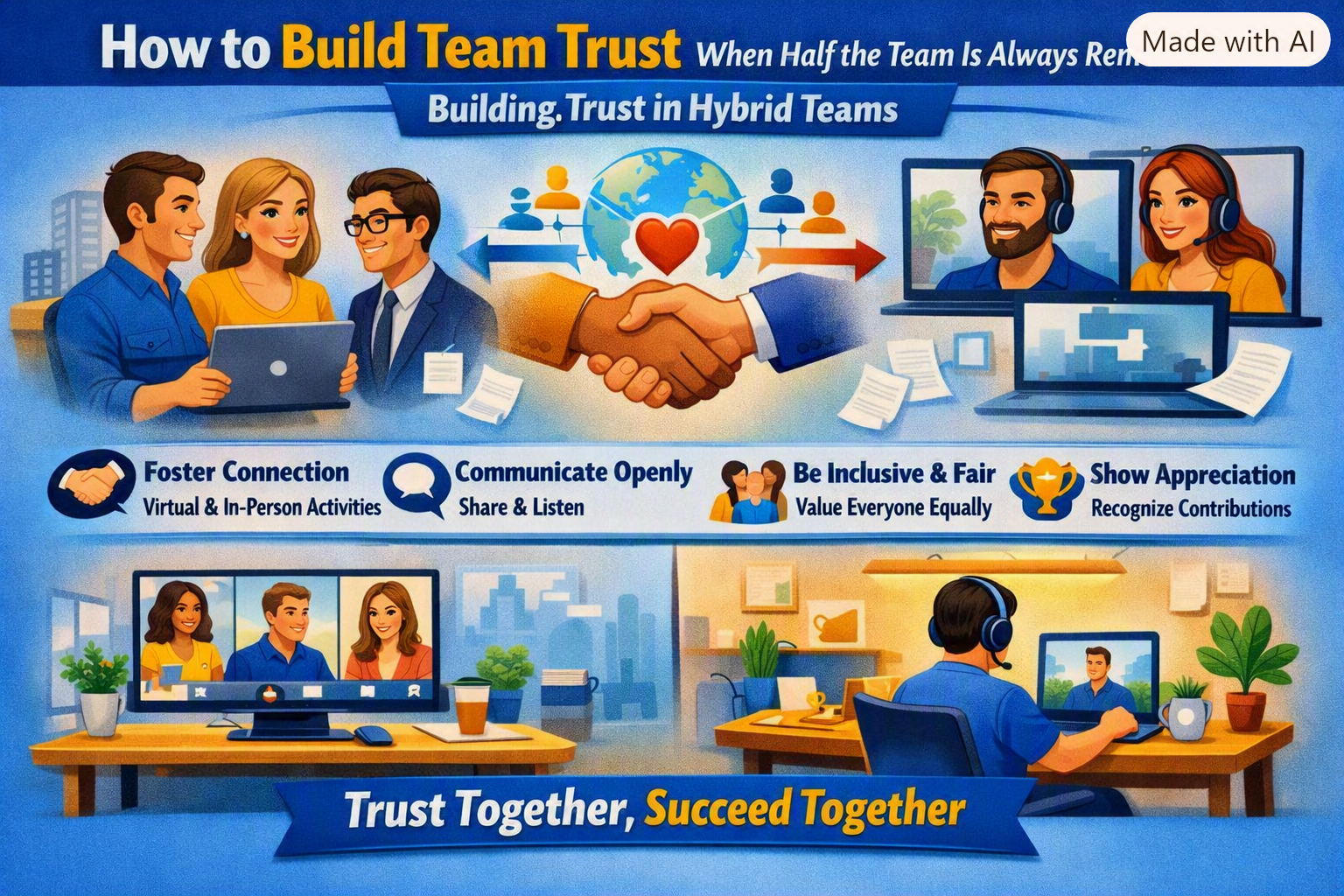
Introduction: Team Trust
Building trust within a workplace can be challenging when the employees do not work together constantly. Some employees may be in the office while others work from home or across the city. The ones working outside the office can feel disconnected, while those in the office can be dismissive. This can slowly impact communication and teamwork.
How to build team trust when half the team is always remote is an important topic to discuss. Fortunately, a team can gain trust even when one half is always remote. Trust is not based solely on co-location, but on communication, reliability, transparency, and respect.
How to Build Team Trust When Half the Team Is Always Remote Essay?
1. Build Equal Participation Opportunities
An easy way to increase trust within a team is to ensure every member gains equal opportunities to participate. This is vital for those not working in the office if they cannot help with important conversations.
For instance, if a conversation is happening, even if there is a separate task, every employee should be able to engage and participate. Managers can achieve this by using conferencing solutions and other tools that allow every person to be involved in important conversations.
If a conversation is happening at the office and it will impact the remote employees, the information needs to be shared with the other team members. If the remote employees feel that their presence is not necessary, they can start to believe that they are not an equal part of the team.
2. Define Clear Expectations
Team members should know the expectations for their performance. This should apply to remote and office-based employees. Additionally, managers must understand that their assessments of performance should not be based solely on the amount of time spent on a task. Instead, the quality of work should be the deciding factor.
For example, a remote employee working from home may complete their tasks faster than an employee in the office. It would be unfair to penalize the home worker for the discrepancy if they are still completing projects on time. Setting clear expectations reduces misunderstandings, which, in turn, builds trust.
3. Maintain Equal Information Sharing
If the office employees hear information before the remote employees, it can impact the level of trust the latter has in the team.
It is not uncommon to see office workers learn about a development through an intra-office conversation before the remote workers. Additionally, the remote workers may be left to learn about a significant change through an email or a project update.
Employees should receive important information in the same manner to ensure that there is not a sense of disparity. Even if the information is a minor update, it should be shared in an accessible forum so that all employees can find it easily.
4. Encourage Team Building
Employees will feel more connected to a team they know personally. In the office, it is easy to build those connections, but it can be more challenging for those working outside the office.
Managers can hold short one-on-one meetings with their staff so that the employees can get to know each other on a more individual level. Such meetings can be brief if the employees are busy, but the informal time spent together can build camaraderie and trust.
Additionally, managers can encourage employees to talk about their hobbies and non-work-related activities. Those in the office can ask the remote workers about their weekend plans or their favorite movies. Discussing such topics can allow the employees to feel connected outside their working roles.
5. Prevent an Office-Favorable Culture
An unintentional issue that can arise is an office-favorable culture where the in-office employees receive benefits the others do not. When a manager discusses a new initiative with the office workers, those working remotely will only find out when they learn about the project from their colleagues.
If possible, managers should try to share significant announcements with everyone to prevent misunderstandings. Wherever possible, the manager should also include remote workers in the decision-making process.
6. Ensure Reliability
Employees can only develop trust if they know that other team members and their superiors are reliable. Being dependable means fulfilling one’s responsibilities, adhering to deadlines, and being honest.
For example, if a project manager asks an employee to submit a report by Friday, they should attempt to provide it on time. If an issue arises, the employee should inform the manager immediately instead of waiting until the deadline to explain the situation.
Managers should also be role models by being dependable and honest when handling employee matters, responding to concerns, and other responsibilities. This can help employees develop a level of comfort and trust with their superiors.
Conclusion: Team Trust
Building team trust when half the team works remotely requires intentional communication, transparency, and consistent collaboration. Managers and employees should create opportunities for meaningful interaction, recognize contributions equally, and ensure remote employees remain included in important decisions.
By focusing on clear communication and mutual respect, organizations can create a connected team culture where employees feel valued and trusted, regardless of where they work.
Ready to build stronger trust in your remote team? Use the right communication strategies, stay connected, and explore Best Job Tool to discover resources that can support better teamwork and career growth.





Leave a Reply