Introduction: Career Paths in Branding
In the modern business world, branding and visual identity design are crucial to securing a company’s success. Businesses strive to differentiate themselves from competitors by imprinting their identities on the public. In addition to logos and color schemes, brand identity design encapsulates typography, packaging, and graphics. Thus, businesses are actively seeking talented designers who can represent their brand in the online and physical spheres.
Exploring Career Paths in Branding will benefit those considering the career change by demonstrating branding and visual identity design opportunities in the business world. The article will also discuss the skills needed to succeed in the field.
Career Paths in Branding and Visual Identity Design?
1. Introduction to Branding and Visual Identity Design
A brand designer’s job goes beyond mere logo designing and encompasses brand development at large. Branding and visual identity design is the umbrella term that includes brand identity, logo design, graphic design, and typography. Thus, brand identity designers create visual components that differentiate a company from its competitors by developing a graphic concept that communicates the brand’s values.
A designer’s comprehension of the targeted audience’s preferences, brand research, and competitor analysis is paramount. Subsequently, companies employ branding and visual identity designers to shape the consumers’ purchasing behaviors and brand recognition.
2. Careers in Branding and Visual Identity Design
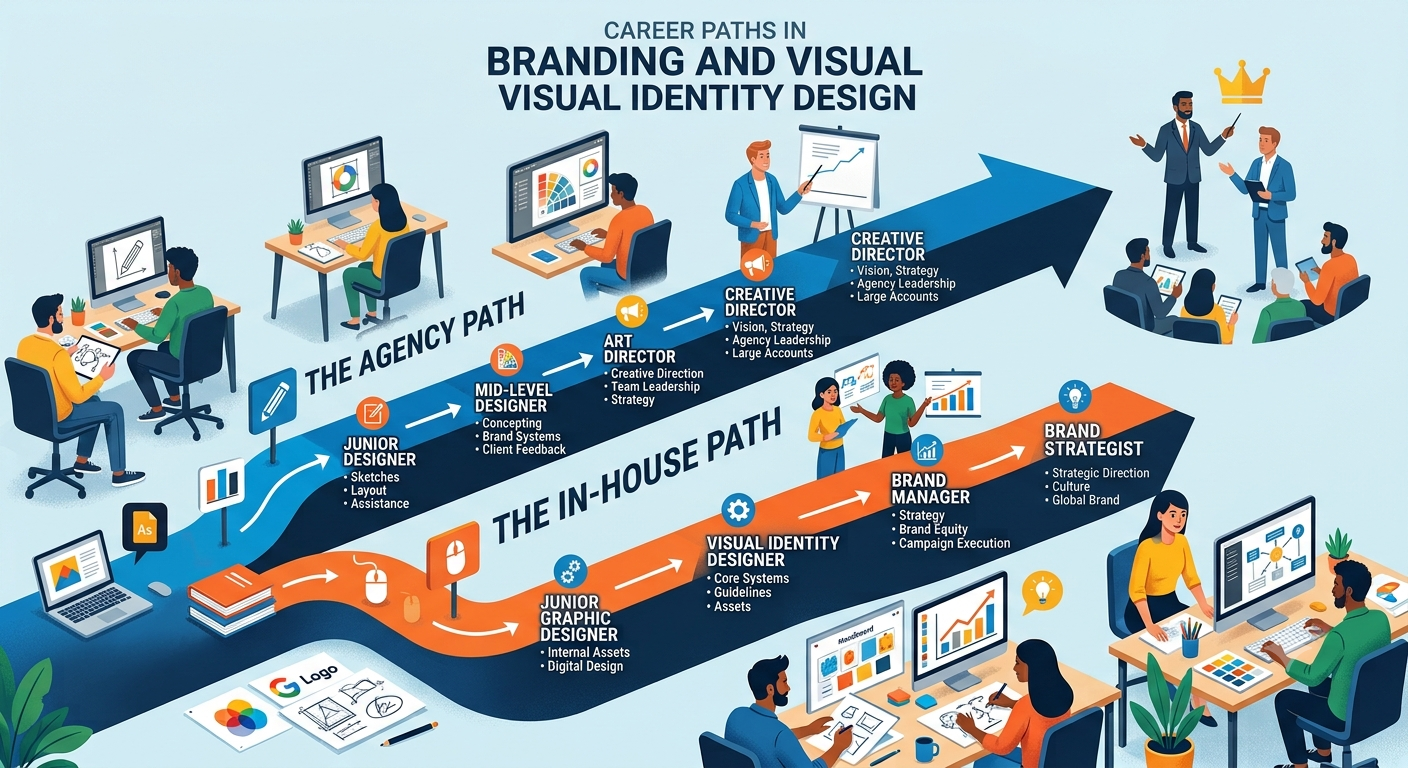
The branding world offers a variety of jobs for designers that require different skill sets and offer varying opportunities. The majority of the branding and design jobs are brand identity designers, whose primary responsibility is to conceptualize a brand’s logo, typography, colors, and imagery. In addition to brand identity design, graphic design is another popular career choice. The graphic designers shape the look of a brand’s marketing material and advertisements. However, most graphic designers operate in agencies, where they execute the marketing campaigns’ visual components.
For individuals who enjoy a more analytical side of the branding and design process, a career in brand strategists is a viable option. Brand strategists engage in brand positioning process, which analyzes the market forces at work, competitors’ branding strategies, and consumer behavior. Another lucrative career in branding is art director, which requires profound graphic design experience and expertise. Art directors are masterminds of companies’ visual marketing strategies.
3. Digital Branding and User Experience
In the digital age, companies require designers who can consistently present their visual identity in the digital space. Thus, individuals who are knowledgeable about digital media and the nuances of visual components have a solid foundation for a career in digital branding. In the digital space, UI and UX design are the most sought-after areas. UI (user interface) designers create the layout of a website or application, whereas UX (user experience) designers focus on end-user experience.
Although UI/UX designers specialize in the digital space, their work often overlaps with branding, as logos, icons, and graphics created by UI designers communicate a brand’s message to the target audience. Moreover, motion graphics and visual effects designers can also build a successful career by supplying animated icons and video content.
4. Key Skills in Branding and Visual Identity Design
Similar to any other career field, branding and visual identity design require individuals to hone their graphic design skills. More specifically, aspiring designers should focus on typography, as it is the backbone of visual design and communicates the brand’s tone and personality. In addition, learning Adobe Illustrator and Photoshop will enable the designer to execute their ideas in digital media. However, brand designers also need to develop soft skills, such as communication and teamwork, since they often work in teams with other designers and marketers.
Crucially, designers must also learn to critically analyze the project requirements and audience. Although creativity is paramount in branding and visual identity design, a profound understanding of the brand’s values and target audience will result in a superior outcome. Moreover, the continuous education of the latest design trends and technologies will provide a competitive advantage to the designer.
5. Portfolio Development
Aspiring designers should build a portfolio that will demonstrate their creative process and expertise in the field. The portfolio should contain the projects that the designer is particularly proud of. At the same time, the entry should also highlight what the designer aimed to achieve, the target audience, and the specific challenge that the project entailed.
Those new to the industry can populate their portfolio with the following entries: fictional brand development, practice-based projects, and collaborations with small businesses. The collaborative projects can also be found by participating in the internship program at a design agency or attending design meetups. Thus, the more effort is put into the portfolio, the more rewarding the outcome will be for the designer.
6. Freelancing, Agencies, and In-house Designers
The working conditions of designers vary depending on their working environment. For instance, in-house designers work directly for the company, whereas freelancers work for both big businesses and startups. Working in agencies is a popular career choice among designers, as it offers a wide range of projects, diverse colleagues to work with, and the opportunity to develop a broad skill set. In addition, the in-house designer position offers job stability as the designer is employed directly by the company.
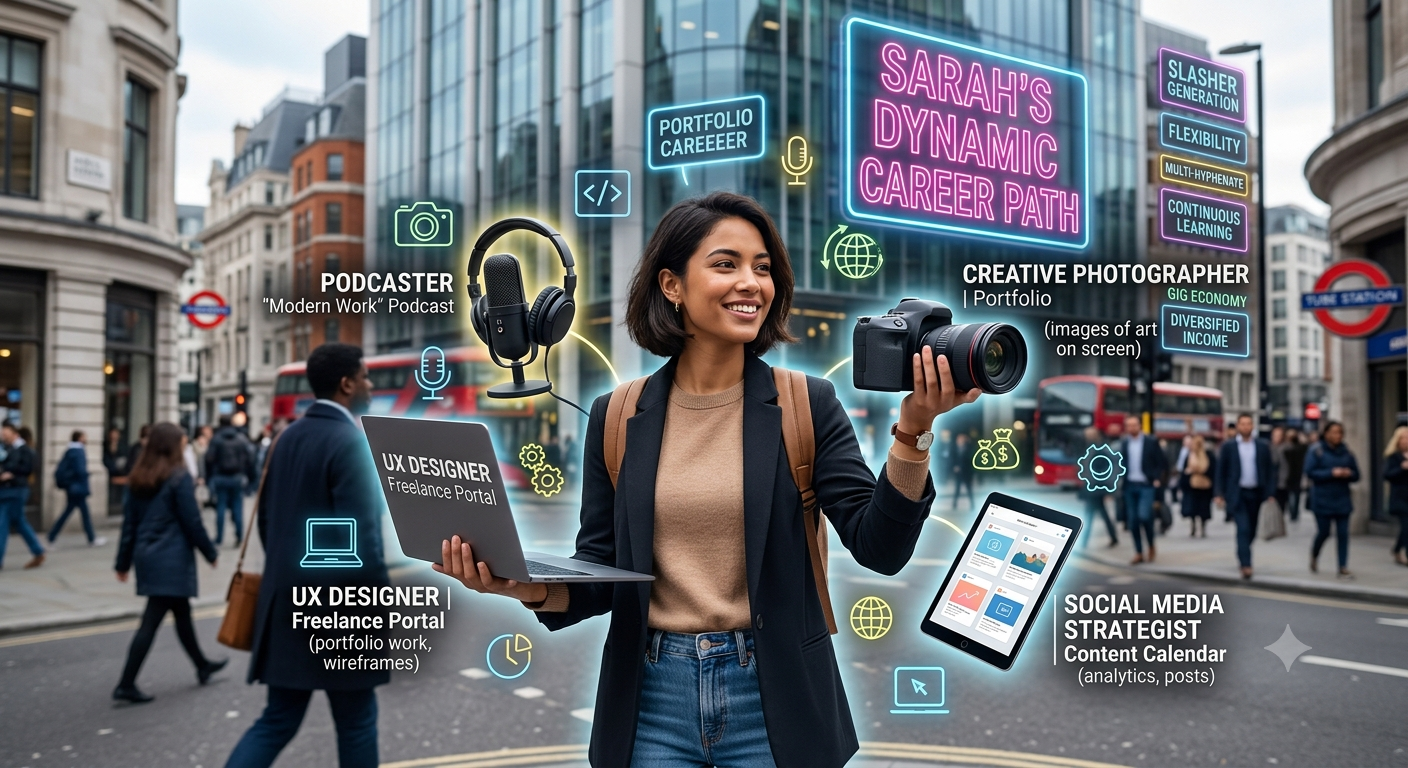
However, a career in design agencies may have little job security due to the possibility of layoffs and staff reductions. Therefore, many designers choose to work as freelancers, as the profession offers flexibility and the freedom to choose the most desirable projects. Nevertheless, a successful freelancer needs to build a network of contacts and clients that will offer a steady flow of projects. Furthermore, the higher-level positions of design-related occupations offer greater stability and competitive compensation.
7. The Future of Branding and Visual Identity Design
The future of branding and visual identity design is bright, as businesses continue to invest in their presence in the digital space. Designers can shape the future brand identity of companies. However, artificial intelligence and robot designers may replace some entry-level designer positions by executing repetitive tasks. Thus, future designers must be well-versed in the intricacies of robot design and the latest developments in the field.
8. Importance of Personal Branding for Designers
One’s personal branding plays a highly essential role when it comes to visual identity design. Designers should be able to demonstrate their competency and creativity in the sphere and present their unique design approach and style to attract new clients and employers. Having a portfolio website, an active social media presence, and participation in online design communities like Behance or LinkedIn is vital for securing new business opportunities.
Moreover, a designer’s personal brand enables them to strengthen their professional reputation and network with influential individuals in the industry. Therefore, personal branding impacts one’s ability to promote their work and influence the market significantly. In addition, individual branding can help visual identity designers find new career opportunities and become successful freelancers
Conclusion: Career Paths in Branding
Numerous careers in branding and visual identity design offer fulfilling opportunities for the aspiring designer. Exploring Career Paths in Branding lists several branding occupations, such as graphic design, brand strategists, art director, and brand identity design. Each of the mentioned occupations has its own challenges and rewards. Additionally, the article notes the importance of developing soft and technical skills, such as graphic design and typography. Finally, the article recommends building a portfolio, enhancing one’s expertise in digital design, and acquiring practical experience to build a successful career in branding and visual identity design. Ultimately, a designer’s role is to shape the brand’s message and effectively communicate it to the target audience.
Ready to explore exciting Career Paths in Branding? Use the Best Job Tools to discover branding and visual identity design opportunities, find your ideal role, and take the next step toward a successful creative career. Start your job search today!




Leave a Reply