
Introduction: Self-Taught Skills
In the modern world, it is not necessary to acquire professional skills within the framework of a degree. There is a variety of ways to learn: online courses, books, or even learning from one’s own mistakes. At the same time, as long as many employers will only consider candidates with degrees and experience, it is beneficial to know how to present self-taught skills to prove that one can carry out job responsibilities adequately. Self-Taught Skills can help candidates demonstrate their abilities even without a traditional educational background.
While some employers might not be confident regarding one’s knowledge gained without experience or a degree, there are solutions to prove one’s abilities. When one focuses on what they learned without the university, using projects to prove proficiency, and clearly communicating the process of acquiring new skills, skeptical employers would recognize the worth of the self-taught candidate.
How to Present Self-Taught Skills?
1. Focusing on One’s Knowledge
When an employee asks how one knows graphic design without university studies, the logical answer is to present the results of one’s work. From personal experience, it is much easier to evaluate an individual in a practical sense rather than listening to their knowledge. Therefore, as a self-taught designer, showing a few examples of one’s work will likely convince any potential employer. Self-Taught Skills become more convincing when candidates demonstrate how they have applied their knowledge to solve real problems and complete practical tasks.
The same principle applies when one is proving potential employers that they can be good at the content writing job vacancy. It does not matter if they studied the fundamentals of the craft, and can recite all grammatical particularities; the companies want to know if a job candidate can deliver actual, quality content. Therefore, showing tangible results of one’s effort will be more convincing than talking about the academic knowledge.
2. Showcasing One’s Portfolio
Another effective way of proving self-taught professions is by showcasing a complete portfolio of one’s work. As far as employers prefer to see real results of the work processes, having a portfolio will be a good way of proving skills to employers. Ideally, it should be based on real work; if not, then at least something close to what this person would have to do in the new job. A well-organized portfolio helps employers evaluate Self-Taught Skills by presenting relevant projects, completed assignments, and measurable achievements in one place.
Depending on the job vacancy, this could mean publishing articles or stories, website design and graphics, marketing strategies, slides of presentations, analytical reports, and anything else. At the core are the projects one has undertaken to develop a particular area of knowledge. For instance, explaining how their previous efforts to improve a digital business helped it gain more customers could be a good argument of applying for a marketing job. Therefore, it is essential to highlight the achievements gained due to the efforts of the self-taught practitioner.
3. Discussing the Process of Getting Professionally Ready
Depending on how far one has come in their self-discovery path, discussing the process of achieving the necessary skill might resolve some issues of potential employers. To be qualified for the position, the self-taught individual would need to show that they are skilled enough to do the job. An adequate explanation of how one learns what they know would be the answer to any concerns regarding the reliability of the person in carrying out the responsibilities of the position.
Furthermore, it shows that self-development skills have adequate quality: a good understanding of the necessary information. When discussing the process of learning, one should describe it accurately to benefit from this point for the job application. For example, one can report that they have completed some online courses to obtain the basics, practiced and improved via the projects, and then refined the found techniques into something that can be presented now. Developing Self-Taught Skills through regular practice and structured learning also demonstrates discipline, consistency, and a commitment to professional growth.
4. Connecting One’s Professions with Employer’s Work
Depending on how the job offer is structured, the practical knowledge that one needs to achieve could be very specific. It might make sense for the self-taught candidate to list relevant skills required for the successful fulfillment of the tasks by the employer.
For instance, when the new position is to be a content writer, the self-taught individual needs to mention that they have adequate knowledge of SEO to optimize articles for keywords and placement. When the new position is to work with spreadsheets, one should mention that they have extensive skills with Excel. Instead of mentioning all the details of the skills, it is better to explain how exactly they would benefit the employer. When candidates connect their Self-Taught Skills with the employer’s requirements, they can show how their knowledge will contribute to productivity and business goals.
5. Using the Projects to Illustrate the One’s Experience
The projects prove practically how experienced the self-taught person already is and how well the techniques learned without the university actually work. Not only does it prove their practical knowledge, but it also serves as a good training ground for future projects one will have to carry out in their new position. Practical projects make Self-Taught Skills easier to evaluate because they provide concrete evidence of problem-solving, creativity, and technical ability.
When explaining the projects, make sure to mention what the problem or task was, what methods you have utilized to arrive at the solution, and demonstrate the results. The most important part is to mention what one learned from the mistakes and how they affected the new outcome. Moreover, the projects do not have to be big: sometimes smaller-sized tasks are more illustrative than the high-scale endeavors.
6. Addressing Concerns Regarding the Academic Background
Some employers have negative attitudes to the academic background: they might question why one did not pursue the more traditional route and went for the self-learning. One must acknowledge this concern and address it honestly but briefly, avoiding any arguments that might cause the hiring managers to dismiss the application.
One can say that it is just another path to the same destination without dismissing the importance of academic learning. Furthermore, this brief mention would also be useful if the employer asks directly for some sort of proof of the knowledge. It is important not to mention the shortcomings of the alternative path while highlighting the benefits of the way chosen.
Another concern might be related to the required degree or certification for the position. While the self-taught experience might be sufficient for the practical work, there are some fields that require specific accreditation for the legal or official practice. Therefore, it is important to mention such details that might be required for the position.
7. Demonstrating Willingness
The willingness to learn, and specifically the capacity to improve, is sometimes more important than the skill set itself. To prove this, one can mention the sources of inspiration for the newly obtained skills and mention the ways those contributed to the professional development. Furthermore, this demonstrates that one is a capable professional who understands how to analyze and criticize their work to bring improvements on their own.
Self-taught professionals should be prepared to discuss the new knowledge and the process of learning to address any issues that the hiring manager might have. This will prove that they have the proper skill set for the job vacancy. Moreover, it shows that they are not stuck in their ways and can continue learning and improving. Continuously improving Self-Taught Skills helps professionals adapt to changing industry demands and remain competitive in the job market.
However, self-taught employees should not overrate their skills: there is no reason to claim that one knows something without the necessary background education. It is much better to be absolutely honest and clear on one’s abilities and weaknesses. In fact, addressing this concern might help to increase the level of trust between a self-taught candidate and a potential employer.
Thus, when one needs to prove that they are able to do the presented job, they should be prepared to explain how they got the required skill set, illustrate it with the examples of their work, and make sure that the employer sees practical benefits from those skills.
Conclusion: Self-Taught Skills
Presenting one’s self-taught skills to a skeptical manager can be challenging, and it is essential to know how to achieve it successfully. First of all, it is necessary to document all the skills one has acquired without proper training. Furthermore, it is vital to complement one’s knowledge with a portfolio, demonstrate the learning process, and prove that the acquired competencies will benefit the employer. Instead of dismissing the job applicants’ credentials, the managers should consider their potential contributions and benefits for the company. Ultimately, Self-Taught Skills can strengthen a job application when supported by practical experience, a relevant portfolio, and clear evidence of professional competence.
Indeed, training oneself to gain new skills can be rewarding; however, it is crucial to learn how to present them correctly to prospective employers. A solid portfolio, along with documented practical applications and benefits, will help the job applicant convince the manager of their competencies. Moreover, it is essential for the self-taught professional to remember that they can constantly hone their skills and improve their competencies, which would positively affect their performance.
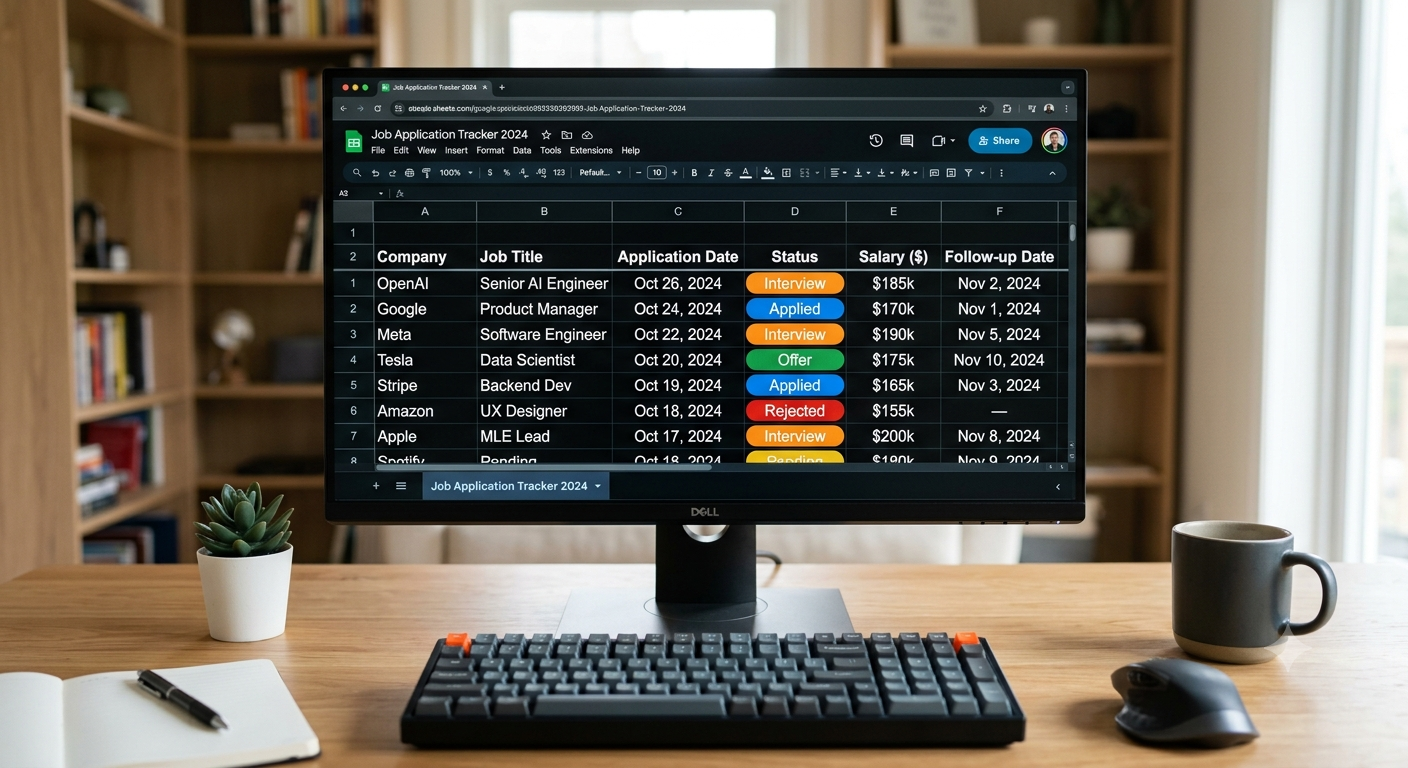
Ready to showcase your Self-Taught Skills and stand out to potential employers? Use the best job tools to track opportunities, highlight your strengths, and take the next step toward your dream career.



Leave a Reply