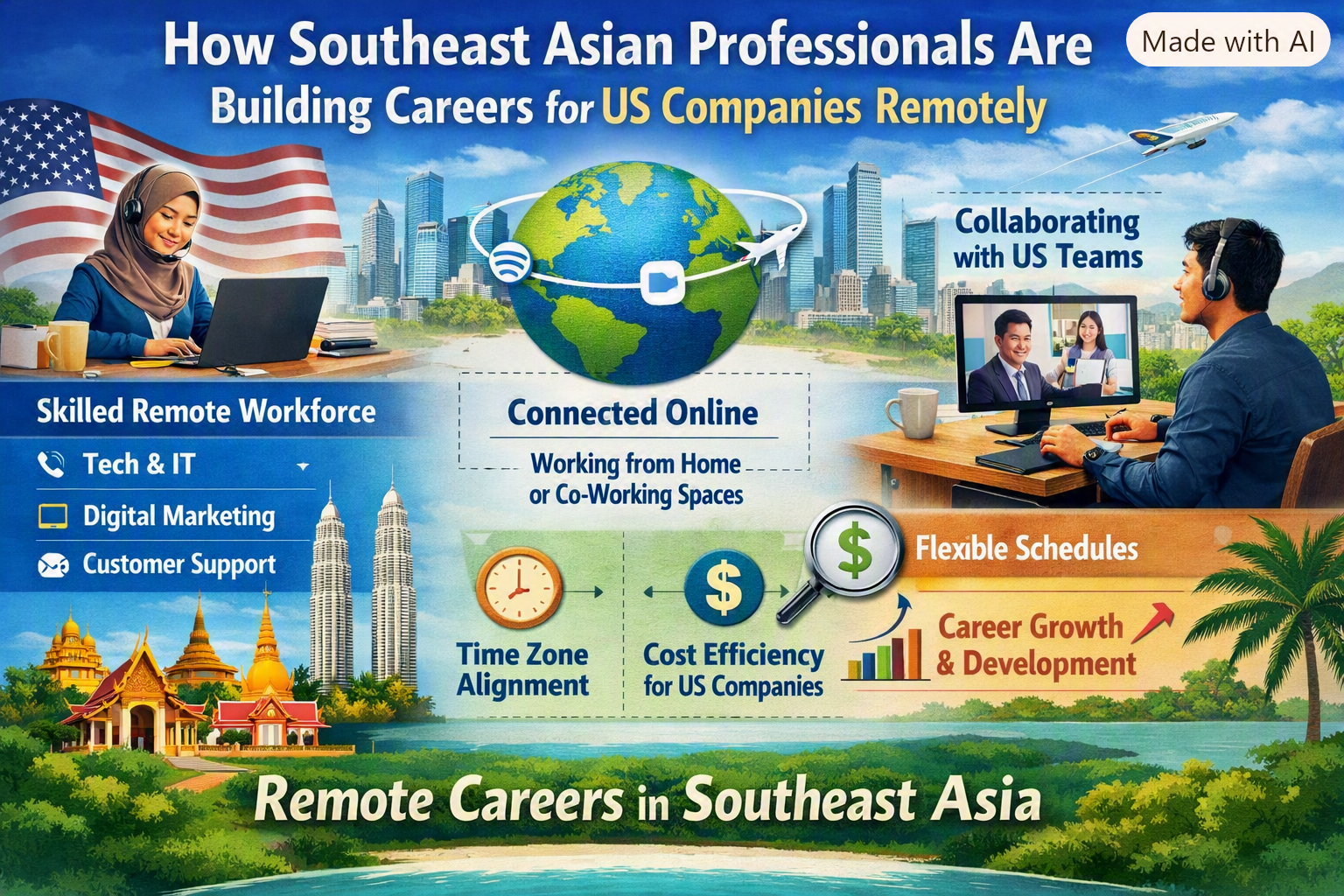
Introduction: Southeast Asian Professionals
The rise of remote work has reshaped the professional landscape in fascinating ways. No longer is it necessary for professionals to move abroad to work for an international company. Today, skilled individuals in Southeast Asia are finding that the ability to work remotely is giving them more opportunities than ever to advance their careers — from the comfort of their own homes.
How Southeast Asian Professionals Are Building Careers for US Companies Remotely has become an increasingly compelling career choice as companies look to move beyond their local hiring pools. According to a 2025 report on cross-border hiring, 25% of surveyed U.S.-based clients were already hiring remote labor in APAC, with the Philippines and Indonesia as prime locations.
How Southeast Asian Professionals Are Building Careers for US Companies Remotely?
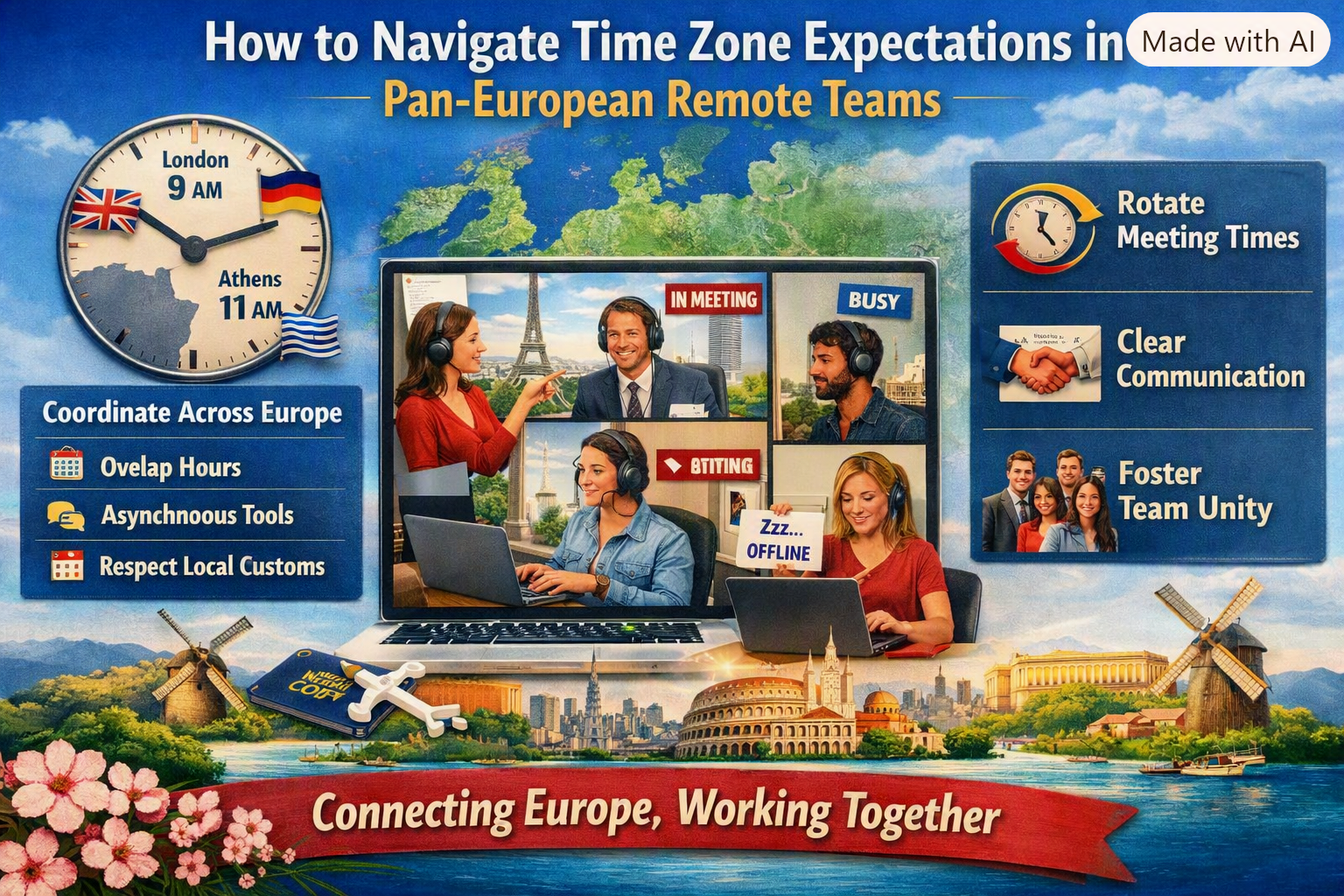
1. Learning to Work Across Time Zones
Time zone differences are one of the biggest challenges of working for a U.S. company from Southeast Asia.
A professional in Singapore, for example, may have to attend meetings late at night or work primarily during U.S. hours (some recent accounts from a Singapore-based software engineer working for a U.S. company describe working into the early morning). Not every remote job requires this kind of arrangement, however, as companies may use asynchronous communication to allow employees to complete important work without having to be online at the same time.
Candidates should ask about working hours before accepting a position. A job described as “remote” does not necessarily mean that it has flexible hours.
2. Using LinkedIn and Remote Job Platforms
Southeast Asian professionals are also becoming more strategic about where they look.
Rather than applying randomly to every remote job, candidates can search for companies that specifically hire internationally. “Professionals outside the United States use job boards and remote-focused platforms to find roles.”
However, applicants should take care to read the location requirements. Many jobs described as “remote” are actually remote only within the U.S. or a regional area. A better approach is to look for phrases such as “global remote,” “international applicants,” “APAC,” “Philippines,” “Indonesia,” or “work from anywhere.”
3. Creating a Professional International Profile
A strong LinkedIn profile can make a big difference.
Professionals should give details about what they do, the industries they understand, and the results they have achieved. Rather than writing something generic such as “hardworking marketing professional,” it is better to describe specific abilities and achievements. A marketer could, for example, mention experience with increasing website traffic, managing paid campaigns, producing content, or generating leads. The same can be said for other professions, as U.S. employers need to understand what a candidate can bring to their business.
4. Understanding Contracts and Payments
Working for an overseas company also means understanding how the professional relationship will be structured.
Some workers may be hired as independent contractors, while others may be employed through an EOR or other local arrangement. The appropriate model will depend on the country, job, company, and employment relationship. Before accepting an offer, professionals should understand payment schedules, currency, taxes, working hours, leave arrangements, termination conditions, equipment policies, and intellectual-property terms. They should also beware of employers asking candidates to pay recruitment fees; a genuine employer should give a clear explanation as to how the hiring and payment process will work.
5. The Importance of Communication and Independence
Remote international employees need to communicate differently than those working in the same office.
A manager may not be available immediately, so employees need to know how to provide updates, ask clear questions, document decisions, and solve routine problems independently. This is one reason why written communication has become such an important career skill. A professional who can explain a problem clearly in Slack, email, project-management software, or a shared document can become a valuable member of a distributed team.
6. Building a Long-Term International Career
The biggest benefit of working remotely for a U.S. company may not simply be the salary but the international experience gained from working with global teams. Professions can learn how American companies operate, understand international customers, develop better communication skills, and build relationships with colleagues from different countries. That experience can be leveraged later to move into senior roles, international companies, consulting, freelancing, or entrepreneurship.
Conclusion: Southeast Asian Professionals
Remote work has opened up new opportunities for Southeast Asian professionals looking to build international careers without having to move overseas immediately. From software development and marketing to customer support, finance, sales, and operations, there are opportunities for professionals to contribute to U.S.-based businesses from their own countries.
The opportunity, however, comes with preparations that must be made. Candidates need relevant skills, strong communication, a professional online presence, and a clear understanding of remote working arrangements. Most importantly, they need to search carefully because “remote” does not always mean “worldwide.”
For professionals who approach the market strategically, working remotely for a U.S. company can be more than just a work-from-home opportunity. It can be a way to build international experience, expand a professional network, and carve out a long-term global career without having to leave Southeast Asia.

Leave a Reply