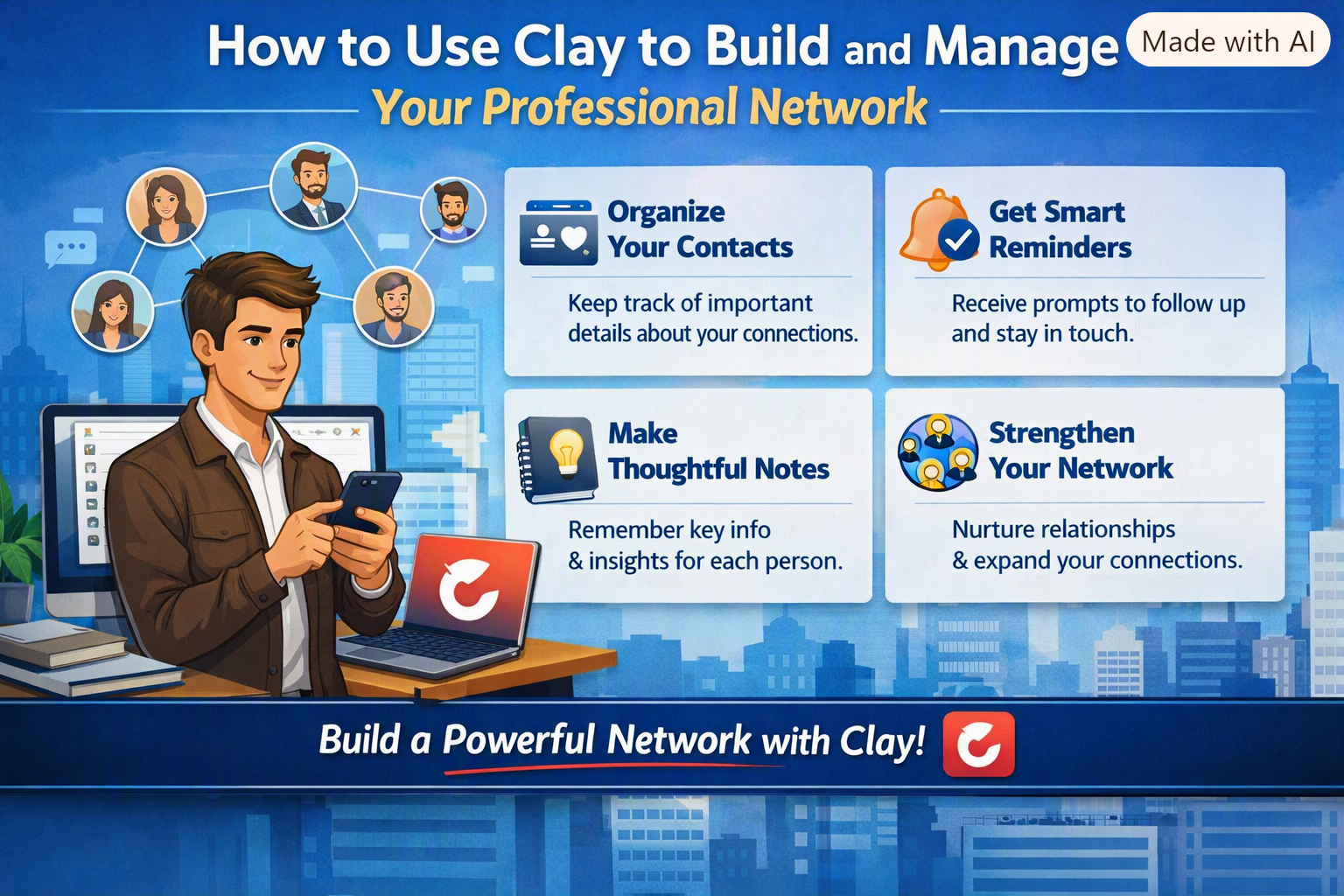
Introduction: Tips to Use Clay
Having a wide range of contacts can open the door to new opportunities, connect you with influential people in your field, provide information on developing skills, and even offer assistance and guidance.
However, having hundreds of contacts across different companies and industries can also create challenges.
How to use clay to build and manage your professional network provides a valuable guide that professionals can use to organize their contacts and manage their professional network more effectively.
Instead of seeing your network as hundreds of individual contacts and names on LinkedIn, building and managing your network can be a structured and organized experience that allows you to understand your network and engage with it more effectively.
How to Use Clay to Build and Manage Your Professional Network?
1. Understand Your Existing Network
Your network probably includes a wide range of contacts. Your past colleagues, managers, classmates, clients, recruiters, business owners, and people you have met at various conferences and events probably comprise your network.
By organizing this information with the help of a tool such as Clay, you can create a comprehensive view of your network. You can also separate your network into various categories based on industry, company, roles, location, and other factors.
For instance, you may sort your contacts into your former colleagues, target companies, recruiters, clients, and industry influencers. This information will provide you with a valuable overview of your network and assist you in interacting with your contacts.
2. Identify Useful Connections
Not all of your network’s contacts are equal. While some people may have a direct link to your professional goals, others may be indirect contacts that you can engage with to help expand your network.
By applying the information you have organized, you can identify the people that you need to focus on interacting with and dedicate your time and effort to building stronger relationships.
For instance, if you are looking for a new job opportunity, you can focus on the people that you have identified in your potential companies of interest.
This does not mean you should spam all of these people with job requests. Instead, by engaging in effective networking, you can establish meaningful relationships that can benefit both parties.
3. Keep Contact Information Organized
When it comes to networking, one of the most common challenges is losing track of your contacts. You may remember meeting someone at a conference but fail to remember the company they work for.
You may also add someone on LinkedIn only to forget about them shortly after the interaction. With an organized system, you can easily keep track of all of your contacts’ information.
It is always a good idea to keep a record of their current companies, roles, interests, and any other relevant information, as well as the last time you interacted with them.
By doing so, you can easily recall pertinent information that can help you engage with them more effectively in the future.
4. Research Before Reaching Out
Before reaching out to someone on your network list, it is always a good idea to do a bit of research on the person to identify ways in which you can personalize your outreach.
Instead of sending a generalized message, try to use some of the information you know about the person and their professional background.
By referencing their interests, you can establish a personalized message.
This shows the recipient that you have taken the time and effort to interact with them genuinely instead of seeing them as just another contact to add on LinkedIn or request a job from.
5. Create Follow-Up Reminders
When it comes to networking, a single conversation is never enough. As people get busier with their lives, it is easy for relationships to fizzle out after an initial meeting.
To ensure that your relationships continue to grow, it is always a good idea to set up a follow-up reminder to reconnect with your contacts periodically.
How often you should follow up will depend on the conversation and relationship. As a rule of thumb, it is always a good idea to reconnect with them every few weeks or months.
You can also use this information to remind yourself to engage with them organically. You can share a relevant article, congratulate them on a recent promotion, or ask for advice and support on a specific project.
6. Use Networking for Job Searching
How to use clay to build and manage your professional network can also be a valuable tool when searching for new job opportunities.
Instead of applying randomly to companies and hoping for the best, you can organize your contacts and determine the companies that you are most interested in pursuing.
If you are considering ten different companies, for instance, you can identify the people, recruiters, hiring managers, and other relevant contacts associated with each of these companies and use this information to engage with them.
Doing so can provide you with a deeper insight into the company and the role you are hoping to fill, giving you an advantage over other candidates.
However, it is also important to keep in mind that you should only apply for the open positions that require you to do so.
Conclusion: Tips to Use Clay
Clay can help professionals build and manage their networks more strategically by organizing contacts, enriching information, and keeping relationship-building efforts consistent. Instead of relying on scattered notes or manual research, you can use Clay to maintain useful contact information and identify meaningful opportunities to connect.
Ready to build a stronger professional network? Use Clay to organize and manage your connections more effectively, and explore Best Job Tool platform to discover new career opportunities and grow your professional network.






Leave a Reply