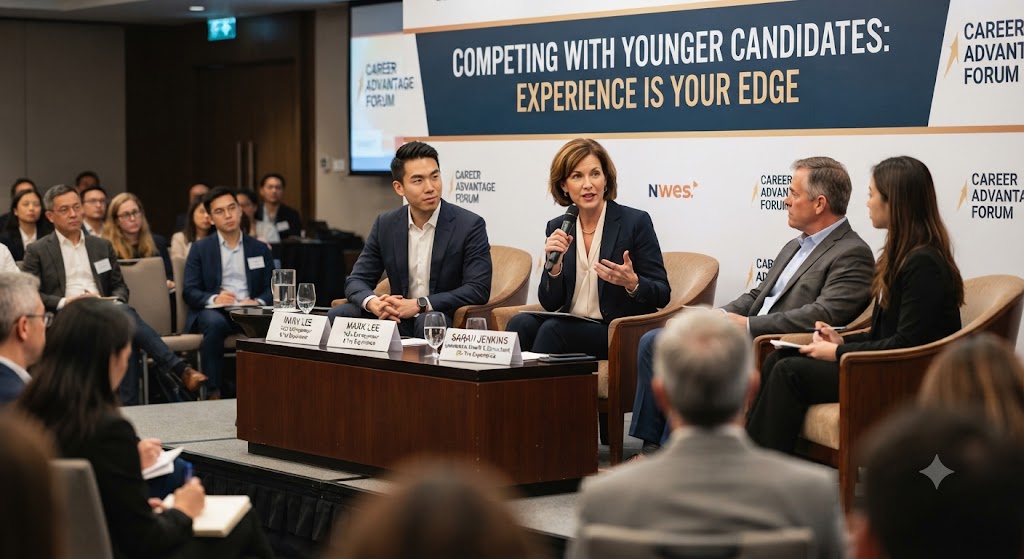
The job market continues to evolve as employers adopt new technologies, change hiring practices, and look for professionals who can adapt quickly. For experienced candidates, competing with younger applicants may sometimes feel challenging, particularly when job descriptions emphasize digital skills, flexibility, and familiarity with emerging tools. However, years of professional experience can offer advantages that are difficult to develop quickly, including sound judgment, industry knowledge, leadership, and the ability to manage complex situations. Younger
The key is to communicate these strengths in a way that matches what employers need today. Rather than trying to appear younger or competing on every skill, experienced professionals should demonstrate how their knowledge, adaptability, and proven results can help an organization achieve its goals.
Whether you are returning to work, changing industries, pursuing a leadership position, or seeking a new opportunity in your 40s or 50s, a focused strategy can help you stand out. By combining experience with continuous learning, modern job-search techniques, and a clear professional brand, you can position yourself as a valuable candidate in a competitive market.
Turn Your Experience Into Measurable Business Value
Professional experience becomes a competitive advantage when employers can see how it translates into results. Simply stating that you have 15 or 20 years of experience does not Younger why an organization should hire you. Instead, demonstrate how your work has improved performance, reduced costs, strengthened teams, or solved difficult problems.
For example, a project manager should explain how they delivered a complex project within budget, improved coordination between departments, or reduced delivery delays. Similarly, an experienced marketing professional can highlight improvements in customer acquisition, campaign performance, or revenue growth.
To communicate your value effectively:
- Quantify achievements wherever possible, using percentages, financial results, time saved, or operational improvements.
- Describe difficult problems you solved and explain the decisions that produced successful outcomes.
- Highlight situations in which your judgment helped prevent mistakes or reduce business risks.
- Connect previous achievements to the challenges mentioned in the target job description.
- Emphasize repeatable strengths rather than relying on job titles or years of service alone.
Moreover, adapt your examples to the employer’s priorities. A growing company may value someone who can build processes from scratch, while an established organization may need a professional who can improve efficiency and manage complex stakeholders.
Your experience should tell a clear story: you understand business challenges, recognize potential risks, and know how to turn decisions into meaningful results.
Demonstrate That You Can Adapt to New Technology
One concern experienced candidates may encounter is the assumption that they are less comfortable with modern technology. Although this assumption does not reflect every professional’s abilities, employers may prioritize candidates who demonstrate digital confidence and a willingness to learn.
Therefore, make continuous learning a visible part of your career strategy. You do not need to master every emerging tool. Instead, focus on the technologies and platforms that directly influence your industry and target role.
For example, experienced recruiters can become familiar with applicant tracking systems, recruitment analytics, and AI-assisted sourcing tools. Finance professionals may benefit from developing skills in advanced spreadsheets, business intelligence, and financial automation. Meanwhile, project managers can strengthen their knowledge of collaboration Experience, workflow automation, and data-driven reporting.
Consider taking these practical steps:
- Identify three to five technologies frequently mentioned in relevant job descriptions.
- Complete short courses or industry-recognized micro-credentials that address genuine skill gaps.
- Apply new tools to a real project, even if it is a personal, volunteer, or practice project.
- Add relevant technical skills and certifications to your résumé and professional profiles.
- Prepare examples that explain how you use technology to improve accuracy, speed, or decision-making.
Importantly, do not present technology as something you are learning simply to compete with younger applicants. Explain how combining modern tools with professional judgment allows you to work more effectively.
This combination can be particularly valuable in roles where automation supports routine tasks but human experience remains essential for interpreting results, managing exceptions, and making high-impact decisions.
Modernize Your Résumé Without Hiding Your Career History
An outdated résumé can make a highly qualified professional appear less competitive. However, modernizing your application does not require removing valuable experience or disguising your career timeline. Instead, organize your résumé around relevance, achievements, and the requirements of the position.
Begin with a concise professional summary that communicates Younger your specialization, strongest capabilities, and most relevant accomplishments. Avoid generic descriptions such as “hardworking professional with extensive experience.” Instead, use a focused statement that explains the value you offer.
For instance, an experienced operations manager might describe their background in process improvement, team leadership, vendor management, and cost control, supported by a measurable achievement.
Your résumé should also follow a clear structure:
- Professional summary: Present your expertise and the type of problems you solve.
- Core skills: Include relevant technical, analytical, leadership, and communication skills.
- Professional experience: Prioritize achievements and responsibilities that match the target role.
- Certifications and training: Highlight recent learning that demonstrates current industry knowledge.
- Education: Include relevant qualifications without allowing older credentials to overshadow recent professional development.
Furthermore, tailor your résumé to each opportunity. Use accurate Younger terminology from the job description when it reflects your actual experience, and keep formatting simple enough for applicant tracking systems to process.
You can also consider shortening descriptions of older positions that are less relevant to your current goals. However, never invent employment dates, alter qualifications, or remove information when doing so would create a misleading impression.
A modern résumé should show both professional depth and present-day relevance. Employers should quickly understand what you have accomplished, what you can do now, and how you Younger can contribute to their organization.
Use Your Professional Network to Access Better Opportunities
Experienced candidates often have an important resource that newer professionals are still developing: a network of former colleagues, managers, clients, vendors, industry contacts, and professional peers.
Nevertheless, networking is most effective when it involves genuine professional relationships rather than simply asking people for job referrals. Your objective should be to reconnect with relevant contacts, exchange industry insights, and communicate the type of opportunity you are pursuing.
Start by identifying people who understand your work and may know organizations where your expertise would be useful. Reach out with a brief, personalized message that explains your current career direction.
For example, you could reconnect with a former colleague to discuss Younger in your industry or ask a previous client about emerging business challenges. These conversations can reveal opportunities that are not widely advertised.
You can strengthen your networking strategy by:
- Reconnecting with former colleagues and managers through LinkedIn or professional associations.
- Attending industry events, webinars, and relevant professional discussions.
- Sharing thoughtful insights about your field instead of posting only that you are looking for work.
- Offering advice or support when your expertise can help another professional.
- Requesting introductions when there is a genuine connection between your background and a company’s needs.
Additionally, maintain a professional online presence. Keep your LinkedIn headline specific, update your experience section, and ensure your profile reflects your current skills rather than only your past achievements.
A strong network can help you learn about hiring needs, understand organizational priorities, and receive introductions to decision-makers. Although networking cannot guarantee an interview, it can help employers understand the value behind your application.
Highlight Leadership, Judgment, and Emotional Intelligence
Technical knowledge is important, but many organizations also Younger professionals who can manage ambiguity, resolve disagreements, support colleagues, and make sound decisions under pressure. These abilities can become valuable differentiators when they are supported by concrete examples.
Experience often exposes professionals to difficult situations that cannot be solved by following a standard procedure. A senior employee may have managed a customer escalation, guided a team through organizational change, negotiated with a difficult supplier, or helped prevent a costly operational mistake.
When discussing these experiences, explain not only what happened but also how you responded and what the organization gained from your actions.
For example, rather than stating that you possess strong leadership skills, describe how you helped two departments resolve conflicting priorities, established a practical plan, and improved delivery performance.
You should also demonstrate that your leadership style remains relevant in modern workplaces. Employers value professionals who can collaborate across generations, listen to different perspectives, Candidates and help colleagues develop their capabilities.
To make these strengths visible:
- Prepare examples of conflict resolution, mentoring, and decision-making.
- Explain how you manage competing priorities without losing sight of business goals.
- Demonstrate openness to feedback and alternative working methods.
- Show that you can collaborate with colleagues regardless of their age or seniority.
- Describe how you support learning, knowledge-sharing, and team performance.
At the same time, avoid implying that experience automatically makes you a better candidate than a younger applicant. Different professionals bring different strengths. Your objective is to show how your particular combination of judgment, expertise, and collaboration can contribute to the role.
Address Age-Related Assumptions With Confidence
Some experienced professionals worry that employers may view them as overqualified, expensive, resistant to change, or less adaptable. Although these concerns do not apply to every employer, preparing thoughtful responses can help you handle potentially difficult interview conversations.
First, clarify why you want the position. If you are applying for a role with a different title or less seniority than a previous position, explain how it aligns with your current goals, interests, and preferred responsibilities.
For example, you might be seeking a more specialized role, a better work-life balance, an opportunity to change industries, or a position where you can contribute directly without managing a large department.
Second, demonstrate flexibility through examples rather than promises. Discuss a time when you adopted a new system, learned an unfamiliar process, adjusted to a changing business strategy, or collaborated successfully with a younger team.
If compensation comes up, focus on the responsibilities, market expectations, and overall opportunity rather than making assumptions about what an employer can afford. Be prepared to discuss a reasonable range based on the position and your priorities.
You should also prepare for questions about your future goals. Explain how the role fits into your professional plans and why you are genuinely interested in the organization’s work.
If you encounter inappropriate Candidates age-related comments or believe a hiring decision may involve unlawful discrimination, document relevant details and consider seeking guidance from an appropriate employment adviser or legal professional in your jurisdiction.
Most importantly, do not apologize for your career history. Present it confidently, while showing that you remain curious, adaptable, and motivated to contribute.
Build a Job Search Strategy Around the Right Opportunities
Competing effectively is not about applying to every available position. Instead, concentrate on roles where your background addresses a clear business need.
For example, a professional with extensive experience in supply chain operations may be particularly relevant to organizations dealing with supplier instability, process inefficiencies, or expansion into new markets. An experienced HR professional may be well suited to roles involving workforce planning, employee relations, or organizational development.
Start by identifying your strongest areas of expertise and the industries Candidates where those strengths are most valuable. Then evaluate job descriptions according to responsibilities, required skills, organizational needs, and opportunities for professional growth.
A practical job-search plan includes:
- Define your target roles: Choose positions that align with your strongest capabilities and current career goals.
- Research employers: Look for organizations whose challenges match your professional experience.
- Use relevant job platforms: Search across industries, locations, and suitable work arrangements, including onsite, hybrid, and remote opportunities.
- Track applications: Record application dates, contact names, follow-up actions, and interview outcomes.
- Prepare tailored applications: Adjust your résumé and professional summary to reflect each employer’s priorities.
- Review your progress: Identify which applications generate responses and refine your approach accordingly.
For better results, maintain a balance between applying for suitable advertised positions and building professional relationships. Also, consider adjacent roles where your transferable skills could be valuable, even if the job title differs from your previous positions.
When searching through a global job platform such as best job tool, focus on opportunities that genuinely match your qualifications, experience, preferred location, and career direction. Read requirements carefully, verify employer information, and prioritize roles where you can explain a clear connection between your past achievements and the organization’s needs.
Finally, remember that a job search can take time. Consistent applications, targeted networking, continued learning, and regular progress reviews will generally provide a more structured approach than relying on application volume alone.
Conclusion
Competing with younger candidates does not require you to imitate their career paths or minimize your professional history. Instead, your strongest strategy is to demonstrate that experience remains valuable when it is combined with current skills, adaptability, and a clear understanding of business needs.
Start by translating your achievements into measurable outcomes. Update your résumé, strengthen your digital capabilities, build meaningful professional relationships, and prepare examples that demonstrate leadership and sound judgment. At the same time, remain open to new industries, modern tools, and different ways of working.
Remember that employers are not simply hiring years of experience. They are hiring the ability to solve problems, make decisions, collaborate effectively, and deliver results. When you communicate those abilities Candidates clearly, your experience becomes a practical business advantage rather than just a line on your résumé.
To take the next step, use best job tool to explore relevant opportunities, identify roles that match your strengths, and connect your professional experience with your next career move. Your next opportunity can build on what you already know while giving you room to keep learning and growing.


Leave a Reply