Introduction: Professional Network
Colleges are not only a place to gain knowledge and pass exams but also a platform to create relationships that will benefit you in the future. A professional network is a network of contacts that know you and your area of expertise and could help you in your professional life. You can benefit from building a professional network in your college life.
Most people believe that students must wait before going to college to start networking. This is false because students can start networking during the early stages of their studies. Students do not need a vast range of work experience and a stable career to start gaining contacts; they just need to be social, confident, courteous, motivated, and open-minded.
How to Build a Professional Network While Still in College?
1. Start With People Around You
The easiest way to start networking is to reach out to those around you. Classmates, professors, seniors, and college staff can be a part of your network. You must remember that all people play a significant role in your professional life.
Your classmates can become successful leaders in the future. Your seniors already have experience working in different companies and fields. Moreover, your professors might recognize a connection with professionals interested in mentoring you. Therefore, it is essential to cultivate healthy and long-lasting professional relationships throughout your college life.
You can begin reaching out to people by scheduling an informal meeting. You can ask your classmates what they are interested in. Talk to your seniors and ask for advice concerning your professional life. Ask your professors for mentorship and support. Such an easy first step will set the path toward spectacular networking ahead!
2. Join College Clubs And Organizations
College clubs are an excellent way to expand your network and gain incredible experiences.
You can find all kinds of clubs in your college, such as business, tech, marketing, writing, sports, public speaking, and many more. Moreover, you can sign up in the clubs which seem the most interesting to you.
Do not join the clubs only because they look good on your resume. You should genuinely want to be a part of the community and do whatever it takes to achieve its goals. By being a consistent and active member, you will gain contacts with other students from various courses and colleges. Additionally, you will also improve your soft skills and demonstrate to your future employers that you can lead, manage, collaborate with others, and solve problems.
3. Attend Seminars and Workshops
One of the best things about college is that it offers a plethora of seminars, workshops, conferences, and guest lectures. These are great opportunities to network with people in a wide range of industries, and gain valuable insight from them.
The key to making connections at these events is not to be a passive listener. Engage with the speaker by asking questions, listening closely to what they have to say, and introducing yourself and thanking them for their time after the presentation. You should always aim to strike up a conversation, instead of just sitting in the audience. You do not always need to ask for a job right away, just try to learn as much as you can, and remember to express your gratitude. Talking to someone in person will definitely help you stand out if you ever cross paths again in the future.
4. Use LinkedIn Proficiently
LinkedIn is one of the most important online tools for professional networking, and students should take advantage of its services. You can start by setting up a LinkedIn profile (you do not need previous experience for that). Make sure to put relevant information such as your areas of expertise, projects, skills, certifications, achievements, and interests. You should also have a professional-looking profile picture and a brief description of who you are and what are your goals.
You can use LinkedIn to connect with your classmates, teachers, alumni, peers, professors, employers, and other professionals. But make sure not to add just anyone, try to be strategic and only connect with those who can offer you valuable insight in your area of expertise. You may also want to follow thought leaders and organizations in your industry and comment on their posts if you feel like it.
5. Connect With College Alumni
College alumni can be a great resource to you, as they have already navigated through college life and the transition into the working world.
Many colleges have alumni networks or groups, where you can reach out to past students of your school. Take advantage of these resources, and politely ask them about their journey through the working world, as well as any skills or experience that may be useful to you.
While you should not ask for jobs, many alumni will welcome you to their industry and field, and give you tips or pointers for when you are ready to enter the professional world.
You could ask questions such as these: What skills are important in your line of work? Or, what are some good qualities to have when you are just starting out?
Most professionals will be glad to hear from you if you are a curious and eager student, so a polite conversation could lead to a lasting professional relationship.
6. Search for Internships
Many people who hold positions in companies or organizations got there through an internship.
An internship can give you insight on how to operate in the professional world, as well as teach you skills pertinent to your field of interest.
While you may be encouraged to bond with your direct superiors, learn from everyone you meet during your internship.
Always be polite and professional, and do your work to the best of your ability.
Those you work with during your internship could remember you fondly, and may put in a recommendation for you with others in the company, or help you connect with others in your chosen industry.
After you have completed your internship, continue to build relationships with those you have worked with. You never know when an old connection might come in handy, and a simple “hello” can keep you in the good graces of your past coworkers.
Conclusion: Professional Network
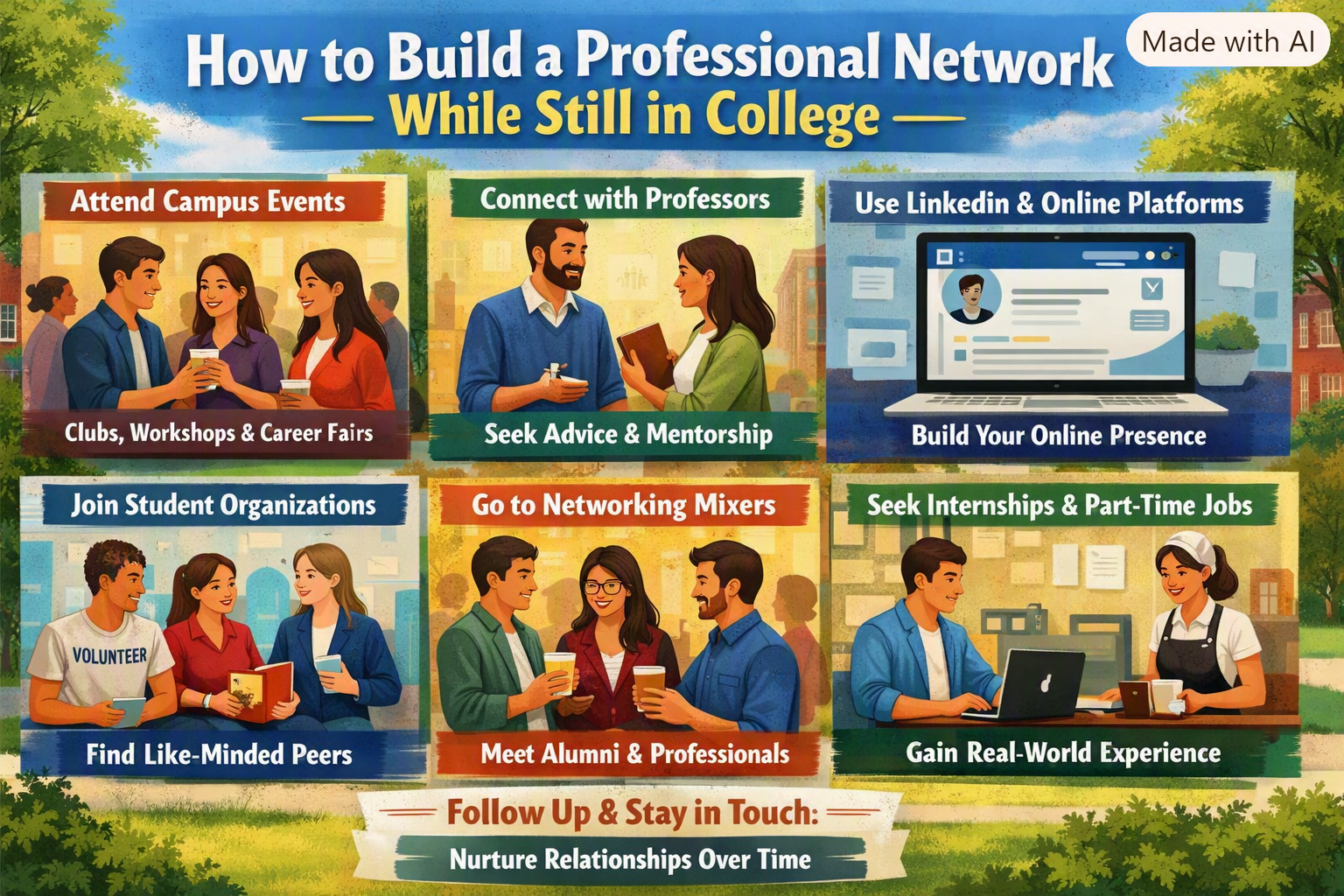
Establishing a professional network in college can ease one’s transition from college to the corporate world. The connections can be created with classmates, professors, senior students, alumni, and professionals. Consequently, one can network through joining clubs, attending events, using social media platforms like LinkedIn, undergoing internships, and learning how to communicate professionally and effectively.
Above all, it is essential to remain authentic and not use others for selfish gains. It is advisable to free your mind from the notion that the only reason for connecting with someone is to get a job. Instead, good relationships are founded on trust and respect for each other.
The above ideas are practical, as everyone is still in college, which allows them to experiment with ideas. Networking can begin with a single conversation with classmates and expand to include alumni and other members of the community. The key idea is that every person one meets can offer new knowledge or skills. Therefore, one should strive to build relationships with as many people as possible to gain new contacts and cut corners in landing a job.
Building a professional network in college can open doors to internships, mentorship, and future job opportunities. Connect with classmates, professors, alumni, and industry professionals, and focus on building genuine relationships. Start growing your network early and prepare for your career with Best Job Tool.





Leave a Reply