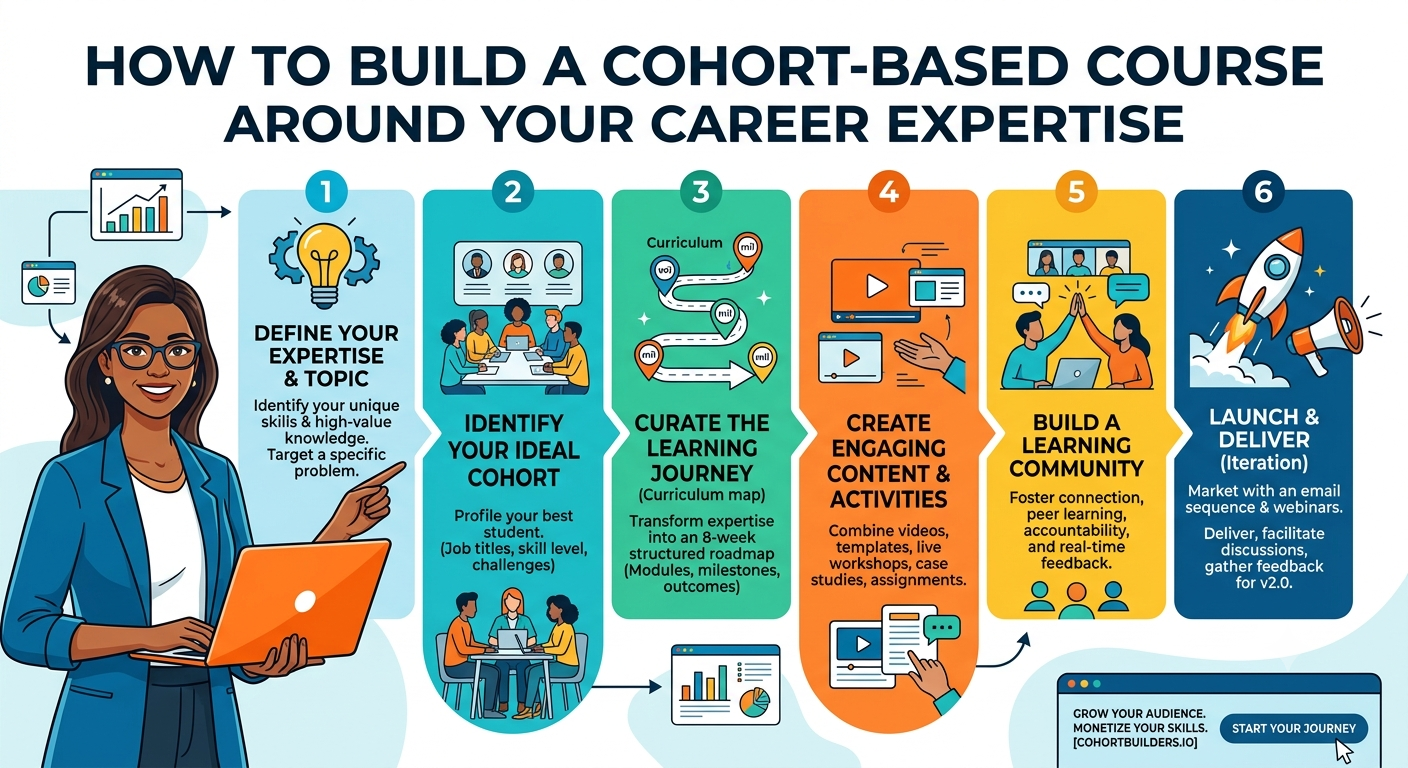
Introduction: Cohort-Based Course
People spend years learning and accumulating experience in their chosen field. That knowledge and experience can be leveraged to help others achieve the same results. But many professionals limit themselves to one income stream by working as an employee or a freelancer.How to build a cohort-based course around your career expertise is an actionable guide to monetizing expertise through educational services.
Cohort-based courses are different from the regular self-led courses as they bring people together to learn a particular topic within a specified timeframe. The course usually follows a curriculum, and students get to interact with the instructor and other students. By designing a learnable experience for others, professionals can earn extra income while sharing their knowledge and expertise. Here’s how such a course can be created.
How to Build a Cohort-Based Course Around Your Career Expertise?
1. Determine What You Can Teach
The first step is to decide what you can teach based on the skills and knowledge you possess. Take your mind back to the years when you learned a particular skill and gained experience. Was there a particular thing that you learned that enabled you to achieve certain results?
For instance, if you are a content writer, you may decide to teach students to write blogs, understand SEO basics, or develop content writing strategies. As a marketing professional, you may want to teach entrepreneurs the basics of digital marketing. On the other hand, as a project manager, you can help others learn to organize their projects better.
You should also think of the problems you have solved or the niche you can help students learn instead of trying to teach everything you know. Remember, the goal is to help them achieve a specific result.
Therefore, look at your previous works and determine what has worked for you and, therefore, what you can possibly teach.
2. Define Your Target Audience
Now that you know what you want to teach, the next step is to determine who your target audience is. In this case, you have several options. Your target audience could be students, working professionals, or even fellow freelancers and entrepreneurs looking to gain new skills.
It is important to define your ideal student and design the course around them. For instance, a content writing course aimed at students may be different from one designed for working professionals.
To determine your ideal audience, you need to research where your target audience hangs out, what challenges they face, and what they want to learn. That way, it will be possible to design a course that addresses their specific challenges and helps them achieve their learning goals.
You can conduct your market research through online forums where your target audience participates. You can also conduct a survey asking what they want to learn and what challenges they encounter in the process to be able to determine what should be taught in the course.
3. Design Your Course Curriculum
A good curriculum is the backbone of a successful course. A well-designed curriculum will guide you on what to teach and when something should be taught. The curriculum should be student-centered and help them achieve the learning goal within the set time.
For instance, if you wanted to design a six-week content writing course, you may want to consider dividing the course into modules. Each week can cover a particular topic related to content writing.
The first week could be an introduction to content writing. The second week can be about developing writing skills. The third week can focus on SEO basics. You can then go on to teach how to write articles, write a portfolio, and complete a final project by the sixth week. It is always important to remember to leave out fluff and only focus on specific skills and knowledge that will help students achieve the intended learning outcome.
4. Determine the Best Way to Present Your Course
Since a cohort-based course is meant to bring students together to learn something within a short time, it is important to find the best way to present the course. People could use a mix of live videos and pre-recorded videos to teach the course.
You can hold regular live meetings to interact with the students and answer their questions. You can also consider using online forums to post assignments and enable them to collaborate with other students in the cohort.
Another good way to present your course is to create a community where students can share their progress and encourage each other. That way, you ensure that they remain accountable for their learning.
The best way to present the course will be determined by your budget and what you are comfortable with handling. You can use video conferencing tools and emails to manage your first few students. There is no need to invest in expensive tools when you are just starting out.
5. Set a Profitable Price for Your Course
Next, you need to figure out how much to charge for your course. In most cases, you should charge what the course is worth to your students while still being able to make a profit. There are also a number of factors to consider when setting a price for your course. Some of the factors to consider include the value of the course, the audience’s capacity to pay, the course length, and the level of support you will provide.
If you are offering a short course with limited support, it may not make sense to charge students as if you are offering a one-on-one mentorship program. However, if you are offering a specialized program and extra support, it makes sense to increase the price. It is also important to research to determine what similar courses cost. Avoid the temptation to charge lower prices just to move students. While it is a good idea to provide affordable learning, you should not undermine yourself.
For instance, if you charge INR 5,000 and have 20 students, you will make INR 1,00,000. However, that is far from the profit that you will make. After this you have to pay for marketing, tools, taxes, and other expenses. You should also consider adding discounts or flexible payment plans for your audiences.
You will also want to think about what students get when they enroll in your course and how you can help them justify the expense. Always communicate your value well to your target audience.
6. Market Your Course and Get Students Interested
No course, regardless of how good it is, can sell itself. That is why it is important to invest time and effort into marketing and getting your course in front of the right people. There are a number of ways you can market your course and get students interested. The best thing is to start by becoming known and reputable in your space while also providing value.
For instance, you can start by writing articles, LinkedIn posts, and videos that provide value to your target audience and get them interested in your expertise. You can also market your course using a mailing list where you can send regular newsletters with valuable insights to your prospects.
You can also consider running a webinar or a free class for your prospects to show them what the course entails. Collect testimonials or case studies from your first few students with permission to use it to market your course and influence others to invest in the course. Finally, it is important to keep your promises and always deliver on what you say you will do to gain the trust of your students and influence them to give you a positive review.
7. Deliver Your Course With Excellent Support
Your job with your course does not end when students enroll. It is important to keep showing up and providing support for them to get the most out of the course. Before you start the course, make sure to set expectations about what will happen and how the students are expected to communicate.
It is also a good idea to provide frequent feedback and identify students who may need additional support. Encourage students to complete assignments that will help them achieve the learning outcome. For instance, you may want to encourage your students to complete the portfolio by the end of the course.
Ask for their feedback throughout the cohort to determine what is working and what areas need improvement. Keep in mind that a cohort-based learning experience works because of the interaction and accountability that it creates. Therefore, students should give you feedback on what they liked about the course and what should be removed or improved.
8. Scale and Grow Your Course Into a Full-time Business
After completing your first cohort, it is important to take the time and measure how well the course performed. You should take a keen interest in how many students enrolled, those who completed the course, their feedback, the costs you incurred, and how much revenue was made.
Based on the performance data and revenue, you can decide how to scale your course. If you decide to continue with another cohort, you can either increase the number of students or create a more complex version of the course for those who already know the basics. You can also consider working with guest instructors and assistants to help you manage your growing number of students.
Finally, you can leverage the existing course to create other products and services that will help you scale your business and still provide value to your students. The existing course can be a good way to sell other products and services, like workbooks, video recordings, and specialized workshops. However, it is important to scale while also providing the same level of support and interactions for your students.
Conclusion: Cohort-Based Course
How to build cohort-based course around your career expertise is a useful guide to helping professionals to use their expertise to create a profitable course while also helping students achieve certain learning outcomes. It is always best to start small, focus on one particular learning result and a small group of students. Then, use the feedback from the first group to improve the course and expand to a new group. Professionals can use their existing knowledge and skills to help others while also growing their careers and earning profit.
Ready to turn your professional expertise into a profitable cohort-based course? Use the Best Job Tools to identify in-demand skills, design your course curriculum, attract the right students, and build a sustainable online education business. Start today and transform your knowledge into a new income stream.



Leave a Reply