Introduction: Build a Brand on a Platform
Learning how to build a brand on a platform new to you poses several challenges. Each platform has a unique audience, rules for content, guidelines for posting, and ways to achieve success. What works on Instagram might not be compatible with LinkedIn and would certainly fail on X. However, it requires considerable patience to achieve success on a platform that is not familiar to you.
If you are determined to build a brand presence on a new platform, you should not be discouraged by the long road ahead. To succeed, you must invest time and effort to learn the intricacies of the platform and plan your approach to engaging the target audience. Nevertheless, investing the time and effort is considerably rewarding, as a well-handled campaign will enable you to build a recognizable brand image on the selected platform.
How to Build a Brand on a Platform You Are New To?
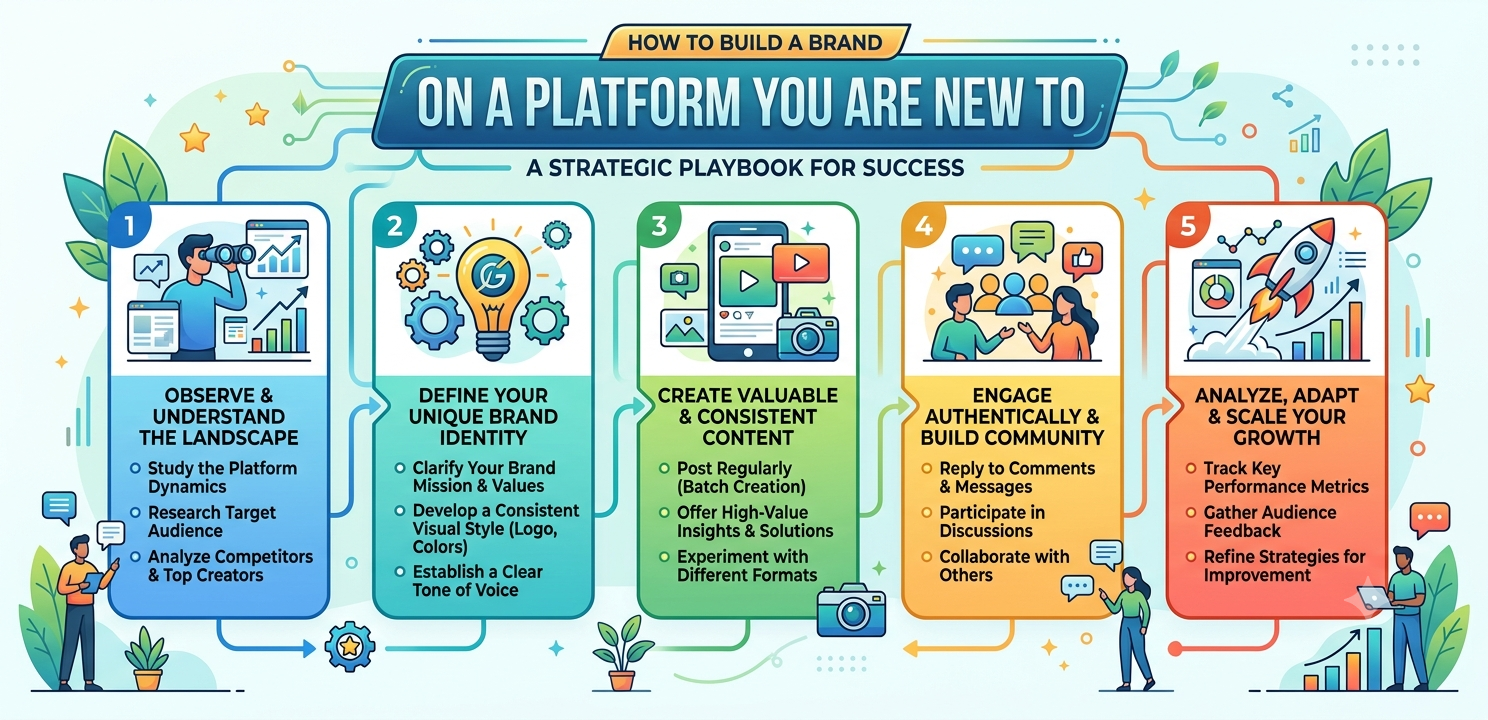
1. Getting to Know the Platform
Prior to publishing the first post, spend a considerable amount of time researching the platform to learn what kind of content resonates with the audience and achieve higher engagement rates. Study the accounts of other users in your niche to determine the trends and topics that yield consistent engagement.
More specifically, identify the formats that the target audience prefers, ranging from short posts and images to long-written posts, live streams, polls, and various other multimedia contents. Furthermore, it is essential to get to know the audience by observing the language they use when communicating with each other.
Although it is crucial to differentiate yourself from others, this stage is primarily about determining the key themes and formats that you should adopt to build a strong presence on the selected platform.
2. Learning About Your Brand and Defining Your Topics
Before you can get engaged with your audience, it is critical to define what you want your brand to represent. Your topics will rely on your profession, the kind of business you run, and your interests. In many cases, businesses leverage multiple topics related to their expertise. For instance, marketing consultants can focus on building a personal brand online, social media tips, and general career advice.
Moreover, it is advisable to minimize your topics to avoid overwhelming your target audience. If you want to maximize your chances of success, create a list of three to five topics that are compatible with the new platform and build your brand presence around them.
3. Learning About the Target Audience
While many platforms offer you an impressive amount of reach, it is crucial not to try to appeal to everyone. A vast audience does not equal a relevant one. Instead, it is necessary to define the target audience for your brand and engage in conversations that are relevant to them.
Specifically, determine the issues your audience members deal with, the problems they seek solutions to, and the kind of information they consume when trying to resolve their queries. The most effective way to learn the requirements, desires, and pain points of your target audience is to read what they write about. Consequently, you will have a solid understanding of the problems your audience deals with on a regular basis and the kind of content that can help them solve it.
4. Creating Content that Resonates With Your Audience
It is perfectly normal to want to share the same content across multiple platforms. Nevertheless, it is crucial not to repurpose the same material as it will appear different to the audiences on various platforms. Instead, use the same topic for different pieces of content optimized for individual platforms.
For instance, you can transform long-form LinkedIn content into a short Instagram post or several tweets on Twitter to show how different social media networks can repurpose the same information. This approach to creating content is infinitely more effective than trying to share the same piece with multiple audiences as they are used to seeing the types of content unique to each platform.
5. Creating a Sustainable Posting Schedule
At this point, it might seem that building a brand presence on a new platform requires you to post frequently and consistently. Ideally, you should post at least once daily or twice weekly. However, even 3-4 weekly posts can help you grow substantially provided they are created consistently.
Furthermore, the content does not have to be exceptional; it merely needs to be relevant and resonate with your audience. It is advisable to plan the themes for individual posts as well as the types of topics they will cover. A useful tip is to prepare a bank of ideas to avoid spending too much time searching for content whenever it is time to publish.
6. Engaging in Conversations on the Platform
Now, when you have defined your topics and developed a sustainable content calendar, it is time to shift the focus on the audience. Besides posting content, it is vital to actively engage with your audience. Respond to each comment on your posts, engage in conversations, and always leave useful feedback. Avoid generic comments, such as great post, nice content, great information, and instead try to encourage the audience to take action.
For instance, you can share a particular opinion or a helpful tip and complement the comment with an emoji to make it more engaging. If you apply this approach every time you engage with someone, you will gradually get noticed by those who genuinely want to connect with you. Additionally, it is advisable to actively engage with members of your niche by commenting on their posts, reading their articles, and watching their videos.
Conclusion
Learning how to build a brand on a platform you are new to requires more time and effort before it begins to show results. You need to take your time to get to know the platform, learn its unique idiosyncrasies, and understand what kind of content resonates with your target audience.
Moreover, it is essential to plan your content in order to achieve consistency without feeling overwhelmed by the task at hand. As a result, the brand can gradually grow on the platform and start yielding sustainable results without exhausting the creator.
Ready to build your brand on a new platform? Start by understanding your audience, creating valuable content, and staying consistent. Whether you’re exploring LinkedIn or using a best job tool platform to discover new opportunities, focus on building a strong presence that gets noticed.



Leave a Reply