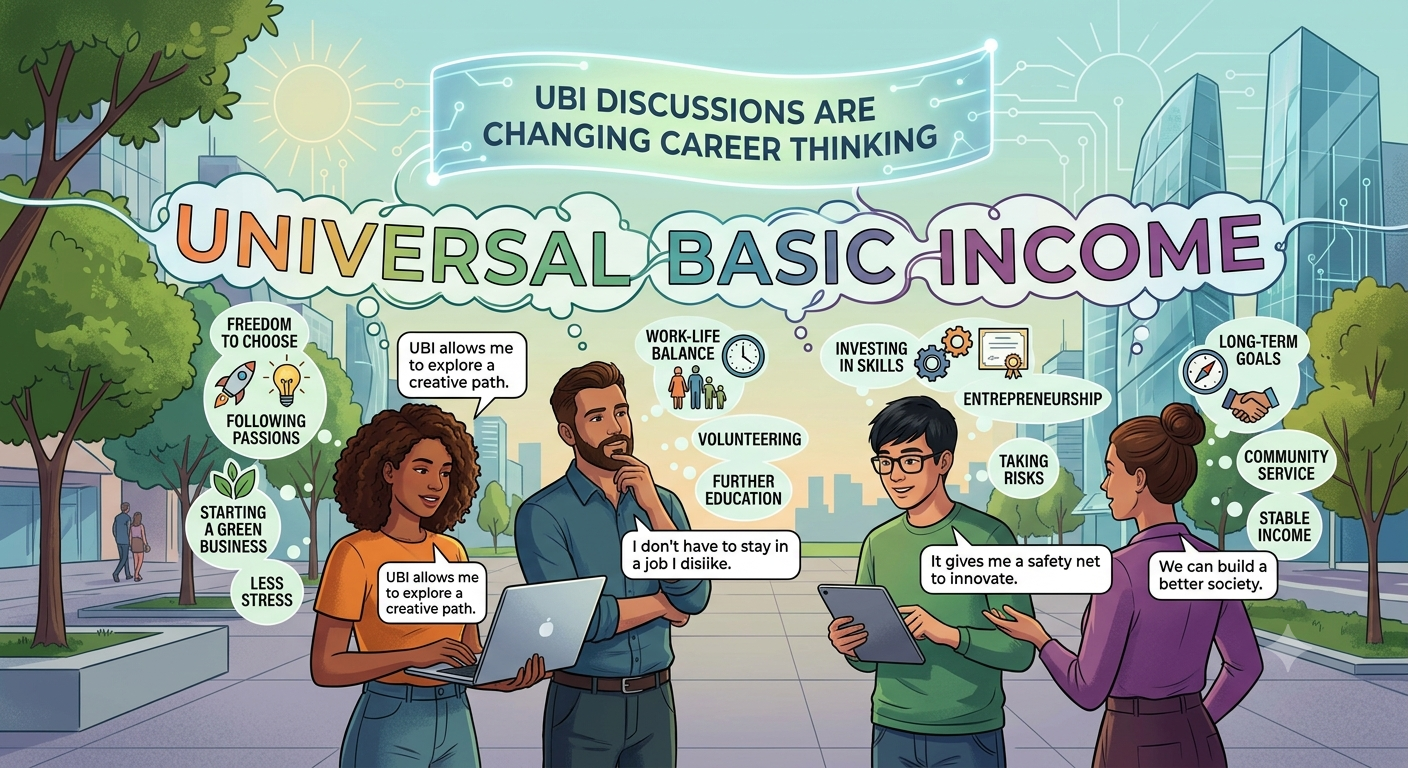
Introduction : Career Thinking
For decades, career decisions have mostly revolved around one question: How can I make enough money to support myself/myself and my family? Though financial compensation is an integral part of most career thinking, the conversations surrounding Universal Basic Income (UBI) spark interesting ideas about the relationship between work, money, security, and personal fulfillment.
Universal Basic Income refers to a system wherein citizens receive regular payments from the government free of charge or with little strings attached. Even though world governments and politicians continue debating the practical implementation of UBI, the concept itself shapes the way individuals think about the future of work.
How Universal Basic Income Discussions Are Changing Career Thinking is an important question as workers navigate automation, artificial intelligence, new working conditions, and economic uncertainties.
How Universal Basic Income Discussions Are Changing Career Thinking?
1. Moving Beyond Survival-Based Career Decisions
For most of human history, career decisions have been risk-reduction measures designed to ensure survival and promote well-being. Landing a stable job that offers financial security determines the type of further education one can pursue, the industries and positions one can apply to, the willingness to take on new projects, and other key decisions.
As people start thinking that their basic needs may be at least partially met even if they do not have a well-paid or stable job, exploring non-traditional career options may become an appealing proposition.
Instead of asking themselves, “What is the best-paying specialty that I can study for the next four years?” or “Which industry offers the highest salaries for my level of education and experience?” people may shift the focus on internal factors, such as, “What kind of work is enjoyable for me?” or “Are there skills that I want to develop throughout my life?” In essence, UBI does not eliminate financial concerns but reduces the pressure to obtain financial stability through a career.
2. Greater Interest in Entrepreneurship
Sparking an entrepreneurial spirit requires two major steps: promoting a sense of security and reducing the risks associated with starting a business.
Since financial instability is one of the most significant concerns preventing people from pursuing entrepreneurship, UBI may empower individuals to become more interested in becoming their own bosses, starting a freelance business, or building a brand. A person who works full-time but dreams of running a marketing agency instead of being an employee may carefully consider their options without the fear of losing a stable monthly income.
In turn, UBI encourages such people to take small steps toward a entrepreneurial career without worrying about the stability of their current salary. It is important to note that UBI can only promote interest in starting a business; establishing an enterprise always requires a certain skill set, a viable business plan, clients, and financial investments.
3. Rethinking the Meaning of a Career
The concept of a career has always been ambiguous;
for individuals, it traditionally refers to a lifetime of work that provides financial and emotional fulfillment;
for employers, a career is a set of skill combinations necessary for an individual to perform a specific job well.
In practice, people often prioritize obtaining a decent income over finding personally fulfilling work that can support themselves. They are willing to engage in stressful working conditions, endless commuting, burnout, and other sacrifices for the sake of financial stability. In turn, UBI allows people to re-evaluate several criteria used to assess if a particular occupation is worth pursuing: How important is a steady income, and how much does one value flexibility, opportunities for personal growth, and being one’s own boss?
For instance, a career-driven person who studies to become an engineer may seriously consider another specialization if they understand that the former profession requires working 60-hour weeks while the latter can offer a stable income while working a 40-hour week. Alternatively, an aging adult who works a menial job as a barker can return to nursing or teaching after retiring from their current post to provide better care for their aging parents without sacrificing the quality of life.
In turn, UBI opens a wide range of possibilities regarding career decisions a person would make a decade or a century later while also rethinking the definition of work.
4. Preparing for Technological Change
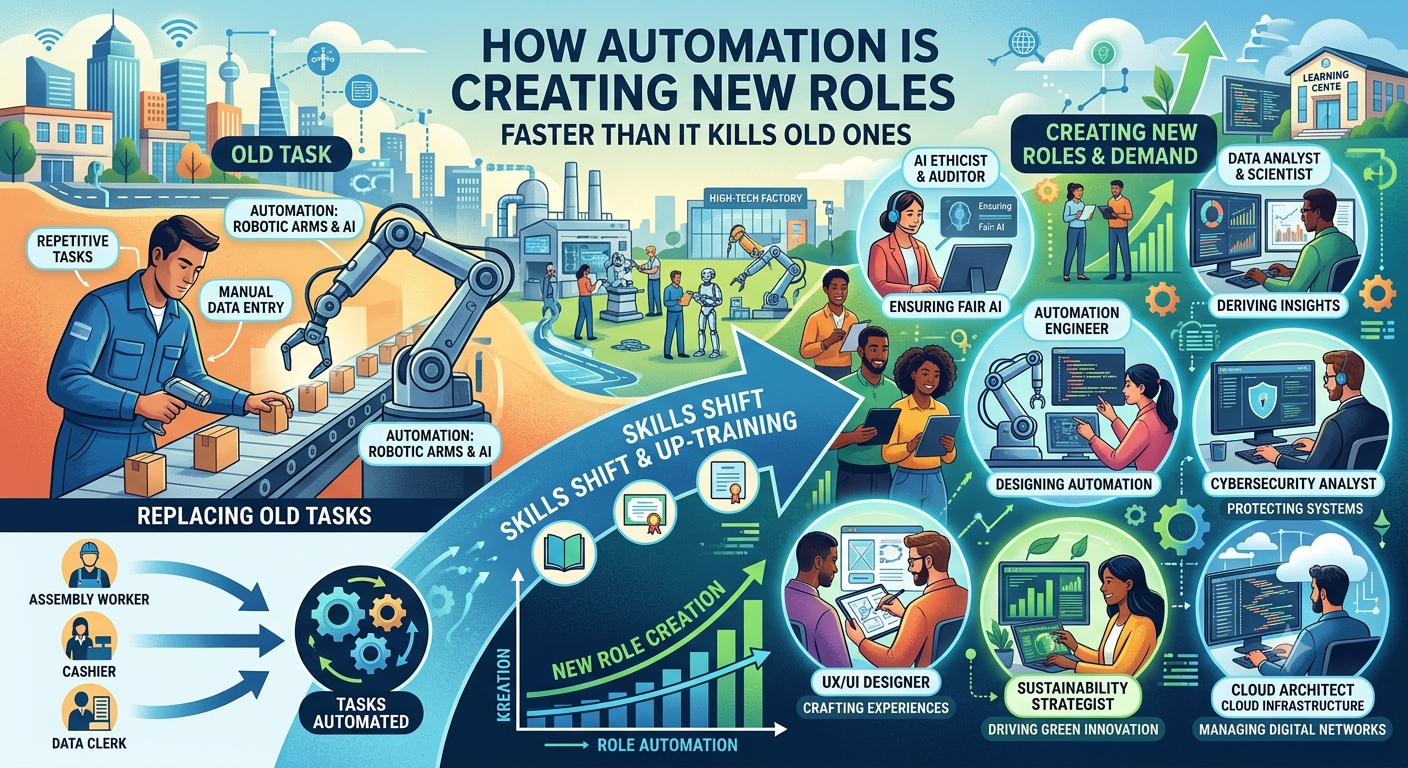
Artificial intelligence and automation threaten numerous middle-skill and routine-based professions, but replacing them requires substantial compensation in the form of human interaction, creativity, strategic thinking, and other soft skills. In any occupation, new skills need to be developed while the existing ones become outdated. UBI, which eliminates the need for people to obtain life-long or high-salary jobs, provides the necessary impetus to pursue a continuous upskilling process required to stay employable.
A key take-home message from the essay is a growing need for individuals to be more open-minded regarding their career paths and pursue opportunities rather than following the long-standing notions established in the mid-20 th century when technology had become the driving force behind economic growth. A university graduate with a four-year degree may enter the workforce, start a business, engage in an online profession, and then join a new organization but this time pick a field that is more aligned with their interests. After several decades, a person can build a sustainable skill set to become a self-employed individual, starting their own business while still having a full-time or part-time job.
It bears noting that UBI will not eliminate the need for people to obtain skills the employers want. Even when UBI starts providing monthly payments, individuals will compete for the careers of the future, which implies that skill-building, networking, and career development remain important long-term goals.
5. More Focus on Skills and Personal Development
Income is only one criterion that determines an individual’s approach towards selecting the next step in their career. From a historical perspective, skill-building outside the realm of a full-time job is a luxury only the most privileged individuals can afford. When time becomes a lesser constraint due to UBI and remote work possibilities, more people can explore educational and personal development opportunities. If an individual understands that pursuing a career is a long-range endeavor encompassing various occupations, they can learn data analysis or programming without focusing too much on how these skills can improve their chances of becoming employed right away. Such an attitude promotes the values of lifelong learning, a sustainable career, and personal growth in a given occupation rather than engaging in constant job hunting without investing too much time and energy into developing specialized expertise.
6. Financial Security Could Change Job Negotiations
UBI may enable employees to demand better work conditions since the financial stability provided by the program will reduce the risks of economic instability when quitting a poorly paying job or disagreeing with an employer about workplace conditions such as flexible hours, remote working arrangements, and others. Alternatively, companies may prioritize job satisfaction when hiring new employees when UBI shifts the focus on workplace culture, employee retention, and other elements that shape the future of work.
7. Career Thinking Is Becoming More Flexible
The essay details the debates regarding Universal Basic Income and focuses on how it reshapes the perception of the career concept as well as practical implications that people should consider. As it is increasingly clear that the age of stable high-paying jobs for life is coming to an end, it is a good time to rethink the traditional definitions. In the era of AI and automation, UBI is a catalyst in rethinking the future of work by encouraging people to pursue meaningful careers that can evolve throughout their lifetime rather being confined to one occupation, industry, or company.
Conclusion : Career Thinking
The idea of Universal Basic Income may be a hotly debated one, but its implications on society reach far beyond the realm of economics. The concept pushes people to question why they work, what they want to do with their lives, and even how they should think about money.
For the individual, that means re-evaluating the role of a job in their life, and considering the many factors that go into finding a fulfilling career.
As society moves towards a future in which robots may replace many traditional jobs, it is important for people to have options and find a career that is not reliant on the steady income of one specific source. Whether or not the idea of UBI takes off, the concept has already forced people to start thinking about a world in which work, money, and career are not necessarily linked.
As the future of work continues to evolve, career planning is no longer just about earning a higher salary. Explore new opportunities, develop valuable skills, and consider career paths that align with your goals and changing priorities. Use Best Job Tool to discover relevant job opportunities and take the next step toward building a career that works for your future.



Leave a Reply