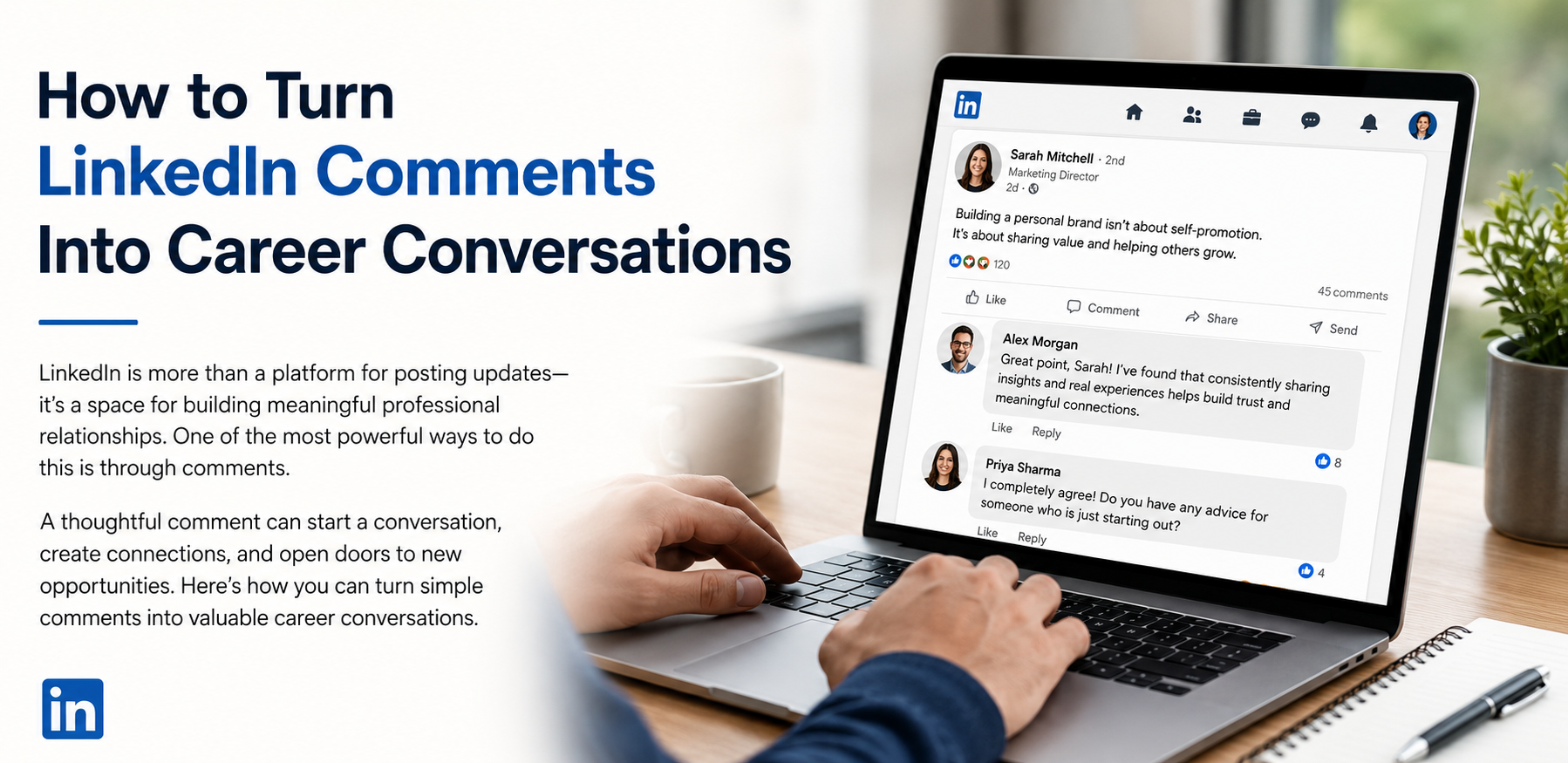
Introduction: LinkedIn Comments Into Career Conversations
LinkedIn is one of the most powerful platforms for professional networking. Many people focus on creating posts, sharing articles, and updating their profiles. While these activities are important, there is another simple but highly effective way to build professional relationships: commenting on LinkedIn posts.
Most users leave short comments such as “Great post,” “Thanks for sharing,” or “I agree.” These comments may show engagement, but they rarely start meaningful conversations. If you learn how to leave thoughtful comments and continue the discussion, LinkedIn comments can become the beginning of valuable career conversations.
Whether you are looking for a new job, trying to build your professional network, seeking mentors, or establishing yourself as an expert in your field, strategic commenting can help you achieve your goals.
In this article, you will learn how to turn LinkedIn comments into career conversations and create meaningful professional connections.
How to Turn LinkedIn Comments Into Career Conversations?
1. Understand the Goal of Professional Commenting
Before writing comments, it is important to understand your goal.
The purpose is not simply to increase likes or gain visibility. The real goal is to create meaningful professional interactions.
Think about questions such as:
- What kind of professionals do you want to connect with?
- Which industries interest you?
- What skills do you want to be known for?
- What type of career opportunities are you seeking?
Having clear goals helps you participate in discussions that support your professional growth.
For example, if you want a career in content writing, commenting on posts related to content marketing, blogging, SEO, and freelancing will be more beneficial than engaging with unrelated topics.
2. Choose the Right Posts to Comment On
Not every post deserves your attention.
The quality of the conversation often depends on the quality of the post.
Focus on posts from:
- Industry leaders
- Recruiters
- Hiring managers
- Company executives
- Professionals in your field
- Thought leaders
- Experienced freelancers
These individuals often attract audiences that match your career interests.
When you engage with their content, your comments become visible to professionals who may share similar goals and interests.
Choose posts that encourage discussion rather than posts that only announce achievements or company updates.
Discussion-focused posts provide more opportunities to contribute meaningful insights.
3. Read the Entire Post Before Commenting
One common mistake is commenting after reading only the headline.
Before writing anything:
- Read the full post carefully.
- Understand the main message.
- Review the comments section.
- Identify areas where you can add value.
Reading the complete post helps you avoid repeating points already mentioned by others.
It also allows you to contribute fresh perspectives that make your comment stand out.
Thoughtful comments are more likely to receive replies and start conversations.
4. Move Beyond Generic Comments
Generic comments rarely create meaningful engagement.
Examples include:
- Great post.
- Nice information.
- Thanks for sharing.
- Well said.
While these comments are polite, they do not encourage discussion.
Instead, try adding value by sharing:
- Personal experiences
- Insights
- Observations
- Questions
- Examples
For instance:
Instead of:
“Great post.”
Try:
“I found your point about networking particularly interesting. In my experience, consistent engagement on LinkedIn has helped me connect with professionals outside my immediate industry. Have you noticed similar results among early-career professionals?”
The second comment invites further discussion and demonstrates thoughtful engagement.
5. Share Relevant Personal Experiences
People connect with stories.
Sharing your own experiences makes your comments more authentic and memorable.
For example:
“If you are looking for your first freelance client, building a portfolio is essential. When I started creating writing samples, I noticed that potential clients responded more positively because they could see examples of my work.”
Personal experiences help others learn from your journey and often encourage them to respond with their own experiences.
This creates a natural conversation.
6. Ask Meaningful Questions
Questions are one of the best ways to start career conversations.
A thoughtful question shows curiosity and encourages others to participate.
Examples include:
- What strategies have worked best in your experience?
- How would you recommend beginners approach this challenge?
- Have you seen this trend change over the past few years?
- What skills do you think will become most valuable in this field?
Questions keep discussions active and give people a reason to reply.
When someone answers your question, a professional conversation begins naturally.
Conclusion: LinkedIn Comments Into Career Conversations
LinkedIn comments are much more than simple reactions to posts. When used strategically, they can become powerful tools for building relationships, demonstrating expertise, and creating career opportunities. Instead of leaving generic comments, focus on adding value through insights, experiences, thoughtful questions, and meaningful discussions.
By consistently engaging with the right people and continuing conversations when others respond, you can transform ordinary LinkedIn comments into valuable career conversations. Over time, these interactions can help you expand your network, strengthen your professional reputation, and open doors to opportunities that may not be available through traditional job searching alone.




Leave a Reply