Introduction: Write a Resume
Many job seekers face a common problem when applying for jobs. They find an interesting position that matches their interests, but they have never worked in that exact role before. As a result, they become nervous and think they are not qualified enough to apply.
The truth is that many employers hire people who do not have direct experience in a specific role. Companies often value transferable skills, willingness to learn, problem-solving ability, and relevant achievements. A well-written resume can help you show these qualities and convince employers that you can succeed in a new position.
Whether you are changing careers, entering the workforce for the first time, moving into a higher position, or switching industries, you can create a strong resume even without direct experience.
This article will explain how to write a resume for a role you have never done before.
How to Write a Resume for a Role You Have Never Done Before?
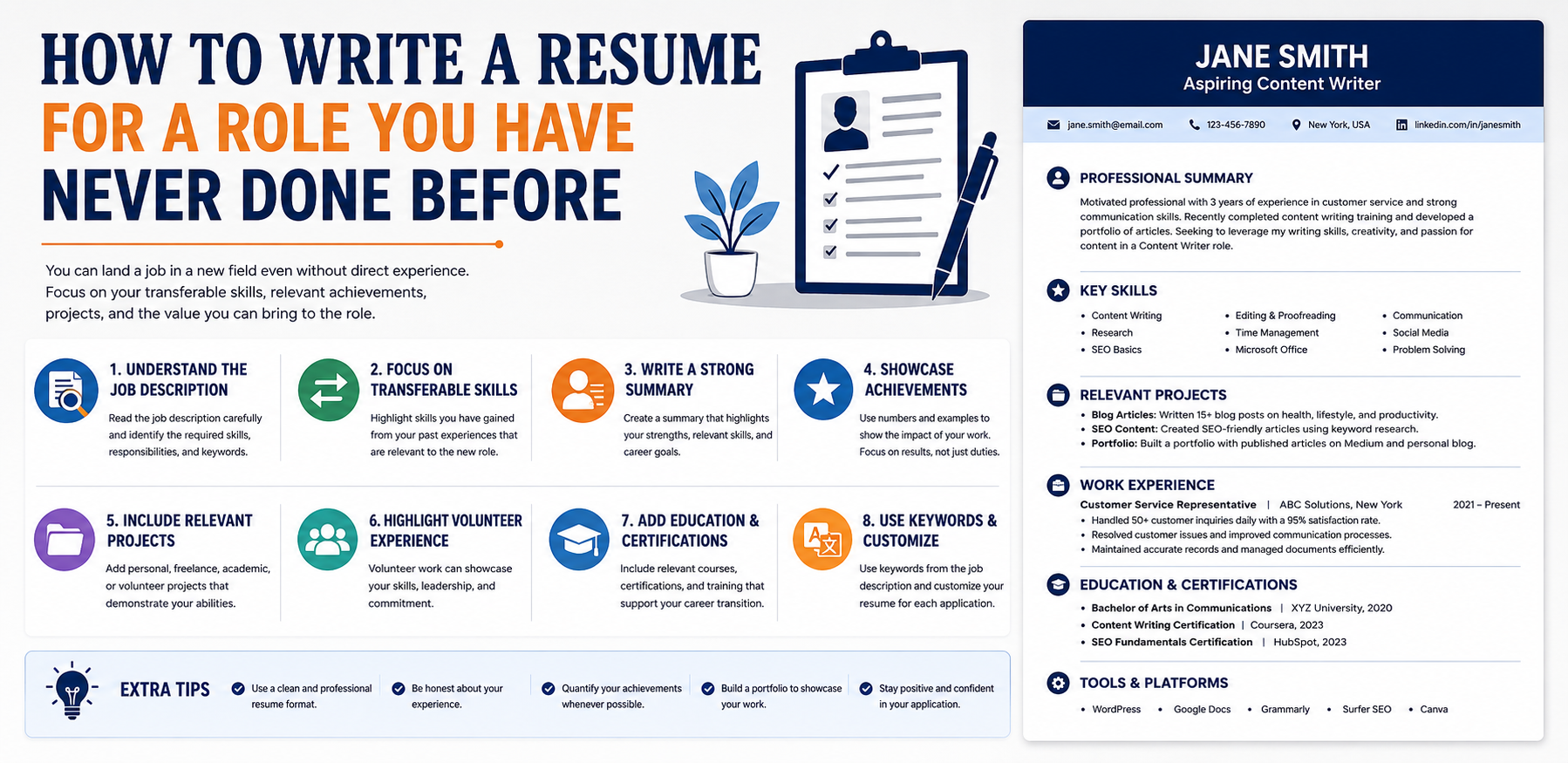
1. Understand the Job Description Carefully
The first step is to study the job description.
Many applicants make the mistake of focusing on job titles instead of responsibilities. Two jobs may have different titles but require similar skills.
Read the job description carefully and identify:
- Required skills
- Preferred skills
- Daily responsibilities
- Software knowledge
- Communication requirements
- Leadership expectations
- Industry knowledge
For example, if you are applying for a content writing role but have worked as a customer service representative, you may already possess skills such as:
- Communication
- Research
- Problem-solving
- Attention to detail
- Time management
These skills can be valuable in content writing even if you have never worked as a professional writer before.
Understanding the employer’s needs helps you customize your resume effectively.
2. Focus on Transferable Skills
Transferable skills are abilities that can be used across different jobs and industries.
These skills become extremely important when you lack direct experience.
Common transferable skills include:
- Communication
- Leadership
- Teamwork
- Problem-solving
- Project management
- Research
- Customer service
- Critical thinking
- Organization
- Time management
For example, a teacher moving into corporate training can highlight:
- Presentation skills
- Public speaking
- Training experience
- Curriculum planning
- Performance evaluation
Even though the job titles are different, the skills remain relevant.
Your resume should clearly demonstrate how your existing skills can help you perform successfully in the new role.
3. Write a Strong Professional Summary
A professional summary appears at the top of your resume and provides a quick overview of your strengths.
This section becomes especially important when applying for a role you have never done before.
Instead of focusing on missing experience, focus on relevant skills and achievements.
Example
Professional Summary
Motivated professional with three years of customer service experience and strong communication, problem-solving, and relationship-building skills. Experienced in handling customer inquiries, managing documentation, and working in fast-paced environments. Currently seeking to transition into a Human Resources role where these skills can contribute to employee engagement and organizational success.
This approach highlights strengths rather than limitations.
4. Highlight Relevant Skills Near the Top
Many recruiters spend only a few seconds reviewing a resume.
If your most relevant skills are hidden at the bottom, they may never be noticed.
Create a dedicated skills section near the top of your resume.
Example
Key Skills
- Content Writing
- Research
- Editing and Proofreading
- Time Management
- SEO Basics
- Communication
- Microsoft Office
- Social Media Content Creation
This allows recruiters to quickly see that you possess abilities related to the position.
5. Emphasize Achievements Instead of Duties
Many people simply list job responsibilities.
For example:
- Answered customer calls
- Handled complaints
- Managed records
These statements do not show impact.
Instead, focus on achievements.
Better Examples
- Resolved customer issues with a high satisfaction rate.
- Managed records for over 500 clients accurately.
- Reduced response time by improving communication processes.
Achievements demonstrate value and make your experience more attractive.
6. Include Relevant Projects
Projects can help fill the gap when you lack direct work experience.
Projects show practical knowledge and initiative.
Examples include:
- Personal projects
- Freelance work
- Volunteer work
- Academic projects
- Portfolio projects
- Online course assignments
For example, if you want to become a content writer, you can include:
Content Writing Projects
- Published articles on Medium.
- Created blog posts focused on health and lifestyle topics.
- Researched and wrote SEO-friendly content.
- Developed writing portfolio with multiple published articles.
Projects prove that you have already started developing skills for the role.
Conclusion: Write a Resume
Applying for a role you have never done before can feel intimidating, but many successful professionals have changed careers and entered new industries without direct experience. The key is to focus on your transferable skills, achievements, projects, certifications, and willingness to learn.
A strong resume does not simply list previous jobs. It tells a story about how your past experiences have prepared you for future success. By carefully studying the job description, highlighting relevant strengths, and customizing your resume for each application, you can demonstrate your potential and make employers confident in your ability to succeed.




Leave a Reply