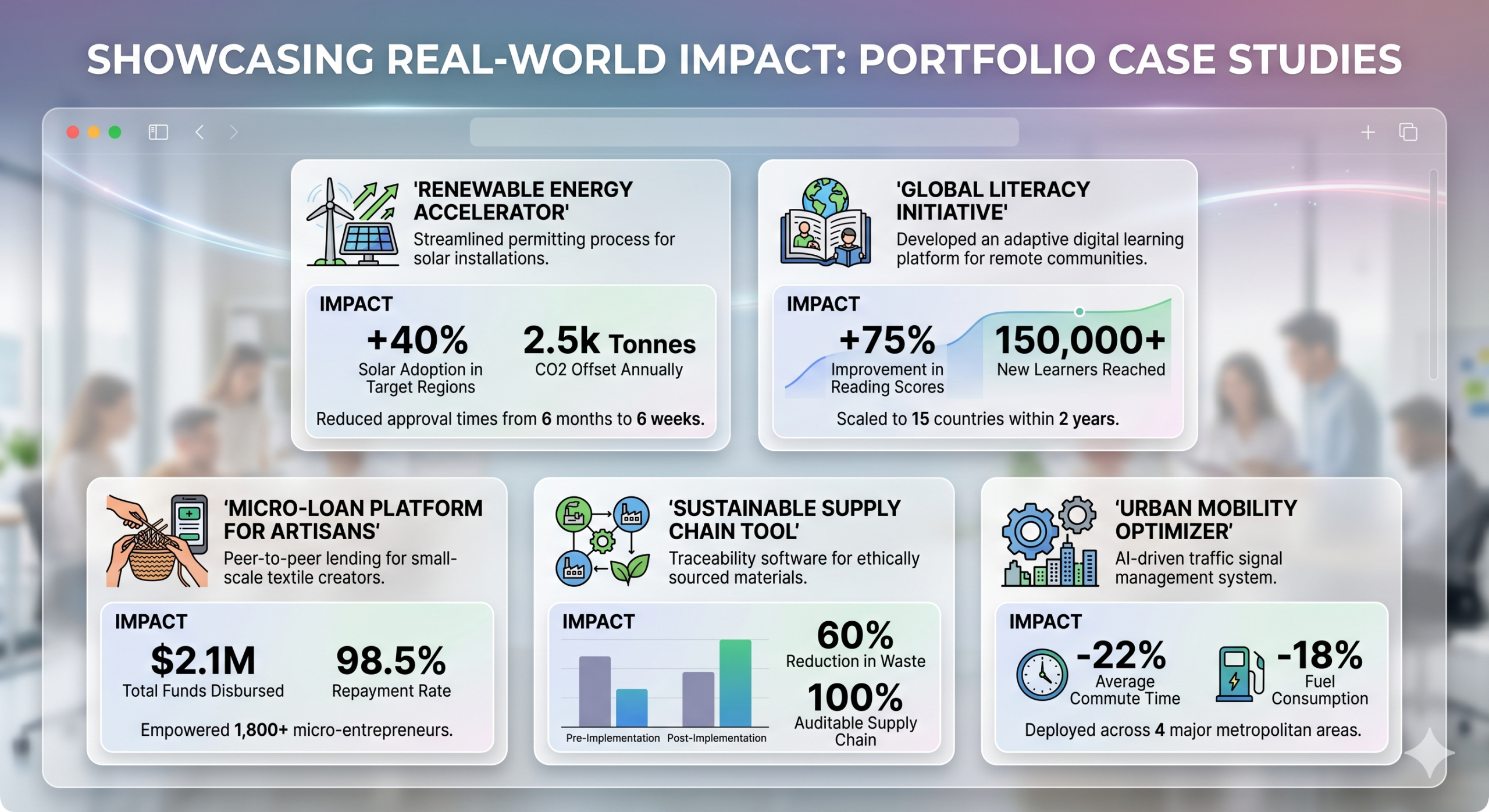
Introduction
A project portfolio can be one of the most powerful tools in your professional toolkit. Whether you are a student, job seeker, freelancer, or experienced professional, a portfolio provides evidence of your skills and accomplishments beyond what a resume can communicate. However, many portfolios focus too heavily on tasks and activities rather than Real-World results.
Recruiters and hiring managers are not just interested in what you worked on. They want to understand the impact of your work. Did your project solve a problem? Did it improve efficiency, increase engagement, save time, or generate value? Demonstrating real-world outcomes helps employers visualize how you might contribute to their organization.
As skills-based hiring becomes more common and remote work opportunities continue to expand, portfolios are increasingly important. A well-structured portfolio that highlights measurable impact can help candidates stand out in competitive hiring processes.
This guide explains how to present your projects in a way that clearly demonstrates value, effectiveness, and professional capability.
Why Impact Matters More Than Activities
Many candidates describe projects by listing responsibilities.
Examples include:
- Managed social media accounts
- Assisted with research
- Developed presentations
- Coordinated team meetings
While these activities show involvement, they do not explain outcomes.
Recruiters want to know:
- What problem was solved?
- What improvements occurred?
- What results were achieved?
- What value was created?
A project portfolio becomes significantly more persuasive when it focuses on achievements rather than tasks.
Impact demonstrates effectiveness, while activities only demonstrate participation.
Start With the Problem
Every strong project story begins with a challenge.
Before describing your actions, explain the situation.
For example:
Weak Example
Created a customer feedback survey.
Strong Example
Customer satisfaction data was inconsistent, making it difficult to identify service issues.
The second example immediately provides context.
By explaining the problem first, you help recruiters understand the importance of the project and the value of the solution.
Use the Situation–Action–Result Framework
One of the most effective portfolio structures is the Situation–Action–Result method.
Situation
Describe the challenge, objective, or opportunity.
Action
Explain what you did and how you approached the project.
Result
Highlight measurable outcomes.
Example:
Situation: A student organization experienced declining event attendance.
Action: Developed a digital promotion strategy and redesigned event communications.
Result: Attendance increased by 45% over three months.
This structure helps readers quickly understand your contribution and impact.
Quantify Results Whenever Possible
Numbers strengthen credibility.
Whenever available, include measurable outcomes such as:
- Revenue increases
- Cost reductions
- Time savings
- Productivity improvements
- User growth
- Engagement increases
- Process efficiencies
Examples:
Instead of:
Improved website performance.
Write:
Reduced page load times by 30%, improving user experience.
Instead of:
Managed social media campaigns.
Write:
Increased social media engagement by 40% within six months.
Quantifiable results make achievements easier to evaluate.Real-World
Highlight Business or Organizational Value
Recruiters often think in terms of value creation.
When presenting projects, explain how outcomes benefited stakeholders.
Potential impacts include:
Financial Impact
- Increased revenue
- Reduced expenses
- Improved profitability
Operational Impact
- Faster processes
- Better productivity
- Reduced errors
Customer Impact
- Improved satisfaction
- Increased retention
- Better user experience
Team Impact
- Improved collaboration
- Better communication
- Increased efficiency
Connecting your work to broader Real-World organizational goals demonstrates strategic thinking.
Showcase Decision-Making and Problem-Solving
Employers want people who can think critically and solve challenges.
Include details about:
- Obstacles encountered
- Decisions made
- Alternative solutions considered
- Lessons learned
For example:
“After identifying low engagement rates, I analyzed audience behavior and adjusted content scheduling based on user activity patterns.”
This demonstrates analytical thinking rather than simple execution.
Problem-solving examples often make portfolios more memorable.
Include Remote Work and Digital Collaboration Examples
Many employers now operate in hybrid or remote environments.
Projects involving virtual collaboration can demonstrate valuable workplace skills.
Examples include:
- Managing distributed teams
- Coordinating virtual projects
- Leading remote initiatives
- Using digital collaboration tools
- Delivering results across time zones
These examples help employers assess your ability to work effectively in modern workplaces.
Remote work experience can be particularly valuable for global opportunities.
Demonstrate Transferable Skills
Not every project needs to be directly related to your target role.
Many projects demonstrate transferable skills such as:
Leadership
Managing teams and initiatives.
Communication
Presenting ideas and Real-World coordinating stakeholders.
Organization
Planning and executing projects.
Analysis
Evaluating information and identifying solutions.
Adaptability
Responding to changing circumstances.
Clearly identifying transferable skills helps recruiters understand your broader professional value.
Use Visual Evidence When Appropriate
Visual elements can strengthen project presentations.
Consider including:
- Charts
- Dashboards
- Screenshots
- Process diagrams
- Before-and-after comparisons
Visual evidence helps communicate results quickly and effectively.
However, ensure visuals support the story rather than replace it.
The explanation behind the results remains essential.
Include Personal and Independent Projects
Many candidates underestimate the value of self-initiated work.
Examples include:
- Research projects
- Blogs
- Volunteer initiatives
- Freelance assignments
- Portfolio websites
- Productivity systems
Independent projects often demonstrate:
- Initiative
- Self-management
- Curiosity
- Continuous learning
These qualities are highly attractive to employers.
A project does not need to be paid work to demonstrate professional capability.
Create Mini Case Studies
Instead of listing projects briefly, develop short case studies.
Each project should answer:
What Was the Challenge?
Provide context.
What Did You Do?
Explain your approach.
What Was the Outcome?
Share measurable results.
What Did You Learn?
Highlight growth and development.
Case studies provide depth and make portfolios more engaging.
They also prepare you for interview discussions.
Update Projects as New Results Emerge
Impact is not always immediate.
Projects may continue generating value after completion.
Consider revisiting projects to Real-World document:
- Long-term outcomes
- Additional metrics
- Expanded responsibilities
- New lessons learned
Regular updates ensure your portfolio remains relevant and accurate.
An evolving portfolio reflects ongoing professional growth.
Align Projects With Career Goals
Recruiters typically review portfolios with specific hiring needs in mind.
Select projects that support your target role.
For example:
Marketing Roles
Highlight campaign performance and audience growth.
Project Management Roles
Showcase planning, coordination, and delivery outcomes.
Data Roles
Present analysis, dashboards, and insights.
Human Resources Roles
Demonstrate employee engagement or recruitment improvements.
Alignment increases relevance and improves recruiter engagement.
Use Career Insights to Identify Valuable Projects
Understanding what employers value can help you choose the strongest projects to showcase.
Global career platforms such as BEST JOB TOOL provide insights into in-demand skills, emerging roles, and employer expectations across industries.
BEST JOB TOOL also helps professionals identify remote work opportunities and workforce trends, making it easier to align portfolio projects with current market needs.
By understanding industry demand, candidates can emphasize projects that resonate most strongly with recruiters and hiring managers.
Conclusion
A strong project portfolio does more than display completed work—it demonstrates real-world impact. Recruiters and employers want evidence that you can solve problems, create value, collaborate effectively, and achieve meaningful results.
By focusing on challenges, actions, measurable outcomes, and lessons learned, professionals can transform ordinary project descriptions into compelling case studies. Quantifying results, highlighting decision-making, and connecting work to organizational goals significantly increase the effectiveness of a portfolio.
As hiring increasingly prioritizes demonstrated skills and practical experience, portfolios that emphasize impact become powerful career assets. Combined with insights from platforms like BEST JOB TOOL, a well-crafted portfolio can help professionals stand out, communicate their value clearly, and unlock new career opportunities.


Leave a Reply