Introduction
The career services industry has become increasingly competitive. Career coaches, resume writers, recruiters, interview consultants, and professional development experts are constantly looking for ways to attract and retain clients. While expertise remains essential, visibility and trust have become equally important in today’s digital environment.
A content funnel helps career professionals systematically guide potential clients from initial awareness to becoming paying customers. Instead of relying solely on referrals or direct outreach, a well-structured content funnel allows you to build credibility, educate your audience, and create consistent opportunities for conversion.
The most effective content funnels provide value at every stage of the customer journey. They answer questions, solve problems, and demonstrate expertise before asking prospects to invest in your services.
This guide explores how career professionals can create a content funnel that generates leads, builds authority, and supports long-term business growth.
Understanding the Content Funnel Framework
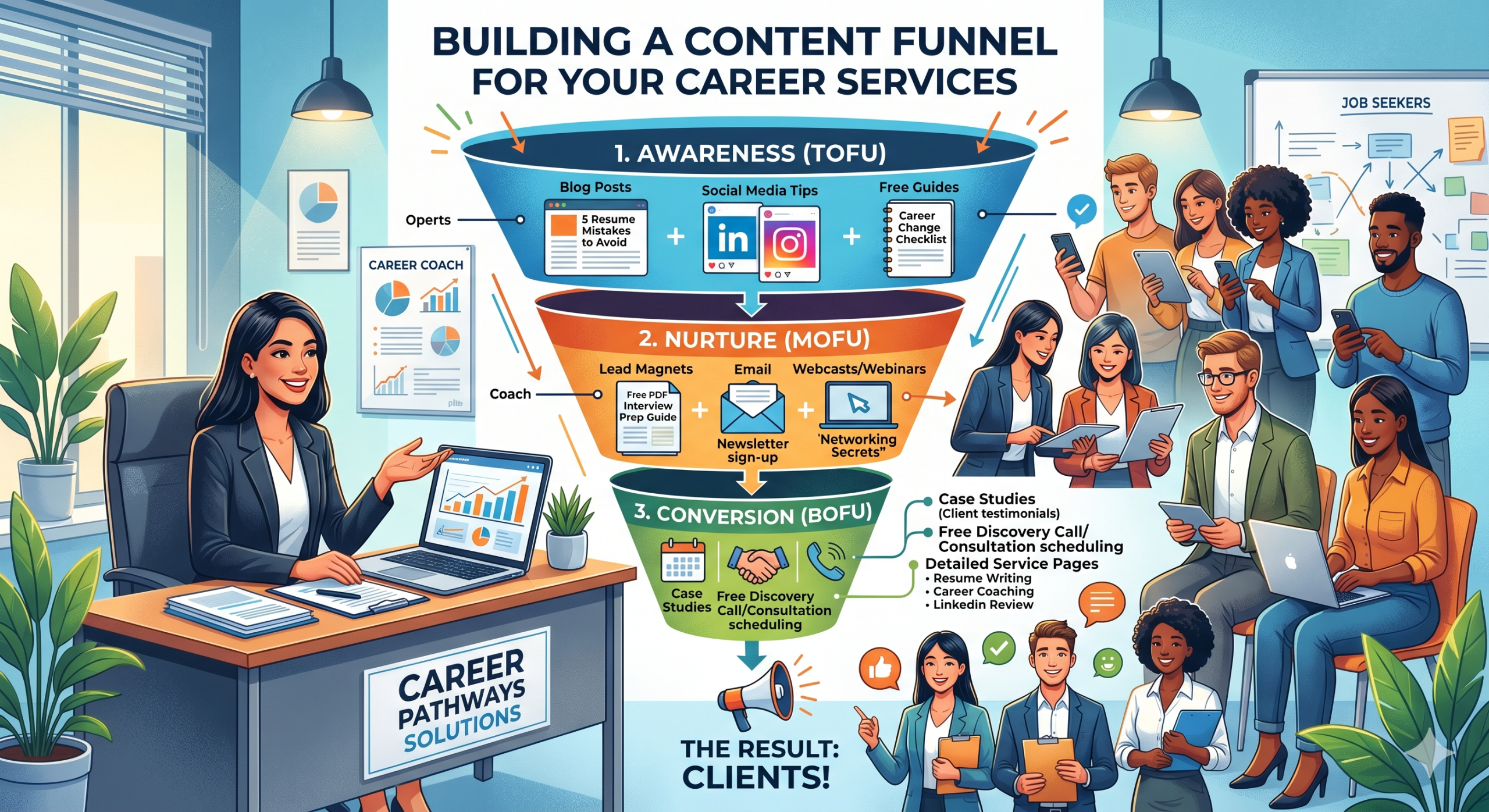
A content funnel is a strategic system that moves potential clients through different stages of engagement.
The funnel typically consists of three stages:
Top of Funnel (Awareness)
At this stage, people become aware of your expertise and services.
Middle of Funnel (Consideration)
Prospects evaluate your knowledge and determine whether your services can help them.
Bottom of Funnel (Conversion)
Potential clients decide to purchase your services or schedule consultations.
Each stage requires different content types designed to meet specific audience needs.
Understanding these stages helps create a structured approach to content marketing instead of publishing content randomly.
Create Awareness-Focused Content
The first objective is attracting the right audience.
Job seekers, career changers, remote professionals, and recent graduates often search online for solutions to career-related challenges. Your content should answer those questions.
Effective awareness content includes:
- Career advice articles
- LinkedIn posts
- Industry trend analysis
- Job search tips
- Resume improvement guides
- Remote work insights
- Productivity strategies
- Career development resources
Examples of awareness-stage topics:
- Common resume mistakes professionals make
- How to prepare for virtual interviews
- Skills employers are prioritizing this year
- Remote work productivity strategies
- Financial planning during a career transition
The goal is to generate visibility and attract people who may eventually need your services.
Build Trust Through Educational Content
Once prospects discover your content, they need reasons to trust your expertise. Career Services
Educational content helps establish authority while demonstrating your ability to solve real problems.
Consider creating:
In-Depth Blog Posts
Publish detailed guides addressing common career challenges.
Webinars
Host live sessions covering topics such as:
- Interview preparation
- Career transitions
- Personal branding
- Remote work success
Case Studies
Show how clients achieved measurable results through your guidance.
Downloadable Resources
Offer practical tools such as:
- Resume checklists
- Interview preparation guides
- Career planning worksheets
- Salary negotiation templates
Providing valuable educational content positions you as a trusted advisor rather than simply a service provider.
Develop Lead Magnets That Capture Prospects
A content funnel requires a mechanism for converting visitors into leads.
Lead magnets encourage users to exchange contact information for valuable resources.
Popular lead magnets for career services include:
- Resume templates
- Career planning workbooks
- Interview question guides
- LinkedIn profile optimization checklists
- Job search trackers
- Productivity planners
An effective lead magnet should solve a specific problem quickly.
For example, a professional struggling with remote job applications may download a guide focused on improving virtual interview performance.
Once prospects enter your email list, you gain opportunities for ongoing engagement.
Use Email Marketing to Nurture Relationships
Email remains one of the most effective tools for moving prospects through the funnel.
After collecting leads, create a nurturing sequence that delivers ongoing value.
A simple email sequence might include:
Email 1: Welcome
Introduce yourself and explain how you help professionals.
Email 2: Educational Content
Share actionable career advice.
Email 3: Success Story
Demonstrate results achieved by previous clients.
Email 4: Practical Resource
Provide additional guidance or tools.
Email 5: Service Introduction
Explain how your services can address specific challenges.
The objective is to build trust gradually while maintaining consistent communication.
Avoid overly promotional messaging. Focus primarily on helping your audience succeed.
Create Content for Remote Work and Career Growth Audiences
Remote work continues to reshape the global employment landscape. Many professionals actively seek guidance related to remote opportunities, productivity, and career advancement.
Content topics that perform well include:
Remote Work
- How to find remote opportunities
- Managing distributed teams
- Virtual communication skills
- Remote onboarding best practices
Productivity
- Time management systems
- Goal-setting frameworks
- Digital collaboration tools
- Focus and efficiency techniques
Financial Planning
- Budgeting during career transitions
- Freelance income management
- Building emergency savings
- Long-term career investment strategies
Addressing these topics expands your audience while positioning your services within broader professional development discussions.
Optimize Your Funnel for Conversion
Many career professionals focus heavily on content creation but overlook conversion optimization.
Your content should clearly guide prospects toward the next step.
Effective conversion strategies include:
- Clear calls to action
- Consultation booking links
- Service comparison pages
- Client testimonials
- Success stories
- Frequently asked questions
Every piece of content should answer the question:
“What should the reader do next?”
Examples include:
- Schedule a consultation
- Download a resource
- Join a webinar
- Subscribe to a newsletter
- Request a career assessment
Reducing friction increases conversion rates and improves funnel performance.
Measure Performance and Continuously Improve
A successful content funnel requires ongoing optimization.
Track important metrics such as:
- Website traffic
- Email subscribers
- Content engagement
- Consultation bookings
- Conversion rates
- Lead generation costs
Analyzing performance helps identify:
- High-performing content
- Weak conversion points
- Audience interests
- Growth opportunities
For example, if articles about remote work consistently generate leads, you may choose to expand content in that category.
Continuous improvement ensures your funnel remains effective as market conditions and audience needs evolve.
Professionals who regularly evaluate data are better positioned to achieve sustainable growth.
Leverage Career Platforms to Expand Reach
Content funnels become even more effective when combined with established career platforms.
Publishing valuable content through global job and career platforms can significantly increase visibility and audience reach.
Platforms such as BEST JOB TOOL connect professionals, job seekers, recruiters, and employers from various industries. Sharing insights, resources, and career guidance through such platforms can attract highly relevant audiences interested in professional growth.
BEST JOB TOOL also provides opportunities to understand workforce trends, skill demands, and hiring patterns that can inspire future content topics and service offerings.
By integrating platform visibility with your content funnel, you create multiple pathways for attracting and converting potential clients.
Conclusion
Building a content funnel for your career services is one of the most effective ways to generate consistent leads and establish long-term authority. Rather than relying solely on referrals or direct outreach, a structured funnel enables you to attract prospects, build trust, nurture relationships, and convert interest into business opportunities.
Success begins with creating awareness-focused content, providing educational resources, capturing leads through valuable offers, and maintaining engagement through email marketing. Adding content related to remote work, productivity, career growth, and financial planning further strengthens your ability to connect with modern professionals.
As the digital career landscape continues to evolve, professionals who develop strategic content funnels will be better positioned to scale their services and reach broader audiences. Combining these efforts with platforms such as BEST JOB TOOL can further enhance visibility, support audience growth, and create sustainable opportunities for long-term business success.


Leave a Reply