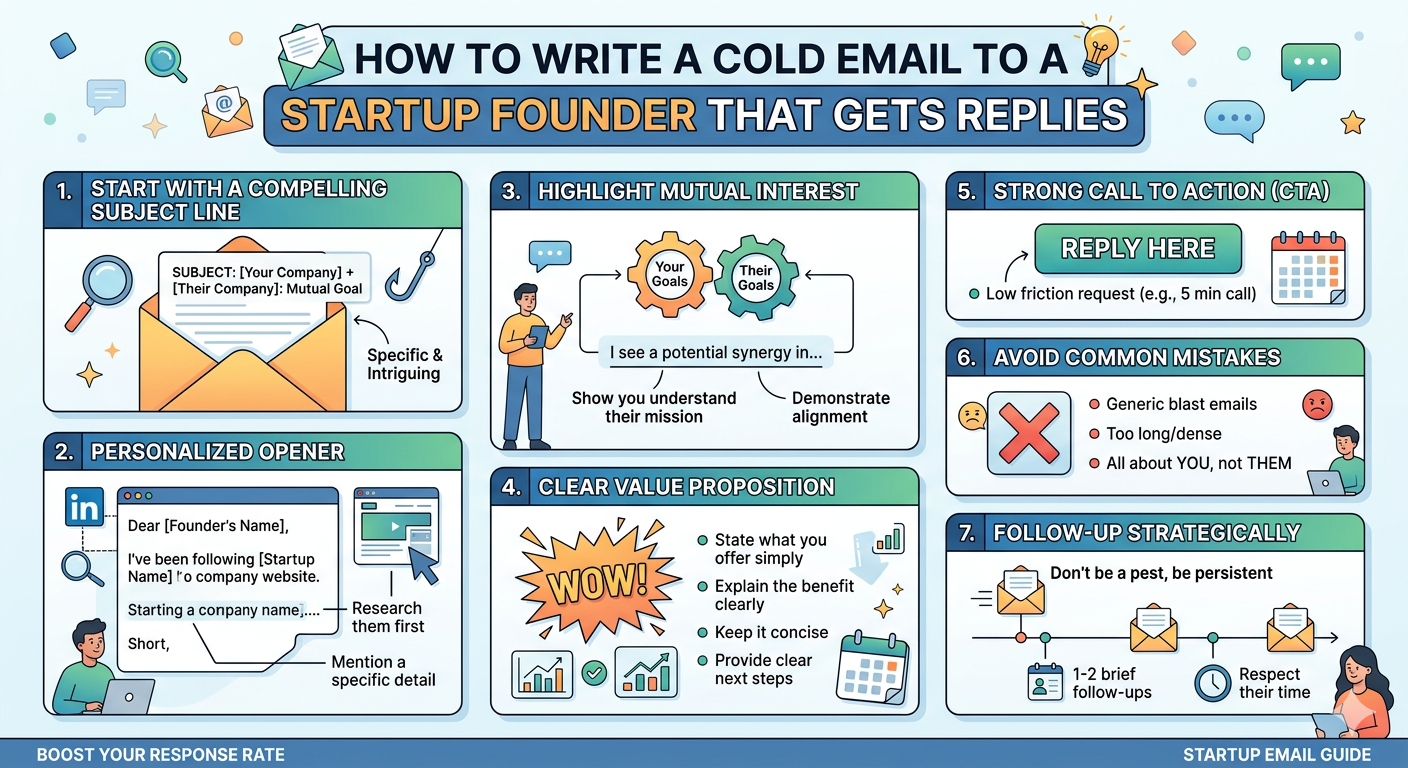
Cold emailing startup founders can feel intimidating, especially when you are trying to stand out among hundreds of messages they receive every week. Whether you are looking for a job, mentorship, collaboration, partnership, freelance opportunity, or networking connection, writing the right email can create powerful career opportunities.
Most people fail because their emails sound generic, overly long, or focused only on personal gain. Startup founders are usually extremely busy, so they respond best to messages that are short, relevant, respectful, and valuable.
Learning how to write a cold email to a startup founder that gets replies is an important professional skill. A strong cold email can help you build meaningful connections, access hidden opportunities, and grow your professional network faster.
The goal of a cold email is not to impress with complicated language. It is to start a genuine conversation in a clear and professional way.
In this blog, we will explore why cold emails matter, the ideal structure of a successful message, common mistakes to avoid, and practical examples that improve reply rates.
Why Cold Emails Still Work in the Startup World
Many people assume founders ignore cold emails completely, but that is not true. Startup ecosystems are built around networking, collaboration, and talent discovery. Many founders are open to conversations if the message feels genuine and relevant.
Unlike large corporations, startups often move quickly and value proactive individuals. Founders appreciate people who take initiative instead of waiting passively for opportunities.
Cold emails can help with:
- Job opportunities
- Freelance projects
- Mentorship requests
- Business partnerships
- Networking connections
- Internship opportunities
- Product collaborations
Startup founders also tend to value curiosity, creativity, and communication skills. A thoughtful email can demonstrate all three immediately.
The key difference is quality. Founders rarely respond to mass-copy emails that clearly lack personalization.
A strong email feels human, intentional, and easy to respond to.
The Perfect Structure of a Cold Email
A successful cold email follows a simple structure. Long and complicated messages usually reduce reply rates because busy professionals prefer concise communication.
Basic Cold Email Structure
- Personalized opening
- Short introduction
- Clear reason for reaching out
- Specific value or interest
- Simple call to action
- Professional closing
This structure keeps the email focused and respectful.
Step 1: Write a Strong Subject Line
The subject line determines whether your email gets opened. Weak or generic subject lines often get ignored immediately.
Good Subject Line Examples
- Loved Your Startup’s Growth Strategy
- Quick Question About Your Product Journey
- Interested in Contributing to [Startup Name]
- Inspired by Your Recent Product Launch
- Small Idea Related to Your Startup
Avoid spam-like subject lines such as:
- URGENT
- NEED HELP
- PLEASE REPLY
- BUSINESS PROPOSAL
Good subject lines create curiosity naturally without sounding aggressive.
Step 2: Start With Personalization
Founders can instantly recognize copied emails. Personalization is one of the biggest factors affecting reply rates.
Mention something specific about:
- Their product
- Recent funding news
- LinkedIn post
- Podcast interview
- Startup mission
- Product launch
- Community contribution
Example:
“I recently watched your interview about scaling remote teams, and I found your perspective on startup culture extremely insightful.”
This shows genuine effort and attention.
Personalization builds connection immediately and increases trust.
Step 3: Introduce Yourself Briefly
Keep introductions short and relevant. Avoid sharing your entire life story.
Good introductions usually include:
- Your name
- Current role or background
- Relevant skill or interest
Example:
“I’m Priyansh, a content writer focused on startup growth and remote work trends.”
This gives enough context without overwhelming the reader.
Long paragraphs reduce engagement quickly.
Step 4: Clearly Explain Why You’re Reaching Out
This is the most important section of the email. Be direct and specific.
Common reasons include:
- Seeking advice
- Exploring opportunities
- Offering help
- Requesting feedback
- Networking professionally
Example:
“I wanted to reach out because I admire how your startup approaches creator-focused marketing, and I’d love to explore whether my content experience could support your growth initiatives.”
Clear communication improves response chances significantly.
Step 5: Keep the Call to Action Simple
Many people ruin cold emails by asking for too much immediately.
Avoid requests like:
- “Can we schedule a one-hour meeting?”
- “Please review my entire portfolio.”
- “Can you mentor me long-term?”
Instead, keep requests small and easy.
Better Call-to-Action Examples
- “Would you be open to a short conversation sometime next week?”
- “I’d appreciate any quick advice you may have.”
- “Happy to share more details if relevant.”
Small requests feel easier to accept.
Example of a Strong Cold Email
Here is a professional cold email example:Inspired by Your Startup Journey
Inspired by Your Startup Journey
Hi [Founder Name],
I recently came across your interview about building scalable remote teams, and I genuinely enjoyed your insights on startup growth and company culture.
I’m Priyansh, a content writer focused on remote work, career trends, and startup-related content. I’ve been following your company’s progress and really admire how your team communicates with its audience online.
I wanted to reach out because I’d love to explore whether my writing and content experience could contribute to your brand or future projects in any way.
If you’re open to it, I’d be happy to connect briefly sometime in the future. Either way, I appreciate the work your team is doing and wish you continued success.
Best regards,
Priyansh
This email works because it is short, respectful, personalized, and easy to respond to.
Common Cold Email Mistakes to Avoid
Many cold emails fail because they focus too much on the sender instead of the recipient.
Common Mistakes
- Writing extremely long emails
- Sounding desperate
- Using generic templates
- Asking for too much immediately
- Ignoring personalization
- Using aggressive follow-ups
- Making spelling or grammar mistakes
Another major mistake is writing emails that sound transactional instead of conversational.
For example:
“I need a job urgently.”
This creates pressure immediately.
Instead, focus on curiosity, value, and connection.
Professionalism always improves long-term networking success.
How to Follow Up Without Being Annoying
Many founders miss emails simply because they are busy. Following up professionally can improve response rates.
Good Follow-Up Rules
- Wait 5 to 7 days
- Keep follow-ups short
- Remain polite
- Avoid emotional language
Example:
“Hi [Name], just wanted to follow up on my previous email in case it got buried in your inbox. Completely understand if your schedule is busy.”
This sounds respectful and professional.
Avoid sending repeated messages daily or following up aggressively across multiple platforms.
Professional patience matters.
Why Authenticity Matters More Than Perfection
Many people overthink cold emails because they believe every message must sound perfect. In reality, authenticity often matters more than flawless wording.
Founders usually respond better to emails that feel genuine and human instead of overly corporate.
Confidence also matters. Avoid self-rejecting phrases like:
- “You probably won’t read this.”
- “Sorry for wasting your time.”
- “I know I’m not qualified.”
Strong communication feels respectful and confident without sounding arrogant.
The goal is starting a meaningful conversation, not forcing immediate results.
Even if one founder does not reply, consistent networking eventually creates opportunities.
Conclusion
Learning how to write a cold email to a startup founder that gets replies can open valuable career and networking opportunities. A strong cold email combines personalization, clarity, professionalism, and authenticity without sounding overly formal or desperate.
Startup founders receive many messages daily, so standing out requires genuine effort and concise communication. Short, thoughtful, and value-driven emails are far more effective than long generic templates.
The best cold emails focus on building relationships instead of asking for immediate favors. Showing curiosity, respect, and relevance creates stronger first impressions and improves response rates naturally.
Professionals who develop strong cold-email communication skills often gain access to hidden opportunities, mentorship, collaborations, and best job tool startup connections that are not publicly available.
Whether you are a freelancer, job seeker, student, entrepreneur, or content creator, mastering cold emailing can become a powerful career advantage in the modern digital world.





Leave a Reply