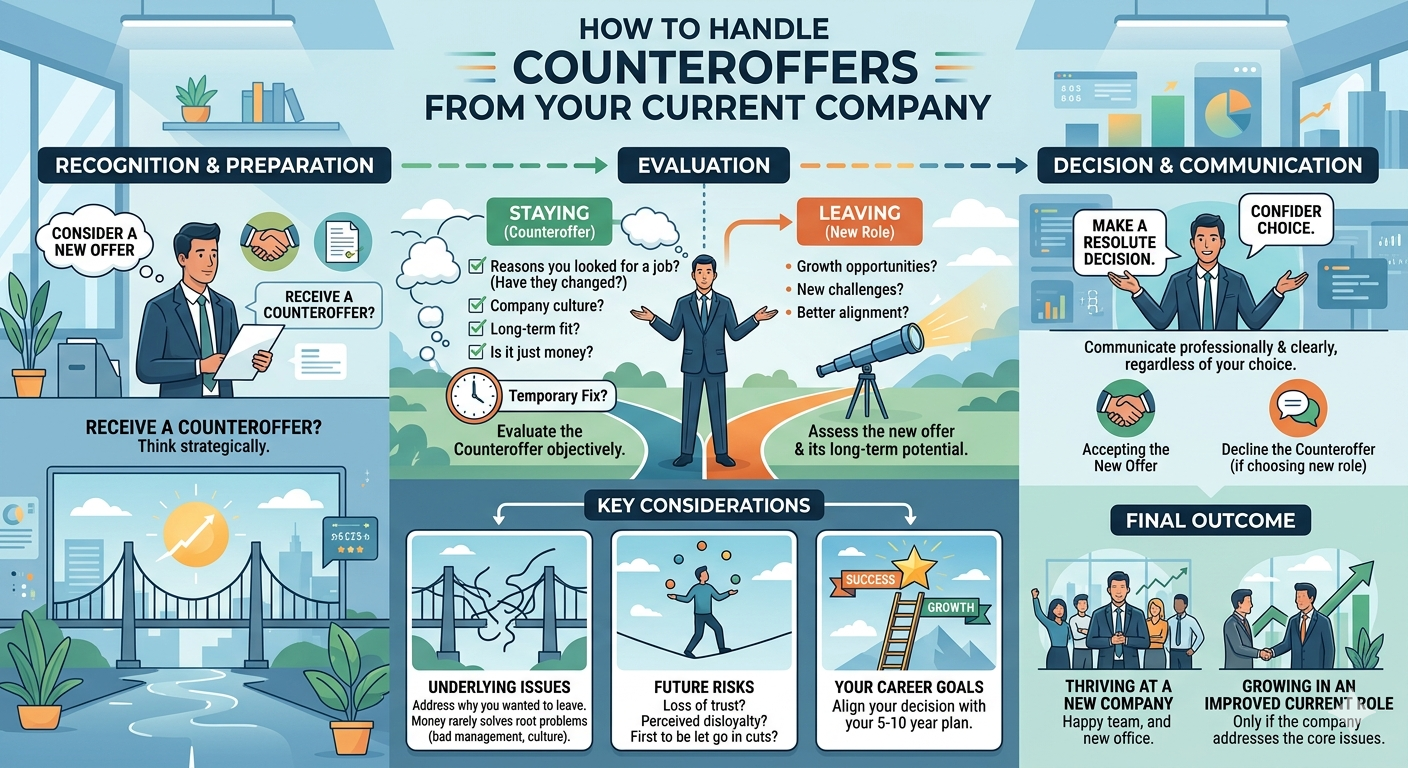
Receiving a new job offer can feel exciting and rewarding. After weeks of interviews, assessments, and negotiations, getting selected by another company often validates your skills and career value. However, the situation can become complicated when your current employer suddenly presents a counteroffer to convince you to stay. Many professionals feel confused during this stage. A Counteroffers higher salary, promotion, flexible work arrangements, or additional benefits may sound attractive. At the same time, accepting a counteroffer can create uncertainty about long-term career growth and workplace trust.
Learning how to handle counteroffers from your current company is important because emotional decisions can impact your future career path. Some employees accept counteroffers and remain satisfied, while others regret staying after a few months.
In this blog, we will explore why companies make counteroffers, the benefits and risks involved, important questions to ask yourself, and the best ways to make a smart professional decision.
Why Companies Give Counteroffers
When employees resign, companies often try to retain valuable talent. Hiring and training new employees can be expensive and time-consuming. Employers may also worry about project delays, team disruptions, or losing important knowledge.
Counteroffers are usually designed to solve immediate retention problems quickly. Companies may offer:
- Salary increases
- Promotions
- Flexible schedules
- Remote work options
- Better bonuses
- New responsibilities
- Improved work conditions
In many cases, employers only realize an employee’s value after they decide to leave. A resignation can create urgency within management, especially if the employee has strong performance records or specialized skills.
Sometimes managers genuinely want to keep talented employees because they appreciate their contributions. However, candidates should carefully evaluate whether the issues that caused dissatisfaction will truly change in the long term.
Understanding the company’s motivation helps employees make more logical decisions instead of emotional ones.
Questions You Should Ask Before Accepting a Counteroffer
Before making a final decision, professionals should evaluate why they originally wanted to leave. Salary is not always the main reason behind resignations.
Ask yourself these important questions:
- Was I unhappy with management?
- Did I lack career growth opportunities?
- Was work-life balance affecting me negatively?
- Did I feel undervalued for a long time?
- Were company culture issues causing stress?
- Am I leaving only because of salary?
- Will these problems actually improve?
Many employees accept counteroffers because of short-term financial benefits. However, if deeper workplace issues remain unchanged, dissatisfaction may return quickly.
Another important consideration is trust. Once an employee resigns, employers may question long-term loyalty. Even if the company convinces the employee to stay, future promotions or leadership opportunities could sometimes be affected.
Candidates should also compare long-term growth potential between both opportunities instead of focusing only on immediate salary increases.
Making a career decision based only on emotions can lead to regret later.
Advantages of Accepting a Counteroffer
Counteroffers are not always negative. In some situations, staying with the current company can be beneficial.
Possible Benefits of Accepting a Counteroffer
- Higher salary without changing jobs
- Retaining workplace familiarity
- Avoiding onboarding stress
- Keeping existing professional relationships
- Receiving improved benefits
- Gaining stronger negotiating confidence
- Access to better projects or leadership roles
Employees who genuinely enjoy their company culture but wanted better compensation may find counteroffers valuable.
Sometimes employers also respond positively by improving communication, addressing employee concerns, and creating better career development plans.
For professionals with important personal responsibilities, staying in a familiar environment can provide stability and comfort.
Additionally, changing jobs always involves uncertainty. New companies may have hidden challenges that are not visible during interviews. Remaining in a known environment may reduce career risks in some cases.
The key is understanding whether the counteroffer addresses the real reasons behind the resignation.
Risks and Disadvantages of Counteroffers
Although counteroffers may seem attractive initially, they also involve significant risks. Many professionals who accept counteroffers eventually leave the company within a year because the original problems remain unresolved.
One major concern is trust. Employers may view employees differently after they attempt to resign. Some managers may question commitment and long-term reliability.
Additional risks include:
- Temporary salary adjustments without long-term growth
- Damaged trust between employee and management
- Being excluded from future leadership plans
- Workplace tension with managers or colleagues
- Delayed career progression
- Repeated dissatisfaction after a few months
In some situations, companies make counteroffers simply to avoid short-term disruption while preparing replacement plans quietly.
Employees should also consider emotional factors. If they already mentally committed to leaving, staying can sometimes create discomfort and uncertainty.
Another common issue is postponed career growth. New opportunities often provide fresh learning experiences, broader networks, and stronger advancement potential.
Accepting a counteroffer should never happen purely because of pressure or fear of change.
How to Compare Both Opportunities Professionally
Making the right decision requires comparing both opportunities objectively. Instead of focusing only on salary, professionals should evaluate long-term career impact.
Factors to Compare
- Salary and bonuses
- Career growth opportunities
- Learning potential
- Company culture
- Leadership quality
- Work-life balance
- Job stability
- Flexibility and remote work
- Industry growth
- Long-term goals
Creating a comparison list can help simplify decision-making. Sometimes a slightly lower salary at a better company can create stronger future growth opportunities.
Candidates should also think about where they want to be in the next three to five years. The best decision is usually the one that supports long-term professional goals instead of short-term comfort.
Talking with mentors or trusted professionals can also provide useful outside perspectives.
Rushed decisions often create confusion later. Taking time to evaluate both paths carefully is important for career satisfaction.
How to Decline or Accept a Counteroffer Professionally
Whether you decide to stay or leave, professionalism matters. Maintaining respectful communication protects your reputation and professional relationships.
If You Decide to Decline the Counteroffer
Thank your employer sincerely for the opportunity and appreciation. Explain that you carefully evaluated your goals and decided to move forward with the new opportunity.
Example:
“Thank you for the generous counteroffer and continued support. After careful consideration, I have decided to proceed with the new opportunity because it aligns more closely with my long-term career goals.”
If You Decide to Accept the Counteroffer
Request written confirmation for all agreed changes, including salary, role adjustments, and benefits.
Example:
“Thank you for discussing my concerns and presenting this opportunity. I appreciate the company’s confidence in me and would like to move forward with the updated role and compensation structure.”
Clear communication prevents misunderstandings later and helps maintain professionalism on both sides.
Career Lessons Employees Can Learn From Counteroffers
Counteroffers often reveal important career lessons. Many employees realize they were undervalued only after receiving outside offers.
This situation teaches professionals the importance of:
- Understanding market value
- Building strong negotiation skills
- Updating resumes regularly
- Exploring industry opportunities
- Prioritizing career growth
- Communicating workplace concerns early
Employees should not wait until resignation to discuss dissatisfaction. Regular career conversations with managers can sometimes improve situations before problems become serious.
Counteroffers also remind professionals that career decisions should align with personal goals, mental well-being, and long-term growth.
Confidence grows when professionals understand their value in the job market. Exploring external opportunities can provide useful perspective, even if employees eventually choose to stay.
Conclusion
Learning how to handle counteroffers from your current company requires careful thinking, emotional balance, and professional judgment. Although higher salaries and improved benefits may sound attractive, employees must evaluate whether the underlying reasons for leaving will truly change.
Counteroffers can provide stability and short-term financial improvements, but they also involve potential risks related to trust, growth, and long-term satisfaction. The best decision depends on career goals, workplace environment, personal priorities, and future opportunities.
Professionals should compare both opportunities carefully instead of reacting emotionally. Looking beyond salary and focusing on long-term development often leads to better career outcomes.
Whether you decide to stay or best job tool move forward with a new company, maintaining professionalism is extremely important. Respectful communication protects your reputation and helps preserve valuable professional relationships.
Career growth is not only about compensation. It is also about learning, fulfillment, leadership opportunities, and long-term happiness. Making thoughtful decisions during important career moments can create stronger success in the future.





Leave a Reply