Introduction
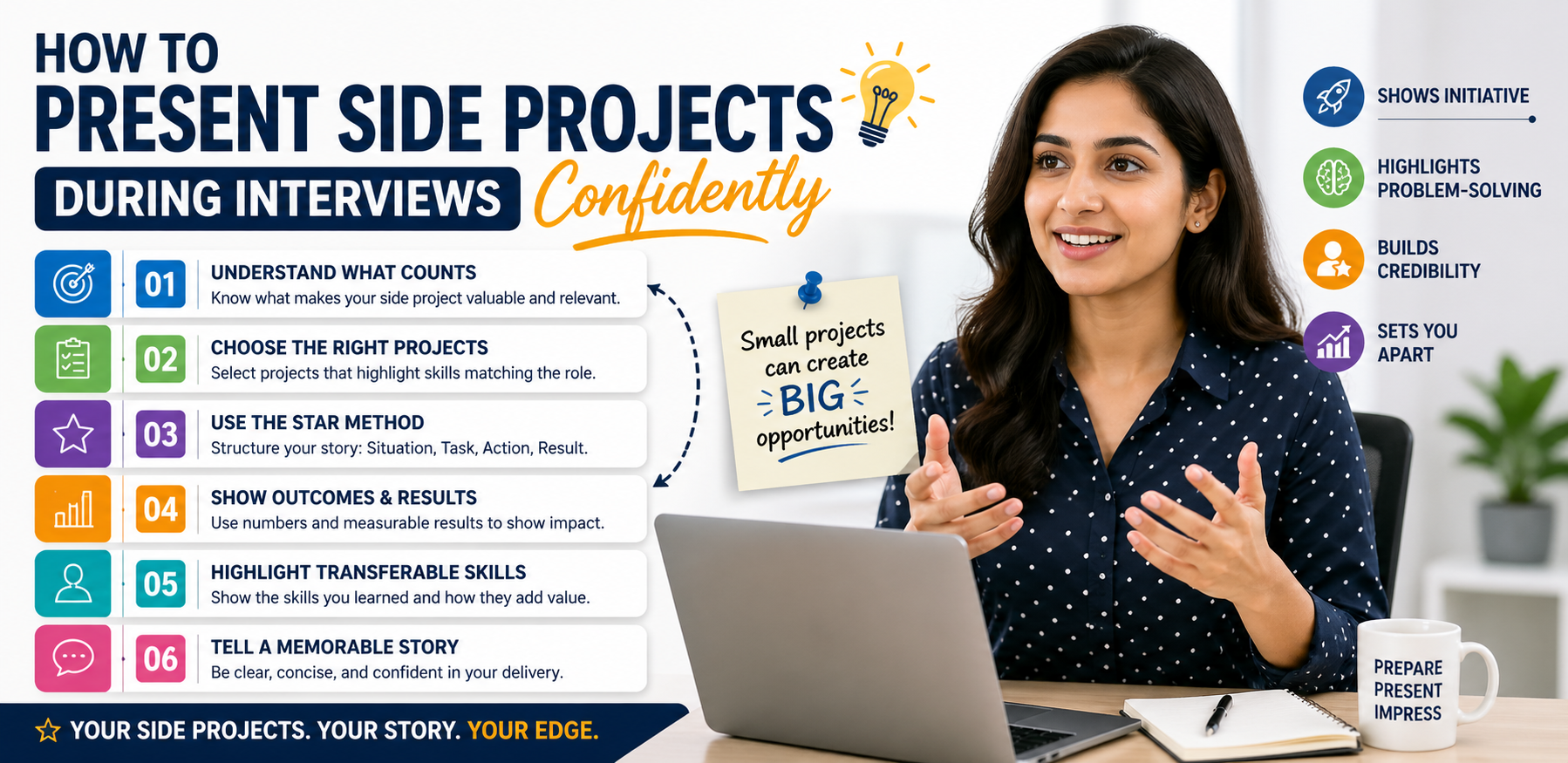
Many of us have done several side projects in addition to our main job. These side projects are very beneficial when it comes to getting a job. Having experience with side projects is definitely a good thing, but many people do not understand how to present it during interviews confidently.
A lot of people either include side projects unevenly in their interview or do not include them at all, which reduces their chances of getting hired. However, including projects in an interview is very important—and presenting them correctly is actually quite easy.
In this article, we will understand what types of side projects there are and how they can be professionally presented.
How to Present Side Projects During Interviews Confidently?
1. Understanding What Counts as a Side Projects
Side projects are not just related with coding or tech. Side project can be any work which you have done apart from your job, studies, or daily responsibilities by taking initiative in which you showcase or explore your skills practically. Below are some common examples which come under projects.
1. Personal Projects
The work which you start with your own interest or curiosity, such as writing blog, creating portfolio website or researching on any topic, these projects show your creativity and self-motivation.
2. Freelance ya Volunteer Work
If you have worked for any client, whether it is paid or unpaid, or helps to any NGO, community, or startup, then it is also a strong side project, especially when it is related to your career field.
3. Learning-Based Projects
Any practical work which you have completed at the time of self-learning, certifications, or courses, such as sample designs, writing samples, case studies, or mini projects, come under side projects.
4. Content Creation Projects
If you are creating content regularly such as blogging on Medium, LinkedIn posts, YouTube channel, podcast, newsletter, or social media content, then it shows your communication as well as consistency.
5. College ya Academic Projects
Final year projects, group assignments, or research work, which are useful to develop skills, can also present as a side project professionally.
6. Passion Projects
The work you do just for your passion, such as poetry writing, photography, graphic design, or community building, can also be a valid side project if it shows the skills and discipline.
2. Choosing the Right Side Projects to Showcase
Firstly, it is important to understand that every side project is not suitable for your interview. You need to choose only those projects which are directly related to your target role or career goal. Relevance is more important than quantity.
Select those side projects which shows your skills, problem-solving ability, and learning mindset. If you have started any project for just experiment and leaves it incomplete, then avoid that project including in your interview. Strong side projects are those which represent your capabilities in a professional way, whether it is small or big.
3. Using the STAR Method
The STAR method is a popular framework for structuring career stories:
- S – Situation: Set the context. What was the situation or problem?
- T – Task: Describe your responsibility or role.
- A – Action: Explain what actions you took to address the task.
- R – Result: Share the outcome or impact of your actions.
Example:
- Situation: I wanted to build a writing portfolio
- Task: I needed to publish quality content
- Action: I wrote and published articles on Medium consistently
- Result: I published 9 articles and got accepted into 2 publications
This method keeps your story concise, structured, and impactful.

4. Showing Outcomes and Results
For professional presentation, only telling “what you did is not enough” telling “what was the result” is more impactful. If possible, tell your outcomes as a number or a measurable results, such as views, engagement, improvement, reach, or efficiency. If numbers are not available, then mention qualitative results, such as improved clarity, positive feedback, or successful outcomes to your side project to build credibility.
5. Highlighting Transferable Skills Through Side Projects
The biggest benefit of side projects is you can showcase your transferable skills, which works for every role. Whether project is technical or creative, you can show skills like communication, problem-solving, time management, research, creativity, and ownership mindset. While writing description, also mention process instead of just telling output, such as planning, coordination, taking feedback, or maintaining consistency. These skills will shows that you can take responsibility easily.
6. Storytelling to Make Side Projects Memorable
The most effective way to present side projects is with numbers, percentages, or measurable results. Do not only say you have improved sales; instead, say, “I increased sales by 30% within six months.” This clearly shows the interviewer the impact of your work. Quantifying achievements converts your efforts into concrete proof and boosts your credibility. It makes your results memorable and convincing.
You can also read “How to Showcase Quantifiable Achievements”.
Conclusion
Side projects are more than just extra work—they are proof of your initiative, consistency, and real-world skills. In interviews, the way you present them matters more than the size of the project itself. By choosing relevant projects, structuring your answers clearly, and highlighting results and learning, you can turn even small efforts into impactful stories.
Remember, recruiters are not only looking for experience—they are looking for potential, problem-solving ability, and a willingness to learn. Your side projects already demonstrate all of these qualities.
“Showcase your side projects with confidence and explore opportunities on Best Job Tool where real work matters more than perfect resumes.”



Leave a Reply