
Introduction: AI Roadmap for Job Seekers
Here is AI roadmap for job seekers.
Artificial Intelligence (AI) is no longer just a tech trend. It is now part of almost every industry—marketing, HR, finance, healthcare, education, and even content writing. For job seekers, AI is not something to fear; it is something to use.
If you are confused about how to start your job search or how to improve your chances of getting interviews, this AI roadmap will guide you step by step—from zero knowledge to becoming interview-ready.
AI Roadmap for Job Seekers: From Zero to Interview-Ready
1. Understanding AI in Job Search
Before using AI, you need to understand what it actually does for job seekers.
AI can help you:
- Write resumes and cover letters
- Find better job opportunities
- Prepare for interviews
- Improve your skills
- Optimize your LinkedIn profile
- Practice communication
In simple words, AI is like a personal assistant that helps you plan, prepare, and perform better in your job search.
But remember, AI does not replace your effort. It only supports your journey.
2. Start With Self-Assessment (Know Yourself First)
Before using AI tools, you must understand yourself.
Ask these questions:
- What skills do I already have?
- What job do I want?
- Am I a beginner or experienced?
- What industries interest me?
If you skip this step, AI will give you random suggestions that may not fit your career goals.
You can also use AI tools like ChatGPT to help you identify your strengths.
Example prompt:
“Help me identify my skills based on my experience in content writing and freelancing.”
AI will give you a structured list of skills like writing, editing, communication, SEO basics, etc.
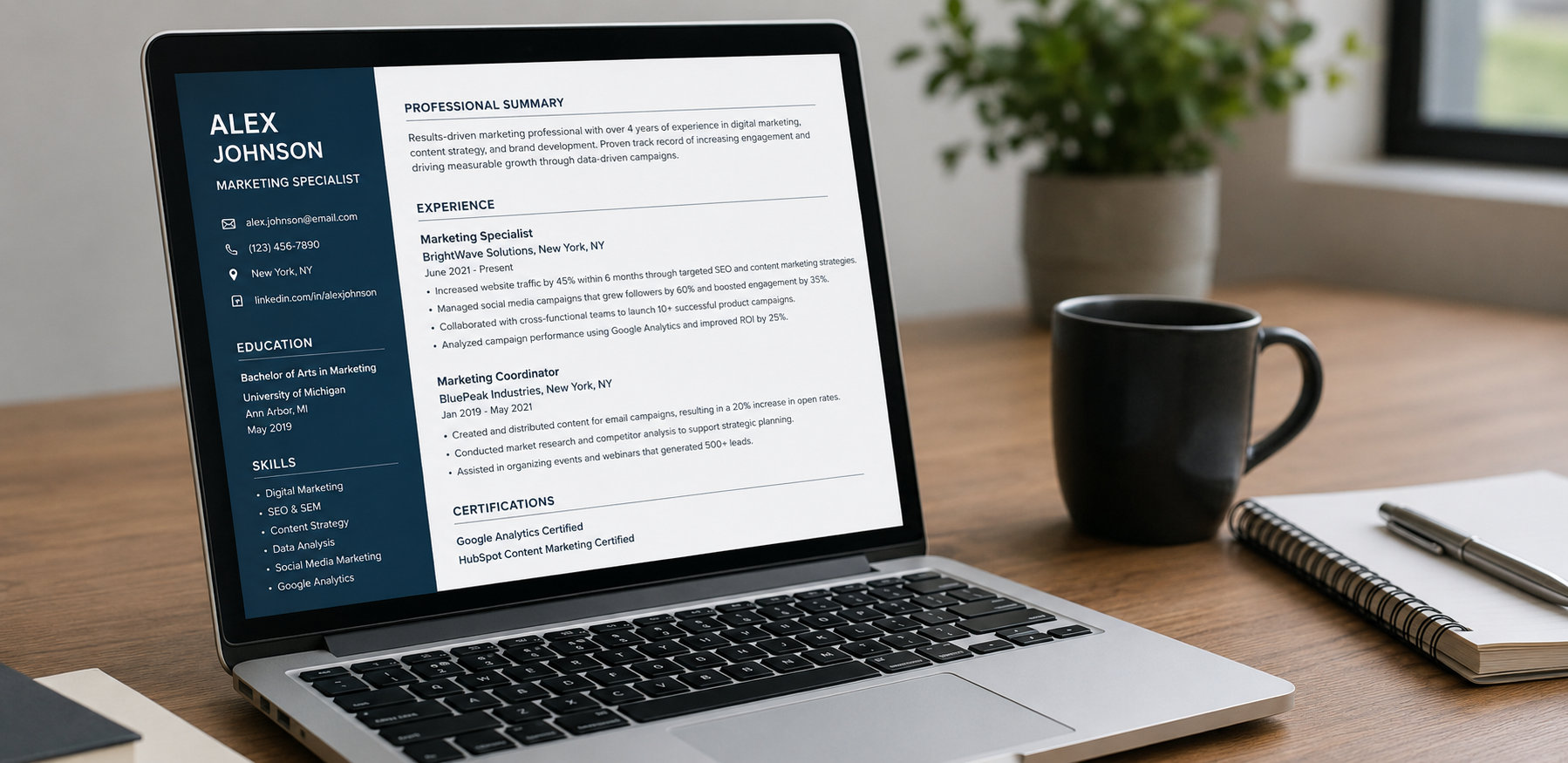
3. Resume Building Using AI
Your resume is the first impression for recruiters. AI can make it much better.
What AI can help with:
- Writing professional resume content
- Improving grammar and tone
- Highlighting skills properly
- Formatting resume sections
You can give AI your basic details and ask:
“Create a professional resume for a fresher content writer with skills in blogging and SEO.”
AI will generate a structured resume with:
- Profile summary
- Skills section
- Experience (if any)
- Education
- Projects
Important tip:
Do not copy-paste blindly. Always edit it in your own style.
4. Creating a Strong LinkedIn Profile
LinkedIn is very important for job seekers today.
AI can help you:
- Write a powerful headline
- Create a professional summary
- Suggest keywords for visibility
- Improve your “About” section
Example:
“Write a LinkedIn About section for a beginner content writer who wants freelance opportunities.”
AI will generate a clear and professional paragraph that you can refine.
Bonus tip:
Use keywords like:
- Content writing
- Freelancing
- SEO writing
- Digital marketing
This increases your chances of being discovered.
5. Finding Jobs Using AI
Job search is no longer manual only. AI tools and platforms can help you find better opportunities.
You can use AI to:
- Search remote jobs
- Find freelance work
- Filter relevant job roles
- Suggest career paths
Instead of randomly applying, use AI like this:
“Find entry-level content writing jobs in India with remote options.”
AI will guide you toward platforms, companies, and job types that match your profile.

6. Learning New Skills Faster With AI
One of the biggest advantages of AI is learning support.
If you want to improve your skills, AI can:
- Explain topics in simple language
- Create learning plans
- Suggest practice exercises
- Give examples
For example:
“Teach me SEO content writing step by step for beginners.”
AI can break it into:
- What is SEO
- How keywords work
- How to write optimized articles
- Practice tasks
This saves time and gives structured learning.
7. Writing Cover Letters With AI
A cover letter is often ignored by job seekers, but it is very important.
AI can help you write:
- Personalized cover letters
- Job-specific introductions
- Strong closing statements
Example prompt:
“Write a cover letter for a content writing job for a beginner with no experience.”
AI will generate a draft, but you should always personalize it with your story.
8. Interview Preparation With AI
This is where AI becomes very powerful.
You can practice:
- Common interview questions
- Role-specific questions
- Behavioral questions
- HR questions
Example:
“Act as an interviewer and ask me questions for a content writing job interview.”
AI will simulate an interview and you can practice answering.
You can also ask:
- “Correct my answer and make it better.”
- “Give me simple answers for this interview question.”
This builds confidence before real interviews.
9. Building a Portfolio With AI (AI Roadmap for Job Seekers)
A portfolio shows your work, even if you are a beginner.
AI can help you:
- Create sample blog posts
- Write project descriptions
- Organize portfolio structure
- Suggest content ideas
Example:
“Create 3 sample blog topics and write short samples for a beginner content writer portfolio.”
Even if you have no experience, you can create strong samples using AI guidance.
10. Improving Communication Skills
Many job seekers struggle with communication in interviews.
AI can help you:
- Practice speaking answers
- Improve sentence formation
- Correct grammar mistakes
- Build confidence in English
You can type:
“Improve this answer for a job interview in simple English.”
AI will refine your communication step by step.
Conclusion: AI Roadmap for Job Seekers
AI is changing how job seekers prepare and apply for jobs. It is not replacing humans, but it is making the process faster, easier, and smarter.
If you are starting from zero, do not worry. You do not need to be perfect. You just need to follow a system.
This AI roadmap helps you move step by step:
From understanding yourself → to building resume → to practicing interviews → to getting job-ready.
The key is simple:
Use AI as your assistant, but always stay in control of your career journey.
If you follow this roadmap consistently, getting interviews will become much easier—and eventually, landing your job will become a reality.




Leave a Reply