Introduction: Speaking Fees
Earning money is never limited to one source, and multiple options can help sustain a person’s professional growth. Every specialist, entrepreneur, or freelancer can find ways to make extra money by using their public speaking skills. Many believe only celebrities, writers, and successful businesspeople earn from speaking, but other professionals can too. Speaking fees can enable professionals to monetize their expertise and communication skills as a dependable secondary income source.
This guide provides information on how speaking fees can generate extra income, attract clients, and build authority. The ability to earn money from speaking can become a frequent occurrence for people with the right motivation and preparation.
How to Earn Money from Speaking: 7 Tips for Extra Income?
1. Define Your Area of Expertise
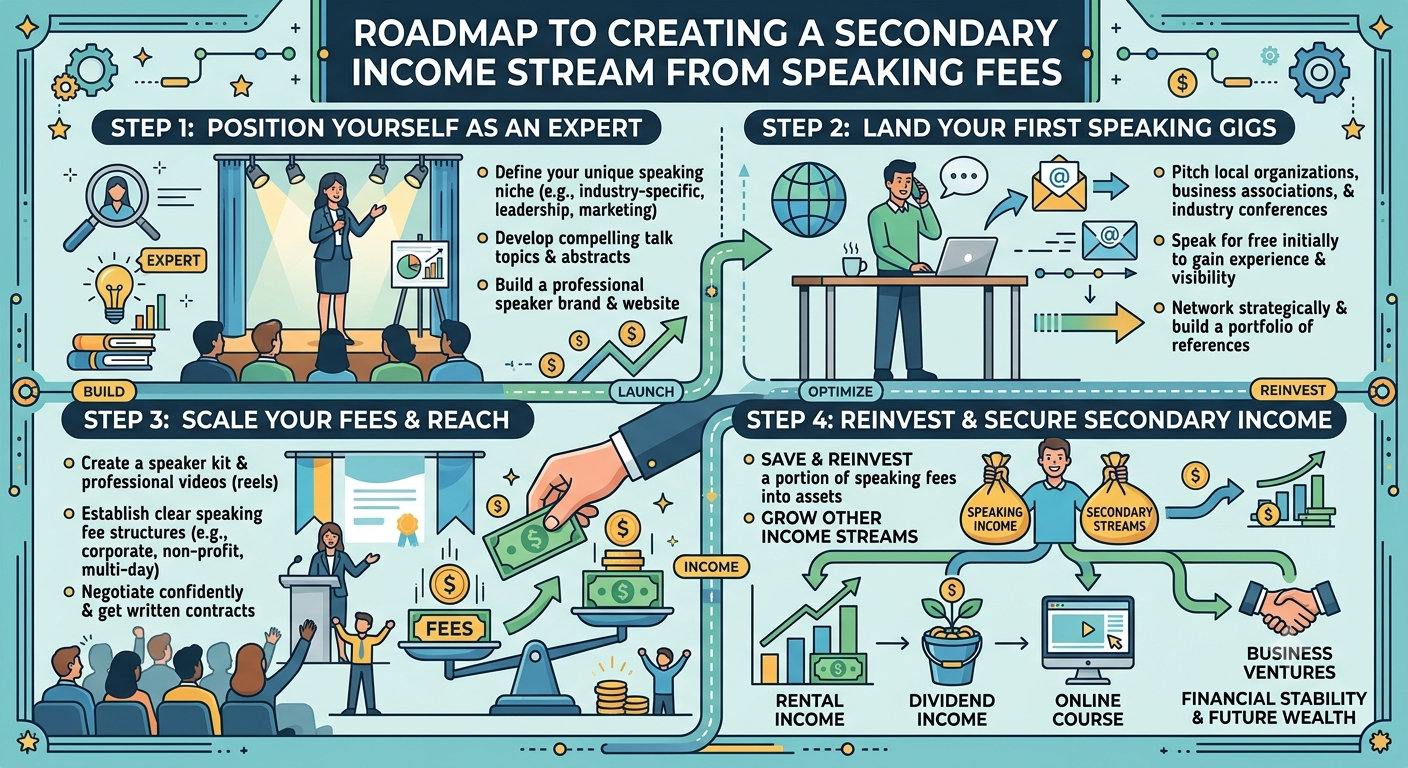
To earn money for speaking, you need to find an area in which you have knowledge and experience and an audience that is willing to pay for your expertise. For instance, content writers can teach people about creating marketing content, managing a blog, or improving writing skills. Business professionals may offer their expertise in areas such as project management and sales growth. Your expertise and experience play an integral part in determining your speaking fees.
Moreover, specialists should define their topic clearly and concisely so that the target audience can identify potential benefits. Once professionals have a general idea of what they want to present, they can make a list of their achievements, goals, and skills and then come up with a couple of possible topics.
2. Look for Events That Pay Speakers
After defining a topic and a target audience, it is time to learn how to find opportunities that pay speakers for their time and effort. Organizers usually state their requirements on websites that specialize in hosting business events, seminars, or workshops. However, speakers should double-check the proposed conditions to ensure that they will not have to cover any expenses. By researching a variety of different events, you can determine which speaking fees are right for you and your experiences and career goals.
People seeking opportunities in speaking can also utilize LinkedIn and other social media platforms and networks of people already working in event planning. Contacting the right people can become the key to learning how to make money from speaking and expanding one’s audience. When contacting organizers, speakers should describe their proposed topic, define the target audience, and outline the benefits.
3. Build a Professional Speaker’s Portfolio
Every event organizer wants to know what a potential speaker can bring to an audience. Having a professional portfolio can be helpful even if a person has never given a well-paid speech. First, a portfolio should contain a short bio of a speaker and the topics they propose. Moreover, it should list several potential titles along with a brief description of what every presentation is about.
A young or inexperienced speaker can start with small local communities, present their ideas on various platforms, and collect feedback to improve their qualities. People can also film their presentations or include some samples in their portfolios. Moreover, speakers can write articles on their topics to attract more visitors and build authority in their field.
Thus, the portfolio should convey three main ideas – what a speaker knows, for whom they speak, and why someone should choose this person. In the long run, building a portfolio can become one of the steps in learning how to get paid for speaking.
4. Set the Right Speaking Fee
The next step in learning how to earn from speaking is to define how much money a person will make from their experience, knowledge, and efforts. Setting the right price is crucial since it defines the value of a presentation. If a fee seems too low, an experienced organizer might perceive a speaker as inexperienced. At the same time, a high price can scare some event planners. A speaker’s portfolio can be used to justify the speaking fees by showing their knowledge and presentation skills.
Speakers should also keep in mind that every hour spent on preparing for a presentation, researching a topic, and communicating with an organizer deserves to be compensated. Therefore, fees should depend on multiple factors, including the size of an audience, a place of an event (online or offline), and additional expenses. Newcomers in the sphere of public speaking for hire should also start with smaller fees and then move to more significant ones as they gain more experience.
Moreover, it is essential to remember that a speaking fee should also include the size of a presentation, preparation time, responses to questions, and additional compensation for organizers. Finally, people should set clear boundaries and explain all inclusions and exclusions so that no one is surprised by the final size of a fee.
5. Get Additional Income Opportunities from One Speech
Learning how to get paid for speaking also includes finding several income streams and getting recurring payments for one presentation. Speakers can also sell guides, conduct paid consultations, set up training courses for those who want to learn more about a topic, or invite visitors to a seminar.
An organizer might also become interested in asking a specialist for another speaking opportunity on a similar or a different topic. Additionally, a presentation can also be adjusted so that one speech can serve for multiple purposes and several target audiences. For instance, tips on professional communication might be interesting for young people, small-business owners, and employees of large corporations. However, young people might want more practical advice, whereas experienced people might be more interested in abstract concepts.
6. Build Authority as a Paid Speaker
Speaking engagements can become a powerful tool for building a professional brand. After a presentation, people who have been a part of it will have a general idea of what a specialist is all about. Therefore, it is critical not to miss the chance to promote one’s services. Speakers can post news about their upcoming presentations and share useful information from already held events on professional sites, such as LinkedIn.
With the permission of organizers, speakers can also post photos, videos, or testimonials from event participants. This way, they will not only build their authority but also attract new visitors and gain more clients. Moreover, word of mouth can help secure job opportunities, freelance offers, or business collaborations. In combination with regular posts on social media, one engaging presentation can bring considerable results.
7. Track Income and Manage Time
Finally, learning how to earn money from speaking requires people to keep track of their income. Getting paid for a presentation is rewarding, but a specialist should also consider several factors before accepting a new opportunity. Every speaking engagement requires time and effort, and a high fee might seem attractive when a speaker ignores the size of an audience and other conditions. Therefore, people should analyze their profit, considering all expenses, define what opportunities are worth pursuing, and set realistic goals.
A high speaking fee in a remote event might be lower than a local one but require significantly fewer efforts. Speakers should also remember that they invest time and energy into preparing for an event. Thus, it is necessary to set realistic schedules and plan regular speaking events without overestimating one’s abilities. Additionally, people should also define their expectations from collaboration and set clear rules regarding payments, recording permissions, and presentation details.
Every public speaker who wants to make money from their skills should also keep track of all expenses and follow tax regulations. A well-organized plan and honest evaluation of possibilities are vital to avoid failures and enjoy every new step in a chosen career.
Conclusion: Speaking Fees
Public speaking engagements offer multiple benefits for those who know how to use them. Following the outlined above steps will help specialists, entrepreneurs, and all those who want to earn extra money to establish themselves as authorities in their fields. Learning how to get paid for speaking can also be a fascinating journey that will help people explore multiple useful opportunities.
Moreover, making money from speaking is not limited to the actual presentations but also includes consultations, workshops, seminars, and other services that a specialist offers. Therefore, word of mouth after a well-timed and well-structured presentation can become the best source of profit for a public speaker.
Turn your knowledge and expertise into a secondary income stream by exploring paid speaking opportunities. Build your portfolio, set competitive speaking fees, and connect with event organizers to grow your professional reputation. Explore the Best Job Tool to discover opportunities that match your skills and career goals, and take the next step toward earning money from public speaking.




Leave a Reply