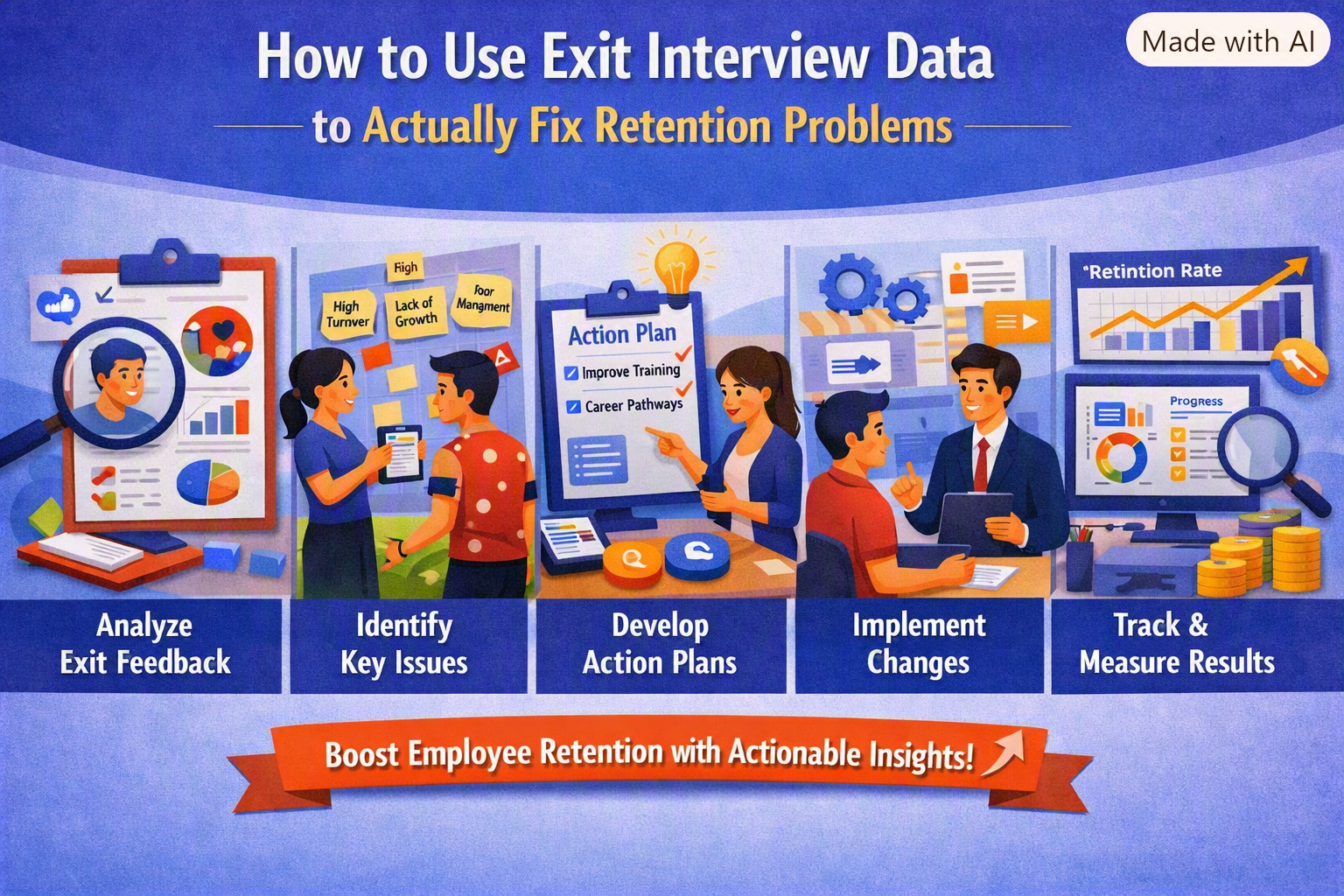
Introduction: Exit Interview Data
High turnover can be devastating to a company: not only does it set a company back in terms of experience, but it is costly, too. The search for new candidates can be tiresome and, at times, the new recruits will not stay with the company for a lengthy period of time.
A tool that many companies use in order to discover the reasons behind employees’ departures is the exit interview. However, merely collecting the information that is provided is not enough. A company needs to scrutinise the data that it collects if it wishes to make a meaningful difference.
How to use exit interview data to actually fix retention problems is an important issue that HR directors and managers should be particularly aware of if they wish to improve employee retention.
How to Use Exit Interview Data to Actually Fix Retention Problems?
1. Collect Honest Feedback
In order for the interviews to yield useful information, it is probably a good idea to make the employees feel as comfortable as possible so that they are encouraged to give truthful answers. It is important that employees know that the primary objective of the conversation is to find out about their experience rather than to find fault.
As such, questions should be asked in a non-confronting manner. For example, rather than asking “Did you like your manager?” ask How would you describe your experience with your manager?
You might want to ask questions about compensation, workload, management, career development, company culture, flexibility, recognition, communication and the responsibilities that the employee has to take on.
2. Look for Patterns
Although the exit interview data that you collect will give you some useful insight, it is important to look at the data as a whole rather than focussing on any one individual’s experience.
To take one example: just because a person left because they felt that their salary was too low, that does not mean that the entire company has a problem with its compensation policies. However, if a significant number of employees mention salary issues, this will give you food for thought.
Categorising exit interview feedback is crucial to identifying possible action points. Some common categories include compensation, management, career growth, workload, culture, work/life balance, recognition, training, communication and flexible working hours.
Once you begin to see what problems are the most frequent, you will be able to take measures to try to solve them.
3. Compare Data Across Teams
The same issue may not affect every department in the same way. Although the entire organization may have problematic human resource management practices, one department could face particularly serious problems.
For example, if the sales department is leaving the company for more plausible reasons while the other departments are not experiencing similar problems, it is worth while investigating the particular circumstances of that department.
You might want to look at the interview data by department, level of position, location, manager and length of employment in order to find out where the problems are coming from.
4. Link Exit Data With Other Data
The information provided in the exit interviews should not be considered in isolation. The best thing to do is to compare the results with other sets of data, for instance, employee turnover.
HR directors could have a closer look at other relevant information, such as absence, engagement, promotion rates, salary changes, performance, internal transfers and length of service.
For instance, if the exit interviews demonstrate that employees left because there were no opportunities for advancement and there are no promotions taking place inside the company, it is safe to assume that the problem lies in a lack of professional development.
5. Turn Problems Into Actions
It is a shame that many organisations collect the data provided in the exit interviews and do not do anything with it.
Asking for employee feedback is a good idea, but it can become disheartening for employees if they feel that no action is being taken.
Once you have identified a problem, it is important that you take concrete steps to address it.
For example, if the data indicates that employees have left because they were not given opportunities to grow professionally, you might want to develop a career development program within the company.
You might also look into offering training, a mentoring program or a budget for further education.
If you raise a vague issue, you might waste the company’s resources. On the other hand, if you clearly identify the problem, you can develop appropriate solutions more easily.
6. Talk to Current Employees, Too
Exit interviews can only tell you why people have left the organisation, but they do not give you any information about why people have stayed. It is important that you complement the information retrieved from exit interviews with stay interviews.
Stay interviews are similar to exit interviews, but they serve a different purpose. Conducted with current employees, they can help you find out what employees like about the organisation, what they dislike, what could make them leave and what they would change.
By combining information from both exit and stay interviews, you can clearly identify what needs improvement.
Conclusion: Exit Interview Data
Exit interviews can be helpful in finding out why people are leaving the company, but this information will only be useful if the organisation knows how to use it.
Rather than looking at the problems from the perspective of any one individual, it should examine the bigger picture and look for recurring issues. The problems that affect a large number of people need to be prioritised. It is also a good idea to compare the interview data with other sets of information, talk to current employees and evaluate the effect of the changes that you make.
Organizations can significantly improve employee retention by taking appropriate action and showing employees that they have heard their feedback.
Ready to build a workplace where employees want to stay? Use exit interview data to identify the real reasons behind employee turnover, address recurring issues, and create a stronger retention strategy. And if you’re looking for your next career opportunity, explore relevant roles on Best Job Tool, a platform connecting job seekers with employers and career opportunities across industries. Explore Best Job Tool.



Leave a Reply