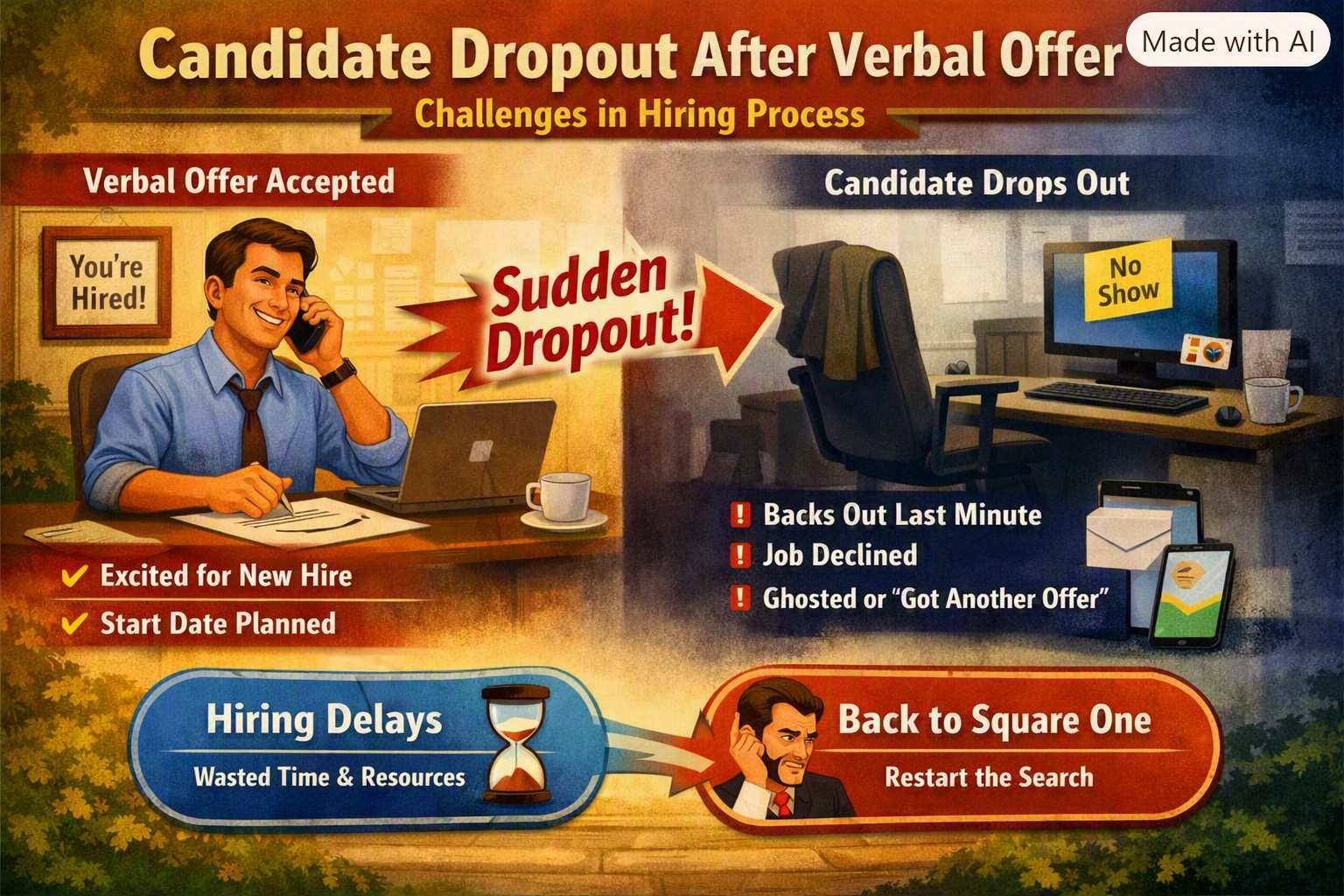
Introduction: Verbal Offer Acceptance
Recruiting the right candidate is a tedious task. The process involves screening, interviewing, negotiating, and finally choosing the ideal candidate for the vacant position. However, the person might decide not to join the company despite having accepted the offer. This scenario can be embarrassing, especially when other candidates had been rejected or there are no alternative candidates.
Understanding How to handle candidate dropout after verbal offer acceptance can help recruiters deal with such problems effectively.
How to Handle Candidate Dropout After Verbal Offer Acceptance?
1. Understand Why Candidates Drop Out
The next logical step is to ascertain the reason why the candidate withdrew their acceptance. People drop out of the recruitment process for various reasons. Some people might get better offers from competitors, get cold feet regarding salary and benefits, have received counteroffers from their current employers, or cannot change jobs due to personal reasons.
Sometimes, candidates do not express all their concerns, so it is essential to give them a chance to explain their stance. There is no shame in losing a candidate. However, it is worth analyzing the reasons behind their refusal to join the company. Therefore, recruiters should interview the candidate to identify the issues and resolve them, if possible.
2. Respond Professionally and Quickly
Recruiters should respond to the news calmly and professionally. Speaking angrily or confronting the candidate will only cause more harm than good. It is crucial to recall that the drop-out is not a personal attack. As much as such feedback is unpleasant, responding politely will leave the door ajar for future collaborations.
The recruiters should appreciate the candidate for their time and, if possible, request feedback regarding the primary reason for their withdrawal. The professional response will also allow the recruiter to understand the situation better and come up with ways of preventing future dropouts.
3. Contact Backup Candidates
One of the most effective ways of mitigating the effects of candidate dropouts is having a pipeline of potential candidates. When the selected candidate withdraws their acceptance, the recruiter can immediately contact the next in line. At this point, it is worth noting that there must be a list of people who expressed interest in the vacant position.
Therefore, recruiters should keep a detailed list of shortlisted candidates during the initial stages of the recruitment drive. The names should include their concerns, interview outcomes, salary expectations, availability, and suitability for the position. That way, it is easy to identify the first choice and inform them immediately without wasting much time.
4. Review the Offer and Hiring Process
There is no doubt that candidate dropouts can occur due to poor compensation or benefits. If there is a history of such rejections, the recruiters should go back to the drawing board and analyze the entire recruitment and hiring process. Do the offered benefits suit the demands of the candidate? Was there enough information regarding the job position? Did the candidates fully understand the company’s expectations?
Perhaps, the verbal agreement does not have enough weight, and the person is not sure about the offer. It is worth considering that most candidates who accept the offer verbally will still join the company on the day of their joining. Therefore, it is advisable to keep them engaged until the day of their first day at work.
5. Engage Candidates Even More
The engagement of potential employees should not stop at the point of verbal agreement. The period between acceptance and the joining date is when many candidates tend to withdraw their acceptance. However, an effective and successful recruitment drive should have proper candidate engagement strategies. In most cases, people do not join the company because of poor engagement and lack of information regarding their new workplace.
Therefore, recruiters should keep the candidates engaged by giving them more information about the company, introducing them to future colleagues, telling them what to expect on their first day, and educating them on the onboarding process. The engagement tactics will reassure the candidate of their correctness in choosing the company.
Moreover, recruiters should send welcome emails or arrange video conferences to introduce themselves to the candidates. The engagement keeps the candidate thinking positively about the company. Consequently, they will be more determined to join the company on the day of their joining.
6. Make Verbal Acceptance Less Risky
Verbal acceptance should be viewed as a positive development in the recruitment process. However, it should not be considered as a definitive choice. Therefore, the company should keep recruiting until the candidate confirms their acceptance on the joining day. In some cases, it might be necessary to give the candidate a written offer outlining specific terms and conditions.
The recruiters should also give the candidate the chance to identify their expectations in a physical or digital document. That way, it will be easy to avoid unnecessary confusion and misunderstandings regarding the job offer.
7. Create a Stronger Talent Pipeline
The above tactics are only successful if the company has a talent pipeline. A talent pipeline refers to a pool of candidates who have demonstrated an interest in the company. The most crucial aspect of these pipelines is that they provide the recruiters with alternatives. Therefore, if the first candidate drops out, the recruiters can start the hiring process with the second candidate without losing much time.
The organizations can invest more in nurturing their pipelines with top talent. The recruiters should maintain long-term relationships with these candidates. It might be worth recalling that the hiring process is not an instantaneous activity.
However, in most cases, companies need to fill positions immediately. The next best thing is to have a reliable talent pipeline, which can provide a consistent flow of candidates. The recruiters should also keep track of the applicants, referrals, and passive candidates, who are suitable for the vacant position.
Conclusion: Verbal Offer Acceptance
Candidates dropout after verbal offer acceptance is a common occurrence in the recruitment process. However, the above strategies can help minimize the effects of such occurrences. The recruiters should keep the candidates engaged throughout the recruitment process and have alternative candidates in case of withdrawal.
You can explore more such blogs with the Best Job Tool.





Leave a Reply