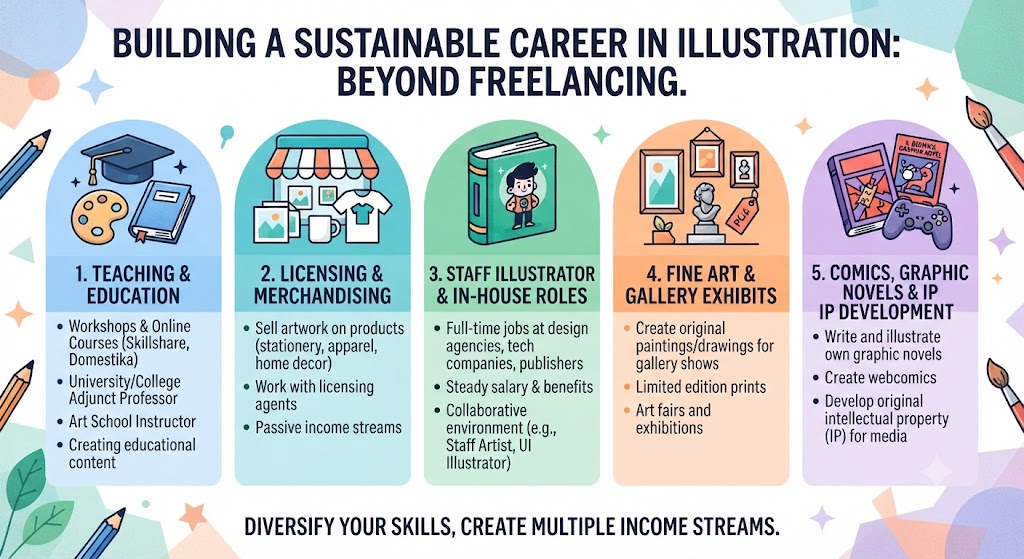
Building a sustainable career in illustration is possible without depending entirely on freelance projects. While freelancing can offer creative freedom, relying only on individual clients can result in unpredictable income, inconsistent workloads, and limited career progression.
A sustainable career in illustration requires a broader strategy. Illustrators can combine full-time employment, remote work, contract opportunities, licensing, digital products, teaching, and creative collaborations. This approach can create greater financial stability while allowing professionals to continue developing their artistic identity.
The illustration industry also offers opportunities across publishing, advertising, gaming, education, technology, entertainment, e-commerce, and media. By choosing a specialization and developing commercially valuable skills, illustrators can build long-term careers instead of constantly searching for the next freelance project.
1. Choose the Right Illustration Career Path
The first step toward a sustainable career in illustration is choosing a career direction that matches your strengths and interests. Illustration is a broad field, so specializing can make your portfolio and job search more focused.
Popular illustration career paths include:
- Editorial illustration
- Book illustration
- Character design
- Concept art
- Digital illustration
- Advertising illustration
- Packaging illustration
- Educational illustration
- Fashion illustration
- Surface pattern design
- Technical illustration
- Game illustration
Full-time positions can provide more predictable income than freelance work. For example, a technology company may hire an illustrator to create marketing graphics, product visuals, website artwork, and branded content.
Similarly, publishing companies may employ illustrators for books, educational materials, and editorial projects.
Therefore, do not limit your job search to positions that contain only the word “illustrator.” Related creative roles can also provide valuable career opportunities.
2. Build a Portfolio for Long-Term Opportunities
A professional portfolio is essential for building a sustainable career in illustration. However, your portfolio should be created around your target market rather than containing every piece of artwork you have produced.
Select your strongest work and organize it according to your preferred specialization.
A professional illustration portfolio can include:
- Character design projects
- Editorial artwork
- Commercial illustrations
- Digital artwork
- Storyboards
- Packaging concepts
- Children’s book illustrations
- Advertising visuals
- Educational graphics
Aim for consistency in quality and presentation. A smaller portfolio containing strong and relevant projects is usually more effective than a large portfolio containing unrelated work.
You can also create self-initiated projects when you do not have commercial experience. For example, develop a fictional publishing campaign, create a character collection, or design illustrations for a hypothetical brand.
These projects demonstrate your creative thinking and help potential employers understand the type of work you can produce.
3. Develop Skills That Employers Value
Strong drawing skills are important, but modern illustrators also need professional and technical skills.
To strengthen your career, consider developing:
- Digital illustration
- Visual storytelling
- Composition
- Typography
- Branding
- Layout
- Basic animation
- Presentation skills
- Creative research
- Project management
Software knowledge should support your career goals. Instead of learning every creative tool available, focus on software commonly used in your target industry.
For example, a book illustrator may need strong digital painting and print-production skills. A technology-focused illustrator may benefit from knowledge of digital interfaces, marketing assets, animation, and collaborative design workflows.
Communication is equally important. Professional illustrators need to understand creative briefs, respond to feedback, explain design decisions, and meet deadlines.
Combining artistic ability with these professional skills can make you more valuable to employers and creative teams.
4. Create Multiple Sources of Illustration Income
One effective way to create a sustainable career in illustration is to avoid depending on a single source of income.
Freelance commissions can remain part of your career, but you can add other revenue streams over time.
Consider:
- Art licensing
- Digital products
- Printable artwork
- Illustration templates
- Creative resources
- Online courses
- Workshops
- Books
- Merchandise collaborations
- Stock illustrations
Licensing can allow an illustrator to earn from existing artwork when businesses use it for approved commercial purposes.
Digital products can also provide an opportunity to sell creative resources repeatedly. Examples include brushes, textures, templates, printable artwork, and educational materials.
However, building multiple income streams takes time. Start with one additional opportunity and measure its performance before adding another.
The goal is not to create several businesses simultaneously. The goal is to gradually reduce your dependence on unpredictable project-based income.
5. Use Remote Work to Expand Your Career Options
Remote work can be an important part of a sustainable career in illustration. Many digital illustration projects can be completed remotely, allowing professionals to work with companies outside their local area.
Remote illustration opportunities can exist in:
- Publishing
- Marketing
- Advertising
- Gaming
- Education
- Technology
- E-commerce
- Media
However, remote work requires strong organization. Creative professionals must manage deadlines, communicate clearly, and maintain reliable workflows without constant supervision.
Create a simple remote work system that includes:
- A daily work schedule.
- Clear project deadlines.
- Organized digital files.
- Regular backups.
- Defined revision stages.
- Scheduled communication time.
- Dedicated periods for focused creative work.
When searching for remote opportunities, use job titles such as “Remote Illustrator,” “Digital Illustrator,” “Character Designer,” “Concept Artist,” and “Visual Designer.”
A global job platform such as best job tool can also help creative professionals explore remote and international job opportunities.
6. Test Travel Before Making Remote Work Your Lifestyle
Remote illustration can provide location flexibility, but working while traveling requires careful planning. Before making long-term travel part of your career, conduct a short travel test.
Spend several days or one week working from your planned destination. Continue your normal professional schedule during the test.
Evaluate:
- Internet reliability
- Workspace quality
- Noise levels
- Electricity availability
- Meeting requirements
- Time-zone differences
- Accommodation costs
- Transportation expenses
- Overall productivity
This practical test can help you determine whether a destination supports your professional requirements.
For example, a location may look ideal for travel but have unreliable internet or limited quiet workspaces. These issues can become serious problems when you have strict project deadlines.
Therefore, test your travel routine before committing to longer stays.
7. Plan Your Finances and Long-Term Career Growth
Financial planning is an important part of a sustainable career in illustration. Income can vary when professionals combine freelance projects, employment, licensing, and digital products.
Begin by calculating your essential monthly expenses. Then create an emergency fund that can support you during periods of lower income.
Your financial plan should account for:
- Living expenses
- Emergency savings
- Software subscriptions
- Computer and equipment costs
- Professional training
- Marketing expenses
- Travel costs
- Taxes
- Long-term savings
If you earn freelance income in addition to a regular salary, avoid spending all of your additional earnings. Allocate money toward savings, taxes, professional expenses, and future career development.
At the same time, create realistic career milestones.
For example, your first year could focus on portfolio development and specialization. The second year could focus on securing a stable creative role while developing an additional income stream. Later, you can move toward senior illustration positions, art direction, licensing, or creative leadership.
Career growth becomes easier when your goals are measurable and reviewed regularly.
Conclusion
A sustainable career in illustration does not require professionals to abandon freelancing. Instead, illustrators should build a career model that combines multiple opportunities and reduces dependence on unpredictable commissions.
Start by choosing a clear illustration specialization and creating a focused portfolio. Next, develop technical, communication, and business skills that employers value. Then explore additional income opportunities such as licensing, digital products, teaching, and creative collaborations.
Remote work can expand your access to national and international opportunities. However, professionals who want to combine work with travel should test their preferred locations before making long-term commitments.
Financial planning is equally important. Building emergency savings, managing professional expenses, and creating long-term financial goals can make creative careers more stable.
Ultimately, a sustainable career in illustration comes from combining creativity with strategic career planning. By developing strong skills, building multiple opportunities, and continuously adapting to market demand, illustrators can create long-term professional stability without relying exclusively on freelance work.

Leave a Reply