Introduction: Skill Stacking
In today’s fast-changing world, having only one skill is often not enough. Technology is changing industries, artificial intelligence is automating tasks, and new job roles are being created every year. Many jobs that exist today may look very different in the future. Because of this, professionals need a strategy that helps them stay valuable and relevant in the job market.
One of the best ways to do this is through skill stacking.
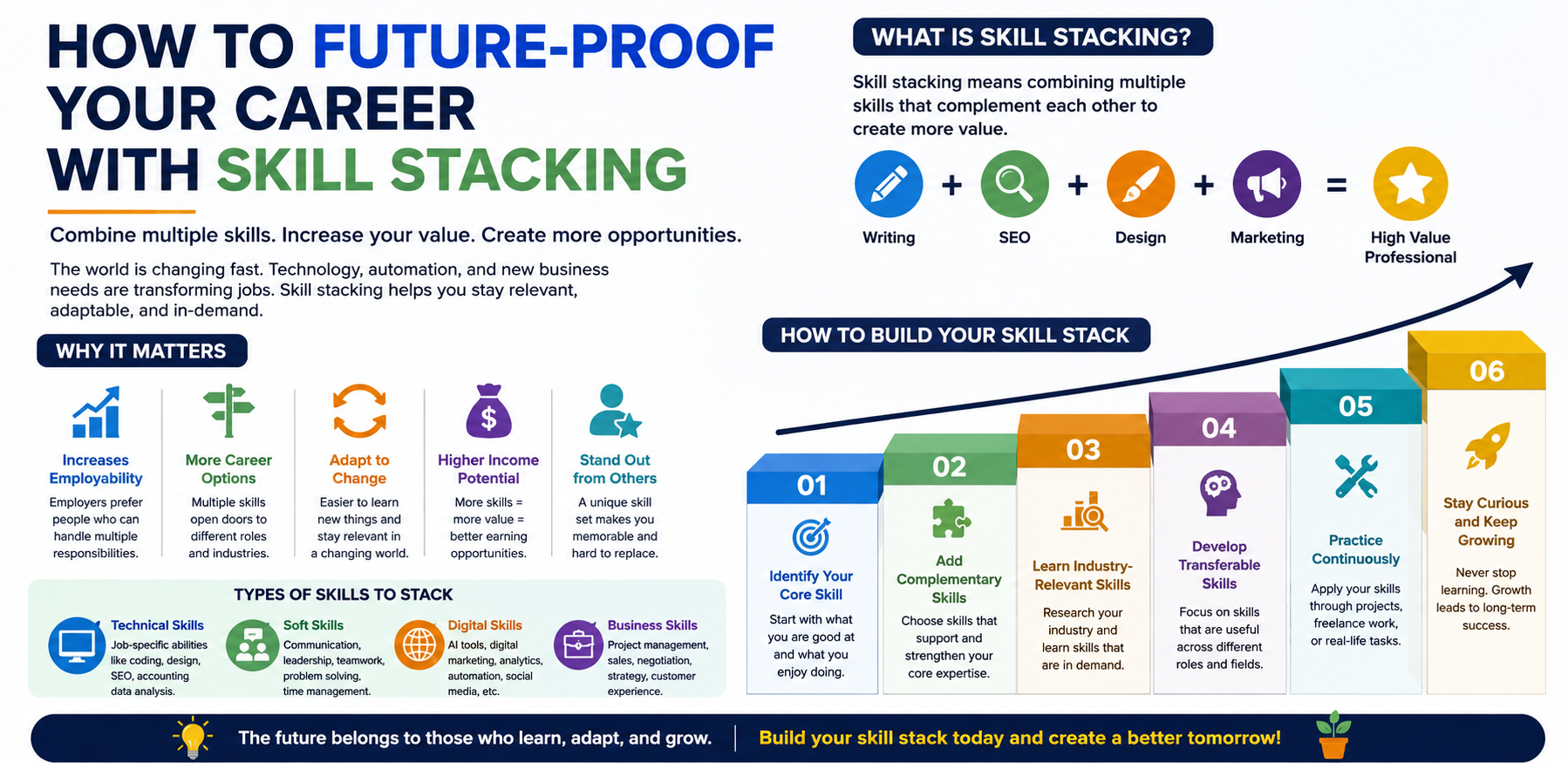
Skill stacking means combining multiple skills that work well together. Instead of becoming the world’s best expert in one skill, you develop several complementary skills that make you unique and valuable. This combination helps you stand out from others and creates more career opportunities.
In this article, we will understand what skill stacking is, why it is important, and how you can use it to future-proof your career.
What Is Skill Stacking?
Skill stacking is the process of learning and combining different skills that complement each other.
For example, a person may know:
- Content Writing
- SEO
- Graphic Design
- Social Media Marketing
Individually, these are useful skills. But when combined, they create a powerful professional profile. Such a person can write content, optimize it for search engines, create visuals, and promote it online.
Another example is a software developer who also learns:
- Communication Skills
- Project Management
- Data Analysis
This combination can help them move into leadership positions more easily.
Skill stacking is not about learning random skills. It is about creating a skill combination that increases your value in the market.
Types of Skills Stacking
Not all skills are equally useful together. The best approach is to combine different categories of skills.
1. Technical Skills
These are job-specific skills.
Examples:
- Programming
- Graphic Design
- SEO
- Accounting
- Data Analysis
- Video Editing
Technical skills help you perform your core work.
2. Soft Skills
Soft skills help you work effectively with people.
Examples:
- Communication
- Leadership
- Teamwork
- Time Management
- Problem Solving
- Emotional Intelligence
These skills are valuable in almost every profession.
3. Digital Skills
Digital skills are becoming essential in modern workplaces.
Examples:
- AI Tools
- Social Media Management
- Digital Marketing
- Analytics
- Automation Tools
These skills improve productivity and adaptability.
4. Business Skills
Business knowledge helps professionals understand how organizations operate.
Examples:
- Project Management
- Sales
- Negotiation
- Strategic Thinking
- Customer Experience
Business skills can increase career growth opportunities.
How to Build Your Skill Stacking?
1. Identify Your Core Skill
Start by identifying your primary skill.
Ask yourself:
- What am I already good at?
- What work do I enjoy doing?
- What career do I want to build?
Your core skill becomes the foundation of your skill stack.
For example:
If you are a content writer, writing becomes your core skill.
2. Add Complementary Skills
Choose skills that support your primary skill.
For content writers, useful complementary skills may include:
- SEO
- Copywriting
- AI Content Tools
- Content Strategy
- Social Media Marketing
These skills strengthen your main expertise.
3. Learn Industry-Relevant Skills
Research your industry regularly.
Look at:
- Job descriptions
- Industry reports
- LinkedIn posts
- Employer requirements
Identify skills that are becoming more important and start learning them.
4. Develop Transferable Skills for Skill Stacking
Transferable skills can be used in different careers.
Examples:
- Communication
- Leadership
- Critical Thinking
- Problem Solving
These skills remain valuable regardless of industry changes.
5. Practice Continuously
Learning alone is not enough.
Apply new skills through:
- Personal projects
- Freelance work
- Volunteer opportunities
- Internships
Practical experience helps you build confidence and expertise.
Examples of Effective Skill Stacking
1. Content Writer
Core Skill:
- Content Writing
Additional Skills:
- SEO
- Copywriting
- Email Marketing
- AI Tools
This combination creates a versatile content professional.
2. Recruiter
Core Skill:
- Recruitment
Additional Skills:
- LinkedIn Networking
- Employer Branding
- Data Analytics
- Communication
This stack improves hiring effectiveness.
3. Software Developer
Core Skill:
- Programming
Additional Skills:
- Project Management
- Communication
- Business Analysis
- AI Development
This combination supports leadership growth.
4. Graphic Designer
Core Skill:
- Graphic Design
Additional Skills:
- Branding
- Social Media Marketing
- Video Editing
- User Experience Design
This stack expands career opportunities.
Conclusion: Skill Stacking
The future job market will continue to change because of technology, automation, and evolving business needs. Professionals who rely on a single skill may find it difficult to stay competitive. Skill stacking provides a practical solution by combining multiple complementary skills into a unique professional profile.
Instead of trying to become the best in only one area, focus on building a combination of technical skills, digital skills, business knowledge, and soft skills. This approach increases employability, creates more opportunities, improves adaptability, and helps you remain valuable even as industries change.


Leave a Reply