Introduction: Fully Distributed Organizations
Do you know how hiring works inside fully distributed organizations?
A fully distributed organization is a company where employees do not work from a single office. Instead, team members work from different locations, states, or even countries. They collaborate and complete their work through digital tools and online communication.
Many of us either work in fully distributed organizations or want to work in one. That is why it is important to understand how hiring works in these organizations. Knowing the hiring process can help you prepare yourself better when an opportunity comes.
In this article, we are going to explore how hiring works inside fully distributed organizations.
How Hiring Works Inside Fully Distributed Organizations?
1. Job Descriptions Are Usually More Detailed
The first thing to understand is that job descriptions in fully distributed organizations are usually more detailed. Since candidates may come from different states or even different countries, it is important for them to have clear information about the role so they can make an informed decision before applying.
Distributed organizations create job descriptions that clearly explain the job responsibilities, expected outcomes, required skills, communication expectations, and time zone requirements. This helps candidates understand exactly what the company expects from them.
2. Applications Focus on More Than Resumes
We all know how important a resume is when applying for a job because it contains important information about a candidate. Every organization asks for a resume so they can learn about the candidate’s background and experience. However, in distributed organizations, recruiters often pay more attention to a candidate’s portfolio and work samples than just the resume.
If you are planning to apply to a distributed organization, it is important to have a resume along with a portfolio, writing samples, project examples, or a LinkedIn profile. Recruiters in distributed organizations want to learn about you, but they also like to see the quality of your work. They use this information to make better hiring decisions.
3. Asynchronous Communication Matters
Communication skills are very important in the workplace because employees need to interact with coworkers and clients. Poor communication can lead to misunderstandings, which can affect both work quality and the company. That is why companies evaluate a candidate’s communication skills before hiring them.
However, distributed organizations pay special attention to asynchronous communication skills. This is very important because team members in distributed organizations often communicate through recorded videos, documents, written updates, and project management tools instead of constant live meetings.
As a result, distributed organizations usually prefer candidates who can communicate clearly in writing. Strong written communication helps team members collaborate effectively, even when they work in different locations and time zones.
That is why, whenever you apply for a distributed organization or a traditional organization, always make sure your application email, assignments, and written communication are clear, professional, and easy to understand.

4. Initial Screening Often Happens Online
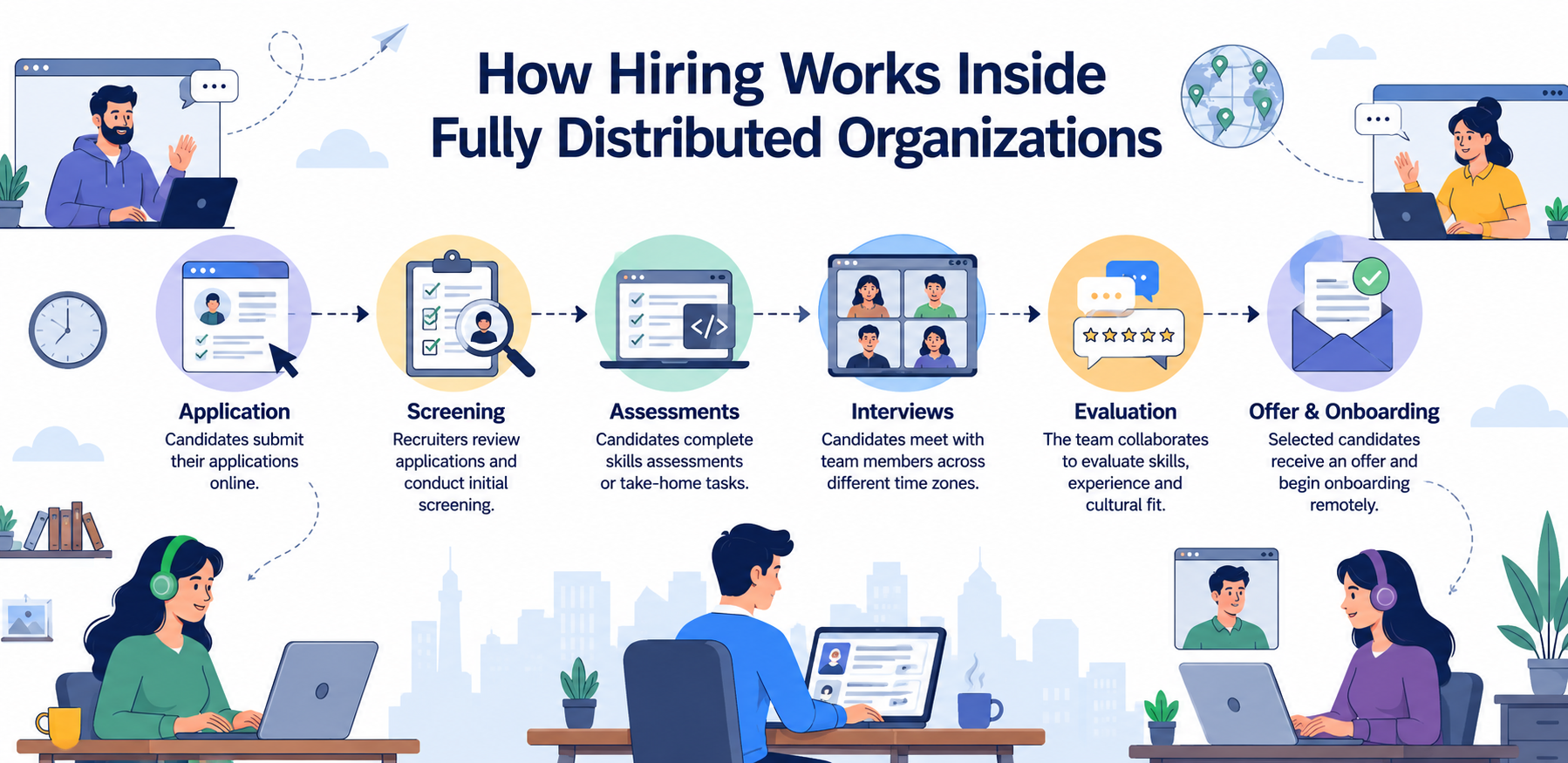
As we all know, in a traditional hiring process, companies first review applications, then ask candidates to complete assessments, and finally invite them to the office for interviews. However, in distributed organizations, the hiring process is usually conducted entirely online.
First, your application is reviewed. After that, you may be asked to answer online questions, sometimes by recording video responses. Then, there is usually a screening call and additional online interviews.
Everything happens online because recruiters want to evaluate how well you work and communicate in a remote environment. Since your job will be performed online, they pay close attention to your communication habits, productivity methods, work style, and time management strategies.
That is why you should always be prepared for online interviews when applying to a distributed organization.
5. Skills Assessments Are Common
As we discussed earlier, most companies focus heavily on resumes. However, distributed organizations evaluate not only your resume but also your actual skills. That is why many distributed organizations ask candidates to complete practical assessments so they can better understand their abilities.
A company may give you a writing assessment, a technical test, or a project-based assignment. These tasks are often designed to reflect real work situations, allowing the company to see how you perform in a practical environment.
If you receive such an assignment, do not be nervous. Stay focused, complete the task carefully, and use it as an opportunity to demonstrate your skills and capabilities. A well-done assessment can often make a stronger impression than a resume alone.
Conclusion: Fully Distributed Organizations
Hiring in fully distributed organizations is different from traditional hiring. These companies focus on detailed job descriptions, portfolios, written communication skills, online interviews, and practical assessments to find the right candidates.
If you want to work in a distributed organization, it is important to build strong skills, create a good portfolio, improve your written communication, and prepare for online hiring processes.
“Fully distributed organizations hire differently—understanding their process can give you a competitive advantage. Explore remote career insights with Best Job Tool.”



Leave a Reply