
Introduction: Micro-Internships
A micro-internship is a short-term paid project that lasts for a few hours or a few weeks. In this, you can gain experience in any field without doing a full-time job. Micro-internships also help you test whether you are interested in that field or not. For example, a micro-internship can include writing three blog posts for a beginner or designing five Instagram posts for a brand.
With micro-internships, you can get real work experience, do low-risk career testing, improve your skills, and also build your portfolio.
If you also want to use micro-internships to test different careers, then you should know some practical and effective steps, which you can learn from this article.
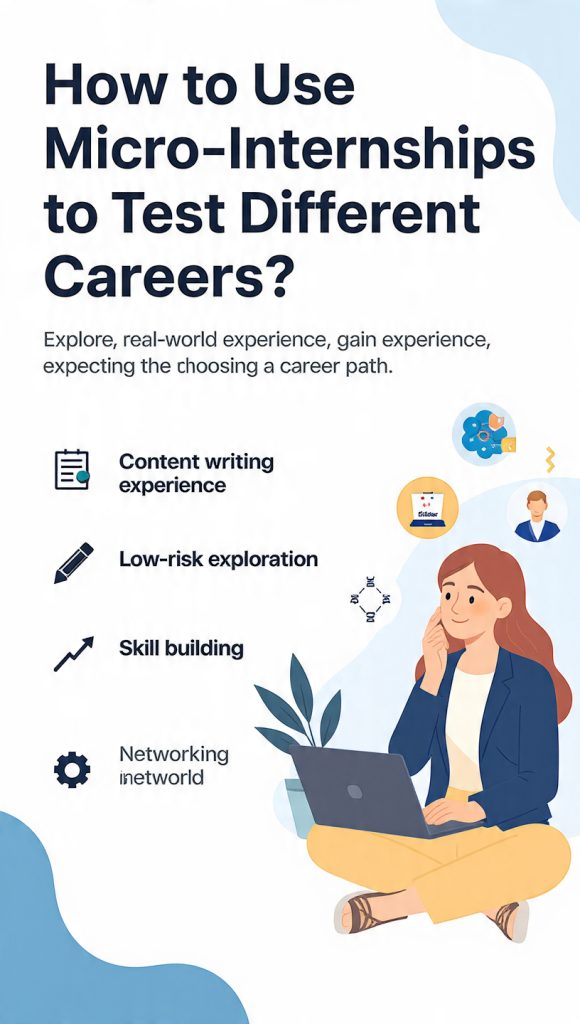
How to Use Micro-Internships to Test Different Careers?
Step 1: Identify Careers You Want to Test
The first step is to identify the career you are interested in and want to test.
Think about and write down the fields you have heard about, the careers that have good growth, or the ones you are personally interested in because of your passion.
After that, from the list of careers you have written, start micro-internships in 2 to 4 fields.
Step 2: Apply for Small Projects First
The second important step is that after you have listed the careers and selected which micro-internships you want to do, you should start working on them.
But remember, you should not accept big roles. Start with small projects like 3 to 5 days tasks or one-week assignments.
If you start working on long projects, it will create a lot of pressure for you. Because of this, you will not be able to explore much or properly test that field.
That is why you should start with small projects. It reduces pressure and helps you learn quickly.
Step 3: Treat Every Project Like a Real Job
Another important thing when you are testing a career through micro-internships is that you should treat every project you accept like a real job, not like extra work.
Give full effort and time to your micro-internship. Take it seriously, complete deadlines on time, communicate professionally, and ask questions when needed. Only then you will get real job-like experience in that field, and you will be able to compare your skills with your expectations.
Step 4: Observe Your Interest Level
After completing a micro-internship and finishing your project, you should ask yourself some questions. These questions will help you understand whether the micro-internship was successful for you or not, and whether you want to work in that field in real life or not.
Some questions can be: Did I enjoy this work? Did I feel bored or excited? Can I imagine doing this work every day for many years?
If your answer is that you enjoyed the work and you want to continue in this field, then you should consider going further in this job or career.
Step 5: Track Your Skills Growth
If you want to use micro-internships for career testing, then tracking your skill growth is very important. It helps you understand whether you can grow in that field or not.
While doing a micro-internship and even after completing it, you should keep a record. In this record, write which tasks you did, which tools you used, and what you learned.
When you have a complete record of everything, you can compare all your micro-internships. This will help you clearly see in which internship you improved the most and which one you should continue in the future.
Conclusion: Micro-Internships
Micro-internships give you a practical way to explore different careers without long-term risk. Instead of guessing what a job might feel like, you actually experience real tasks, real deadlines, and real expectations in a short time. This makes your career decisions more clear and confident.
By trying small projects in different fields, you not only discover what you enjoy but also build useful skills and a strong portfolio. Over time, these experiences help you choose a career path based on reality, not assumptions.
“Explore real career paths through hands-on experience and find opportunities on Best Job Tool where learning meets practical growth.”




Leave a Reply