Introduction
Interviews are very important for every person, whether they are a professional or a beginner. Everyone works very hard to clear the interview and impress the recruiter so they can get a job and build a successful career.
But many people make one mistake that affects their performance in interviews. They rush into interviews without proper preparation, or with very little preparation. This should not be done. If you feel that you are not fully prepared, you can slow down the interview process strategically.
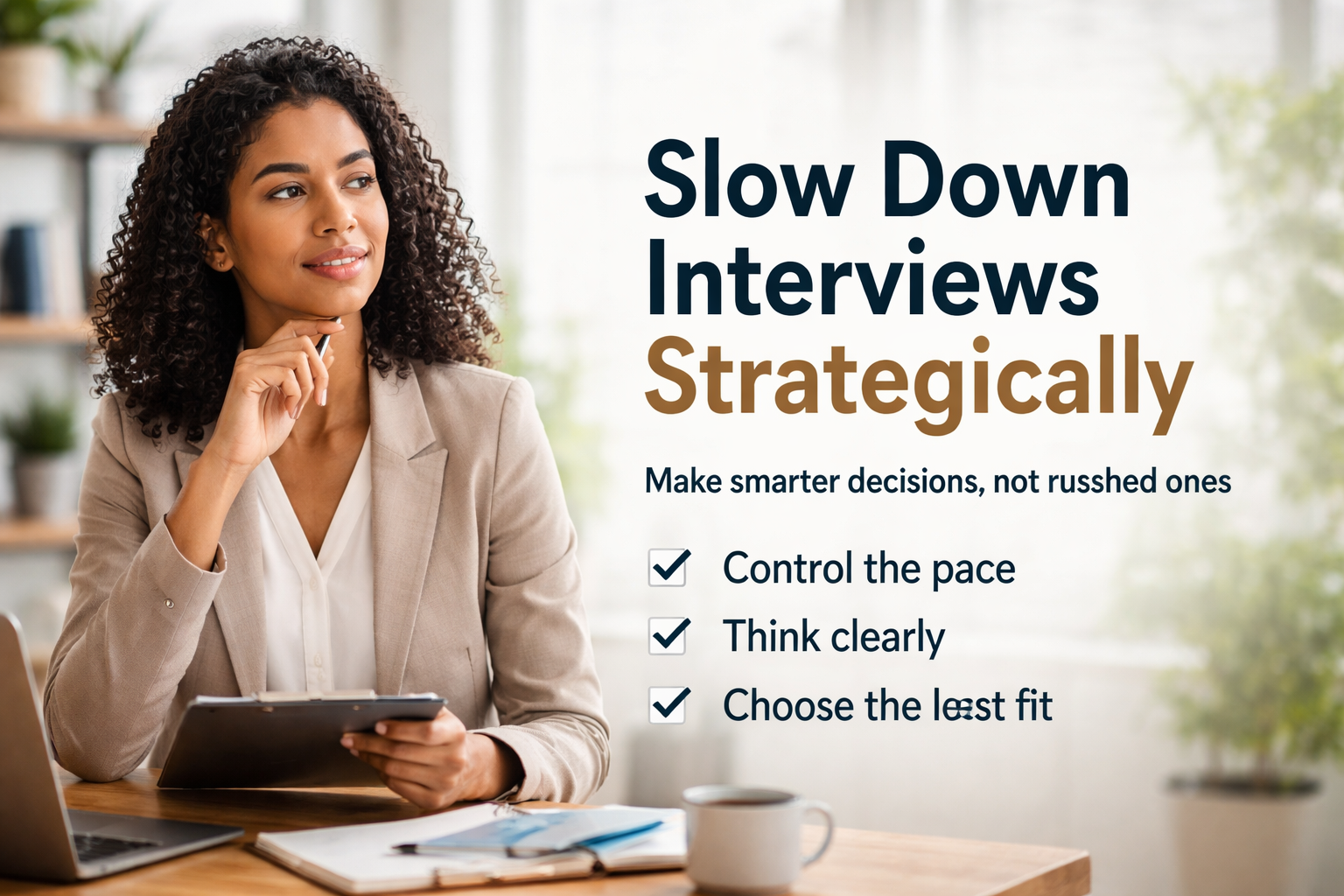
Slowing down interviews does not mean delaying or avoiding them. It means controlling the pace so you can make better decisions, reduce pressure, and increase your chances of success in a smart way.
In this article, we will understand how to slow down interviews strategically without looking uninterested.
How to Slow Down Interviews Strategically?
1. Control Your Availability (Without Looking Uninterested)
Often, companies share available time slots for interviews and ask candidates to choose one. This is where many people make a mistake—they select the earliest slot so they can give the interview as soon as possible. But this is not the right approach. You should choose a time that works best for you.
When you choose the earliest slot, even if you are not truly ready or free at that time, you don’t get enough time to prepare properly. It also creates pressure to stay free at that specific time. Because of this, you focus more on finishing other tasks instead of preparing well for the interview.
So, always choose a time when you are both physically and mentally free. This gives you enough space to prepare yourself properly, both mentally and technically.
2. Ask Thoughtful Questions to Slow Down Interviews
Many people just think that the interview should finish quickly, so they answer the recruiter’s questions in a hurry and don’t put in any extra effort. But this is completely wrong.
An interview is not just a question-and-answer session. It is an interaction between the recruiter and the candidate. In this process, the recruiter tries to understand the candidate deeply, and the candidate also learns and understands many things about the company.
So, in an interview, you should not only answer questions—you should also ask questions. This helps you learn more about the company.
You can ask about the team structure, role expectations, and challenges in the position. This naturally slows down the pace of the interview and also helps you gain valuable insights.
3. Request Time Before Giving Final Answers
The most important things in an interview are salary, relocation, and joining date. Recruiters often ask candidates about these. But it does not mean that if you are not sure yet or need more time to think, you should just give any random answer.
You can politely tell the recruiter that you would like some time to think so you can give a well-considered answer.
This helps you think properly and respond according to your comfort. It also reduces the chances of regret later.
4. Space Out Multiple Interview Rounds to Slow Down Interviews
Applying to multiple companies is a good strategy instead of depending on just one. But this approach becomes a mistake when a candidate agrees to schedule all interviews on the same day.
If you schedule all your interviews on one day, it creates a lot of pressure. You also don’t get time to improve yourself, and you end up performing the same way in every interview. As a result, the outcomes of all interviews are also similar.
That’s why you should not schedule all interviews on the same day. Keep at least a one or two-day gap between them. This way, you can learn something from each interview, improve yourself, and perform even better in the next one. You can refine your answers, which will improve your performance and increase your chances of getting hired.

5. Use “Follow-Up Time” Strategically
After each interview round, send a thoughtful follow-up email to the recruiter. This is important because you are not the only candidate—there are often hundreds of candidates applying for the same job. Because of this, the process can be long, and it becomes difficult for companies to update everyone on time.
That’s why sending a follow-up email after each round is a good approach. It helps you get updates on time and also shows your interest in the role. You can also use this email to add something important that you may have forgotten to mention during the interview.
6. Don’t Rush to Accept Offers
Every candidate gives an interview to get selected and move forward in their career. But when you are informed by the company that you are selected, you should not rush or say yes immediately out of excitement.
You should ask for some time—at least 2 to 5 days. During this time, you can compare other options, review everything properly, understand the company and the job role, and think about your interests.
When you feel confident and sure, then you can inform the company about your decision and agree on a joining date, such as after 2 or 3 days.
Conclusion
Slowing down interviews strategically is not about delaying your success—it’s about making smarter, more confident decisions. When you control the pace, you give yourself the space to think clearly, respond thoughtfully, and evaluate whether the opportunity truly aligns with your goals.
Instead of rushing through the process, a calm and intentional approach helps you present your best self while also ensuring that you’re choosing the right path—not just the fastest one.
In the end, interviews are not just about getting selected—they are about selecting what’s right for you.
Want to explore such blogs and best career opportunities? Visit the Best Job Tool.




Leave a Reply