Introduction
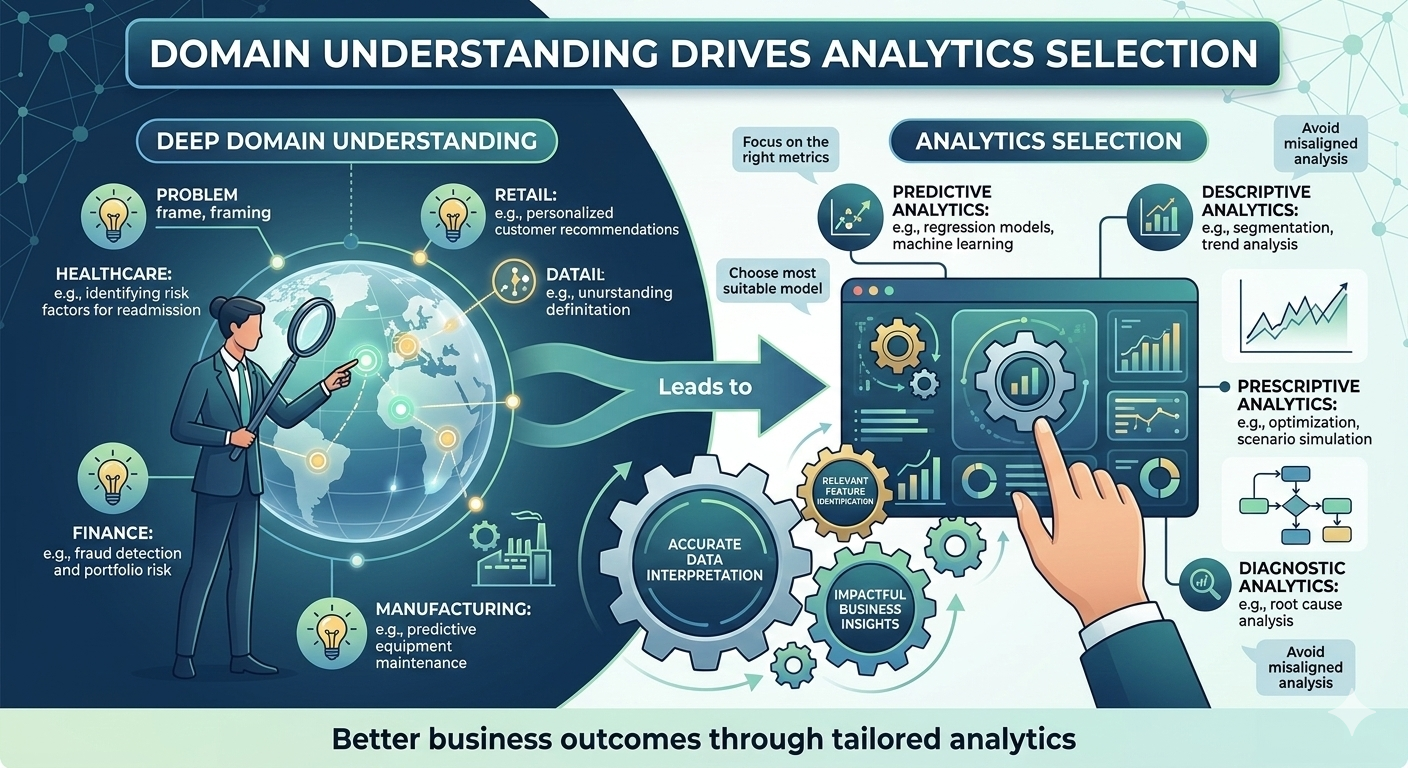
Data analytics plays a critical role in modern decision-making. Organizations collect massive amounts of data every day, yet raw data alone does not create value. Professionals must decide which metrics to analyze, which patterns matter, and which insights can support business goals. This challenge explains exactly why domain understanding improves analytics selection in data-driven organizations.
Analytics tools and algorithms can process large datasets quickly. However, without proper domain knowledge, analysts may focus on irrelevant metrics or misinterpret patterns. Domain understanding helps professionals choose the most meaningful analytics approaches and produce insights that drive real business outcomes.
Domain knowledge defines relevant business questions
Effective analytics begins with asking the right questions. Without domain knowledge, analysts may focus on technical metrics that do not influence business performance.
Professionals who understand the industry can identify meaningful questions related to revenue, customer behavior, operational efficiency, or risk management. Consequently, they select analytics methods that directly support strategic objectives.
Clear business questions guide better analytics decisions.
Industry context improves metric selection
Every industry has its own performance indicators and operational priorities. For example, customer retention matters heavily in subscription businesses, while inventory turnover matters more in retail operations.
Analysts with domain expertise recognize which metrics truly represent success. Therefore, they avoid wasting time analyzing irrelevant or misleading data points.
Accurate metric selection improves the quality of analytics outcomes.
Domain understanding prevents misinterpretation of data
Data patterns can easily be misunderstood without proper context. For instance, a sudden increase in transactions may indicate growth, but it might also result from seasonal demand or promotional campaigns.
Domain knowledge allows analysts to interpret data trends accurately. They can distinguish between temporary fluctuations and meaningful long-term patterns.
Context-driven interpretation leads to reliable insights.
Business processes influence analytics models
Analytics models should reflect how a business actually operates. Without understanding workflows, analysts may design models that ignore operational realities.
Domain-aware professionals align analytics models with real processes such as supply chains, sales cycles, or customer journeys. This alignment ensures that insights remain practical and actionable.
Operational awareness strengthens analytical accuracy.
Collaboration improves with domain familiarity
Analytics teams often work with departments such as marketing, finance, operations, or product management. Effective collaboration requires understanding each department’s priorities and terminology.
Professionals with domain knowledge communicate more effectively with stakeholders. As a result, they gather better requirements and deliver insights that match business needs.
Strong collaboration improves analytics impact.
Data quality assessment requires domain expertise
Not all data is equally valuable. Analysts must evaluate whether datasets accurately represent business operations.
Domain understanding helps professionals identify incomplete, inconsistent, or misleading data sources. They recognize which datasets reflect real business performance and which ones require further validation.
Better data selection improves analytics reliability.
Predictive models become more accurate
Predictive analytics relies on selecting appropriate variables and assumptions. Domain knowledge helps analysts identify factors that truly influence outcomes.
For example, analysts in finance understand economic indicators, while analysts in healthcare understand patient risk factors. These insights improve predictive model accuracy and relevance.
Domain expertise enhances forecasting capability.
Decision-making improves with contextual insights
Analytics results must support business decisions. If insights lack domain relevance, leaders may struggle to apply them effectively.
Professionals who combine analytics skills with domain understanding present insights that align with strategic priorities. This increases confidence in data-driven decisions.
Contextual insights drive better business outcomes.
Career value increases for domain-aware analysts
Organizations increasingly seek professionals who combine technical analytics skills with industry expertise. Analysts who understand both data tools and business operations bring greater value.
These professionals often move into roles such as business analyst, analytics consultant, or data strategy leader. Their ability to connect analytics with business goals strengthens their career prospects.
Hybrid expertise accelerates professional growth.
Conclusion
Data analytics delivers powerful insights only when professionals interpret information within the correct business context. That is precisely why domain understanding improves analytics selection in modern data-driven organizations.
Domain knowledge helps analysts ask better questions, select relevant metrics, interpret patterns accurately, and build practical models. By combining analytical expertise with industry understanding, professionals create insights that truly support decision-making and organizational success. To explore analytics opportunities that value both technical skills and business knowledge, use the best job tool to discover roles aligned with your expertise.
Find Your Dream Job Today – Explore Endless Career Opportunities and Secure Your Next Role with Best Job Tool.






Leave a Reply