Introduction
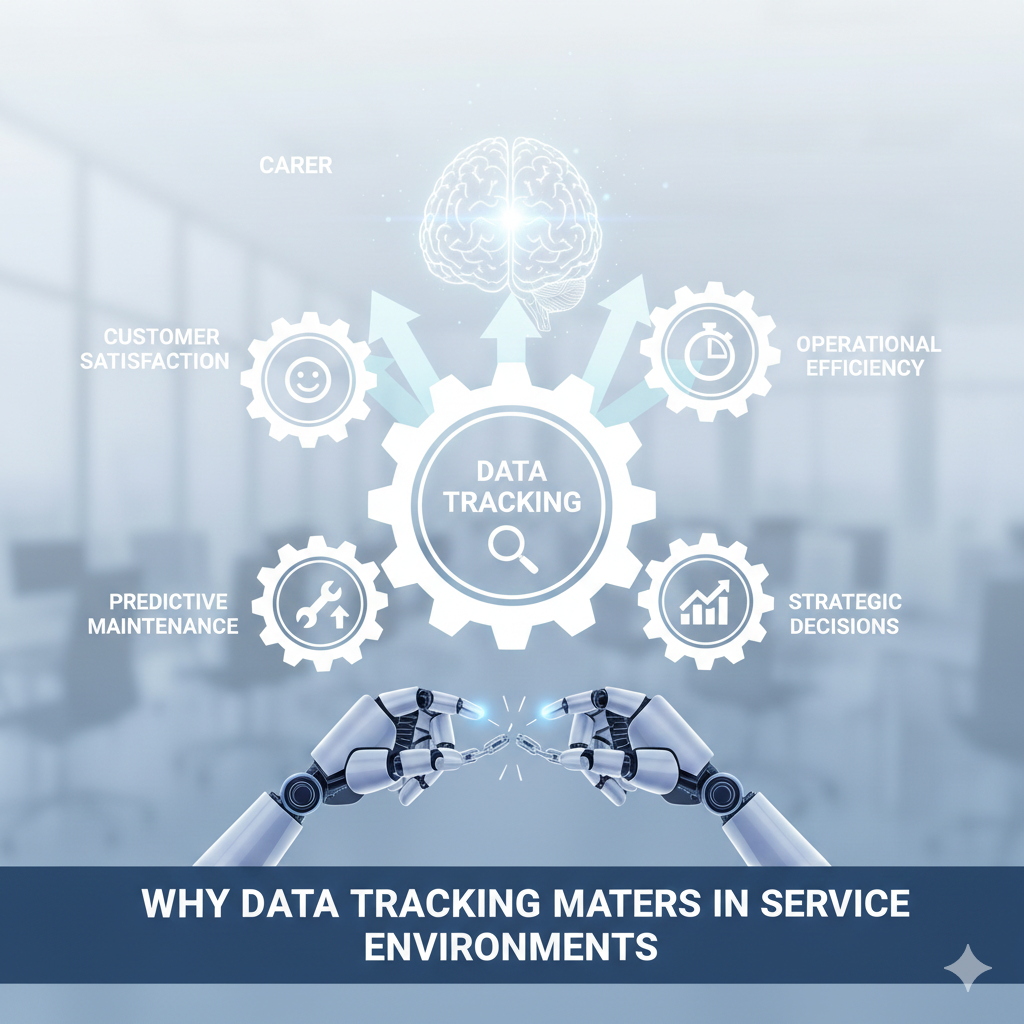
Service environments operate on speed, accuracy, and customer satisfaction. However, delivering consistent service quality is impossible without measurable insights. This is where data tracking becomes essential. From response times to resolution rates, every interaction generates valuable information. That is exactly why data tracking matters in service environments across customer support, technical service, and client management roles.
Data tracking transforms service from reactive support into a structured and performance-driven system.
Data tracking improves service consistency
In service roles, consistency is critical for customer trust. Data tracking allows organizations to monitor response patterns, resolution timelines, and service behavior.
By analyzing this data, managers can identify gaps and standardize service processes. This ensures customers receive reliable and predictable support experiences.
Consistency directly enhances customer satisfaction.
Performance evaluation becomes more objective
Without data, performance reviews rely heavily on subjective opinions. Data tracking introduces measurable performance indicators such as resolution time, ticket closure rates, and customer feedback scores.
These metrics provide a fair and transparent way to evaluate service professionals. Employees understand expectations clearly and can improve based on measurable outcomes.
Objective evaluation increases accountability and motivation.
Faster issue resolution through trend analysis
Service environments handle recurring issues. Data tracking helps identify common problems, frequent complaints, and system bottlenecks.
By recognizing patterns, teams can implement proactive solutions instead of repeatedly handling the same issues. This significantly reduces resolution time and operational workload.
Trend analysis improves efficiency and service quality.
Customer experience becomes more personalized
Data tracking enables service teams to understand customer history, preferences, and past interactions. This allows professionals to deliver personalized support rather than generic responses.
Personalized service increases customer loyalty and satisfaction. Customers feel valued when their issues are understood without repetition.
Personalization is a direct benefit of effective data tracking.
Resource allocation becomes more efficient
Service managers use data to identify peak workload hours, staffing gaps, and productivity trends. This helps in better workforce planning.
Efficient resource allocation reduces burnout, improves response speed, and enhances overall operational performance. Data-driven planning strengthens service systems.
Operational efficiency depends heavily on accurate tracking.
Quality assurance improves with measurable insights
Data tracking allows organizations to review service interactions and maintain quality standards. Metrics such as customer satisfaction scores and feedback ratings highlight service effectiveness.
Quality assurance teams can use this data to train employees and improve communication strategies. Continuous improvement becomes easier with clear performance insights.
Quality control becomes systematic instead of reactive.
Data tracking supports proactive service strategies
Instead of waiting for customer complaints, service teams can use data to anticipate issues. Predictive insights help prevent service failures before they escalate.
This proactive approach improves brand reputation and customer trust. Organizations that track service data effectively deliver smoother customer journeys.
Prevention becomes more effective than correction.
Transparency increases internal accountability
When service data is tracked and visible, employees become more accountable for their performance. Clear metrics reduce ambiguity in expectations and outcomes.
Transparency encourages professionalism and consistent service behavior. It also strengthens internal communication between teams and management.
Accountability improves overall service culture.
Career growth benefits from data awareness
Professionals who understand service metrics and analytics gain a competitive advantage. Data literacy helps them improve performance and adapt to modern service tools.
Employers increasingly value service professionals who can interpret dashboards, reports, and performance metrics. This skill enhances long-term career growth.
Data awareness is becoming a core service competency.
Conclusion
Modern service environments rely heavily on measurable insights to maintain quality, efficiency, and customer satisfaction. That is precisely why data tracking matters in service environments for both operational success and employee performance.
From improving consistency to enabling personalization and proactive solutions, data tracking strengthens every aspect of service delivery. Professionals who embrace data-driven service practices position themselves for better performance, growth, and long-term career success.
Find Your Dream Job Today – Explore Endless Career Opportunities and Secure Your Next Role with Best Job Tool.






Leave a Reply