Introduction
In today’s fast-changing job market, companies do not only hire people for what they know. They also hire people for how fast they can learn. Skills become outdated quickly. Tools change. Technology updates. Market trends shift. Because of this, recruiters look for candidates who can learn fast and adapt easily.
Learning speed does not mean how many degrees you have. It means how quickly you understand new information, apply it in real situations, and improve your performance. A candidate with high learning speed can grow with the company. That is why recruiters give special attention to this quality during the hiring process.
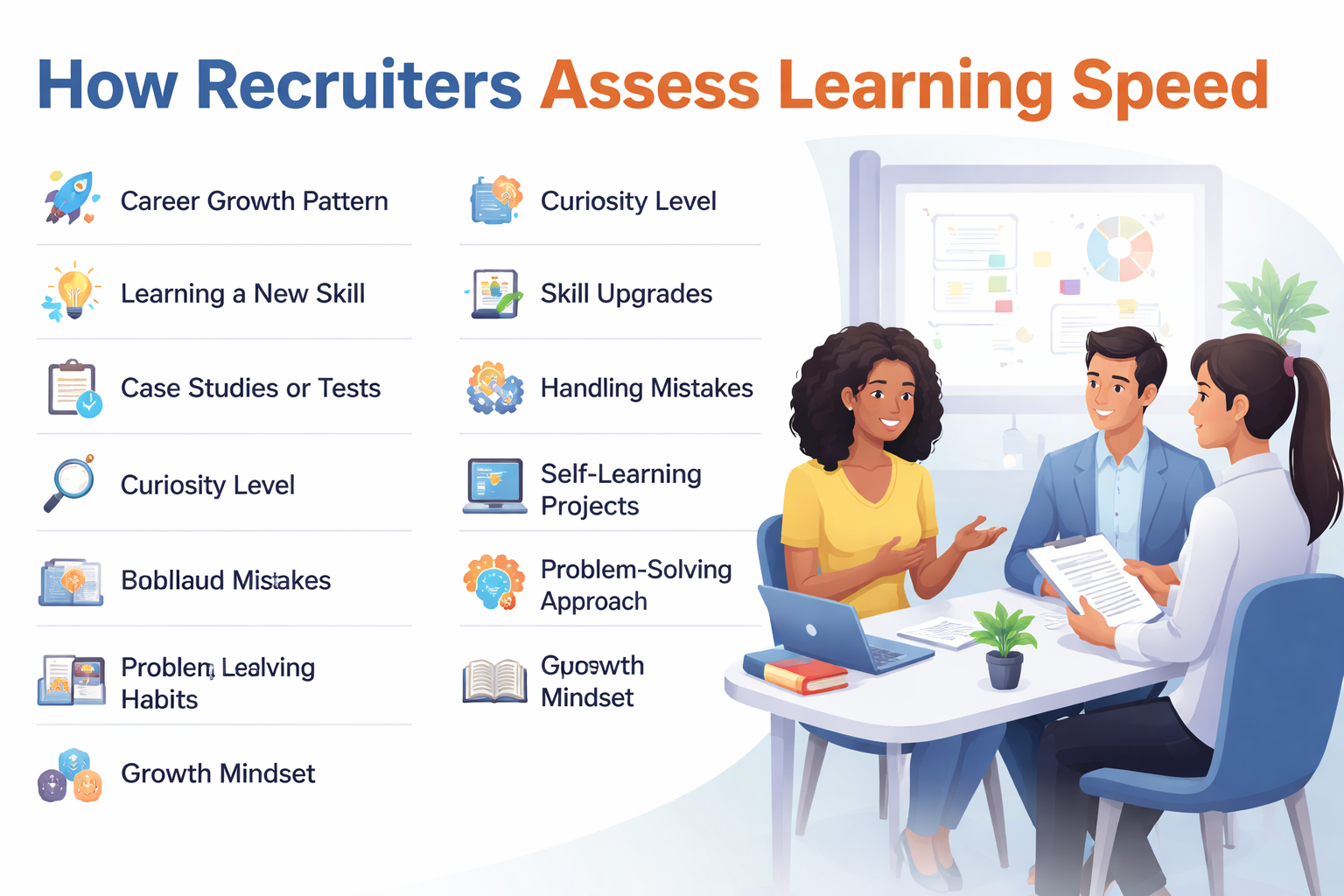
In this article, we will understand how recruiters assess learning speed and what signals they look for in candidates.
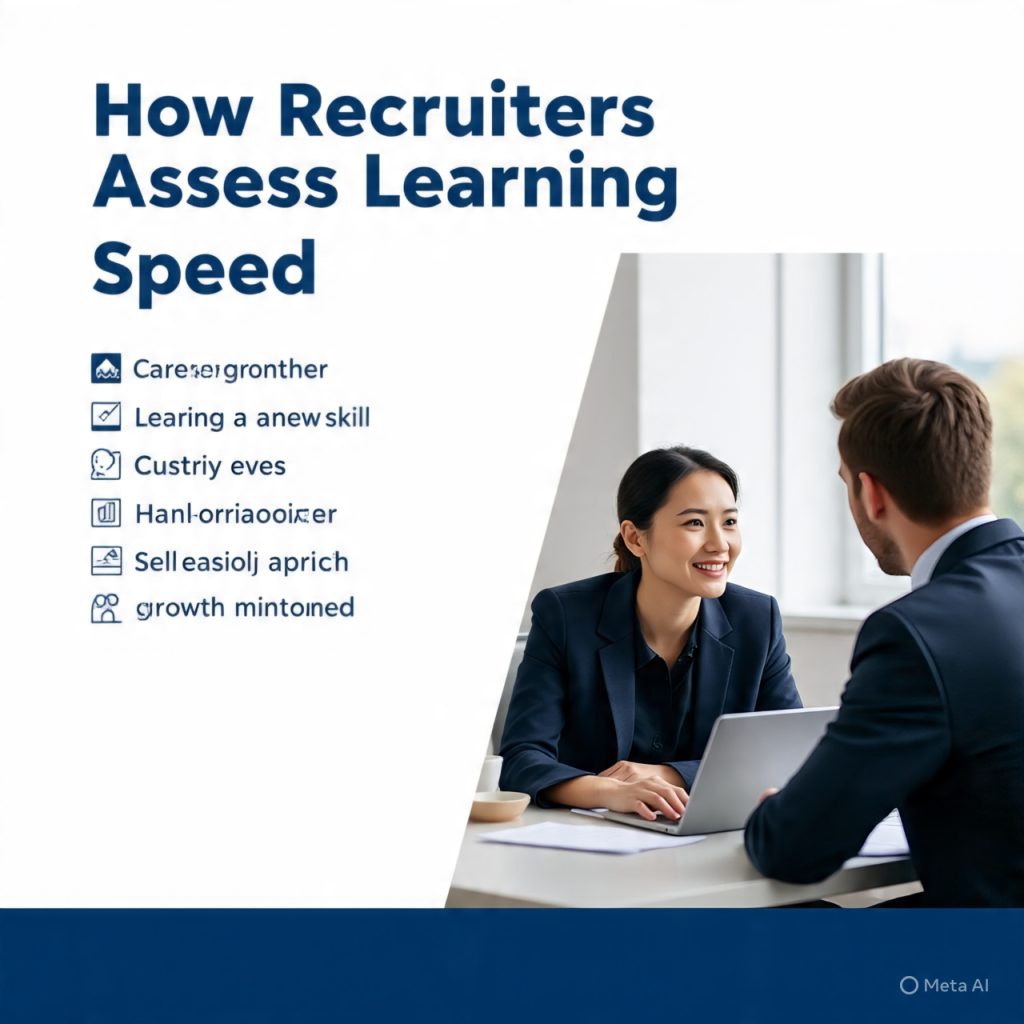
How Recruiters Assess Learning Speed?
1. They Look at Your Career Growth Pattern to Assess Learning Speed
Recruiters carefully check your resume to understand your growth journey. If you started as a junior employee and slowly moved to higher roles, it shows that you learned new skills and handled more responsibility.
For example, if someone started as a content writer and later became a content strategist, it shows that the person learned planning, analysis, and leadership skills. Growth within a short period can indicate fast learning ability.
Recruiters also notice if you changed industries successfully. If you moved from one field to another and still performed well, it shows that you can learn new systems quickly.
2. They Ask About How You Learned a New Skill
During interviews, recruiters often ask questions like:
- Tell me about a time when you had to learn something quickly.
- How do you learn a new tool or software?
- Describe a situation where you had no prior experience but still completed the task.
These questions are not random. Recruiters want to know your learning process. Do you watch tutorials? Do you read articles? Do you ask seniors? Do you practice daily?
If you clearly explain your method and show real results, it creates a strong impression. Recruiters are more impressed when you talk about practical learning instead of just theory.
3. They Observe How You Answer Unexpected Questions
Sometimes recruiters ask questions that are not directly related to your experience. They may give you a situation you have never faced before.
For example:
“What will you do if you are given a project with zero guidance?”
Your answer shows how you think. Do you panic? Or do you say that you will research, break the task into small steps, and ask for clarification if needed?
Your ability to think logically in new situations shows your learning speed and adaptability.
4. They Give Case Studies or Practical Tests to Assess Learning Speed
Many companies use assignments or case studies to check learning speed. They may give you a new tool, short instructions, or a problem to solve.
They do not expect perfection. They want to see:
- How fast you understand instructions
- How you apply knowledge
- How you handle mistakes
- How you improve within a short time
For example, a marketing candidate may be asked to create a small campaign plan using a tool they have never used before. If the candidate quickly understands the basics and creates a reasonable plan, it shows fast learning ability.
5. They Notice How You Talk About Mistakes
People who learn fast are not afraid of mistakes. They see mistakes as lessons.
Recruiters often ask:
“Tell me about a mistake you made and what you learned from it.”
If you blame others, it creates a negative impression. But if you say:
“Yes, I made this mistake. I understood the reason. I improved my process. And I never repeated it.”
It shows maturity and growth mindset. Fast learners reflect on their mistakes and change their behavior.
6. Assess Learning Speed by Checking Curiosity Level
Curiosity is closely connected to learning speed. Recruiters observe whether you ask meaningful questions during the interview.
For example:
- What tools does your team use?
- How does the company support skill development?
- What are the biggest challenges in this role?
These questions show that you want to understand and grow. A curious mind learns faster because it wants to explore more.
If a candidate shows no interest and asks nothing, recruiters may feel that the person is not motivated to learn.
7. They Analyze How You Explain Complex Topics
Recruiters sometimes ask you to explain a skill or concept you know. They observe how clearly you explain it.
If you can explain something in simple words, it shows deep understanding. Deep understanding comes from learning properly.
For example, if you are a software developer and you explain a technical concept in simple language, it shows that you did not just memorize it. You truly understand it.
Understanding deeply means you can also learn new concepts easily.
8. They Look at Skill Upgrades to Assess Learning Speed
Recruiters check if you regularly upgrade your skills. Have you done any recent courses? Have you learned new tools? Have you attended workshops?
In today’s time, online platforms like Coursera and Udemy make learning easy. If your resume shows recent certifications or training, it shows that you believe in continuous learning.
It does not mean you need expensive courses. Even self-learning through books, YouTube, or practice projects shows initiative.
9. Assess Learning Speed by Observing Adaptability in Conversation
Sometimes interviewers change the topic quickly. They move from technical questions to behavioral questions.
Your ability to shift smoothly shows mental flexibility. If you take too much time to adjust, it may show slow adaptability.
Fast learners usually stay calm and adjust their thinking according to the situation.
10. They Review How Quickly You Understand Feedback
During interviews or assignments, recruiters may give small feedback.
For example:
“Can you make this answer more specific?”
“Can you add more data?”
If you immediately improve your response, it shows that you absorb feedback quickly.
Learning speed is not only about understanding new information. It is also about applying feedback immediately.
11. They Check for Self-Learning Projects
Many recruiters appreciate candidates who build personal projects.
For example:
- A writer who starts a blog.
- A designer who creates personal design samples.
- A coder who builds small applications.
These projects show that you do not wait for someone to teach you. You take initiative and learn on your own.
Self-learning is a strong indicator of fast learning speed.
12. They Evaluate Problem-Solving Approach
Fast learners do not just gather information. They connect information and solve problems.
Recruiters may ask situational questions like:
“What will you do if a client rejects your work?”
Your structured answer shows your thinking process. If you say you will analyze feedback, identify gaps, improve quality, and communicate clearly, it shows maturity and learning ability.
13. They Notice Your Confidence with New Challenges
Confidence does not mean arrogance. It means you believe you can learn.
If you say:
“I have not worked on this exact tool, but I am confident I can learn it quickly.”
It shows positive attitude. Many recruiters prefer someone who is willing to learn rather than someone who knows everything but resists change.
14. They Assess Time Taken to Complete Hiring Steps
Sometimes learning speed is visible even in small things:
- How quickly you submit assignments
- How well you follow instructions
- How accurately you understand email communication
If a recruiter sends instructions and you follow them correctly without confusion, it shows attention and quick understanding.
Careless mistakes may indicate poor comprehension skills.
15. They Look at Your Reading and Research Habits
Recruiters sometimes ask:
“How do you stay updated in your field?”
If you mention books, blogs, industry reports, podcasts, or newsletters, it shows that you actively learn.
For example, someone in the technology field may follow updates from Google or Microsoft to stay informed.
Regular learning habits increase learning speed over time.
16. They Analyze Body Language and Listening Skills to Assess Learning Speed
Learning speed also depends on listening skills.
If you interrupt the interviewer or do not listen carefully, you may misunderstand questions.
But if you listen calmly, nod, maintain eye contact, and answer exactly what was asked, it shows strong comprehension skills.
Good listeners usually learn faster because they understand information correctly the first time.
17. They Check Emotional Intelligence to Assess Learning Speed
Fast learning also requires emotional control. If you become nervous under pressure, your thinking ability may reduce.
Recruiters observe:
- How you handle difficult questions
- How you respond to disagreement
- How you behave under stress
Calm and balanced candidates usually process information better.
18. They Compare You with Industry Demands
Every industry changes at a different speed. Technology and marketing change very fast. Government or administrative roles may change slowly.
Recruiters assess whether your learning speed matches industry demands. For example, tech companies expect faster upskilling compared to traditional roles.
If your profile shows slow growth in a fast-changing industry, recruiters may question your adaptability.
19. They Look for Growth Mindset
A growth mindset means you believe skills can improve with effort.
Recruiters prefer candidates who say:
“I am still learning.”
“I am open to feedback.”
“I want to improve.”
This mindset shows long-term potential. Learning speed increases when a person believes in self-improvement.
20. They Evaluate Consistency
Learning speed is not only about quick understanding. It is about consistent improvement.
If your work history shows steady progress, skill improvement, and better responsibilities, it indicates strong learning ability.
In contrast, if there is no growth for many years, recruiters may feel that you stopped learning.
Conclusion
Recruiters do not expect candidates to know everything. They understand that no one is perfect. What they really want is someone who can grow with the company.
Learning speed is a powerful quality. It shows adaptability, curiosity, problem-solving ability, and emotional maturity. Recruiters assess it through resume patterns, interview answers, assignments, behavior, and small signals.
In a world where change is constant, fast learners have a strong advantage. If you focus on continuous improvement and stay open to new knowledge, you will naturally develop strong learning speed.
Instead of trying to appear perfect, focus on showing that you are willing to learn, ready to improve, and confident enough to face new challenges. That mindset alone can make you stand out in front of any recruiter.



Leave a Reply