Introduction
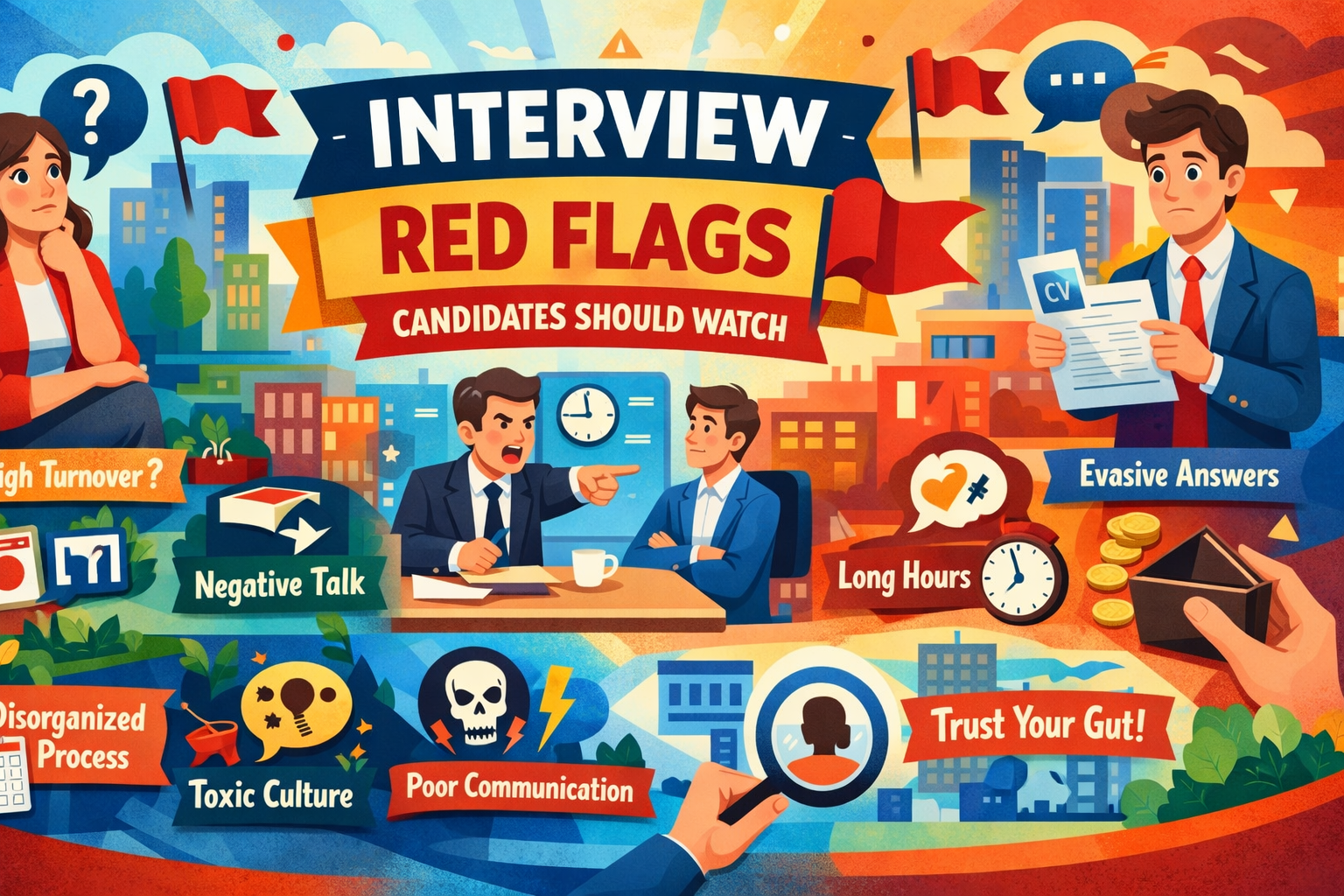
As we all know, an interview is an important stage for every individual, whether they are under pressure, experienced, or just starting their career. Interviews are crucial for taking your career to the next level. But while trying to present yourself well, do you also try to understand the company? There are many interview red flags that candidates should notice and understand before joining any company.
It is not always true that a company is the best just because they select you. Before joining, it is very important to know about the company to plan your work and growth properly.
In this article, we are going to talk about the interview red flags candidates should watch out for.
Interview Red Flags Candidates Should Watch
1. Lack of Clear Job Description
The first red flag that every candidate should notice is an unclear job description. When a company does not clearly explain the role and responsibilities of a job, it usually means that either the company itself is confused about the role or the company is disorganized.
If you work in such a disorganized company, many problems can arise. For example, you might have to do tasks that are beyond your skills, which can lead to frustration and stress, and it can also affect your work-life balance.
That’s why, during the interview, you should ask questions to the recruiter about the day-to-day responsibilities. You can ask for examples of tasks you will handle. This will help you easily decide whether you want to join the company or not.
2. Interview Red Flags: High Turnover Rate
The second red flag is high turnover rate. If a company has a high turnover rate, it usually means that the management is weak, the workplace culture is not good, or employees are not satisfied with their jobs.
If a company has a high turnover rate, you should think twice before joining. This could mean a stressful work environment, unrealistic expectations, or a team with low morale, which can affect your performance.
That’s why, during the interview, it is always effective to ask about employee tenure. You can also check platforms like LinkedIn or Glassdoor. Understanding turnover can help candidates avoid jobs that may be unstable or stressful.
3. Disorganized Interview Process
Another red flag that every candidate should watch for is the interview process. If the interview process seems unprofessional, it usually indicates that the organization has several internal problems and cannot manage a smooth interview process.
A disorganized interview process can be a sign of weak management practices and lack of professionalism. To identify this, notice things like: the recruiter arriving late, being unprepared, or the schedule being changed repeatedly without proper communication. These are signs that the interview process is not professional.
Additionally, you can politely ask for clarification about the interview stages and timeline. If you feel that the interview process is disorganized, it is often best to avoid joining that company.
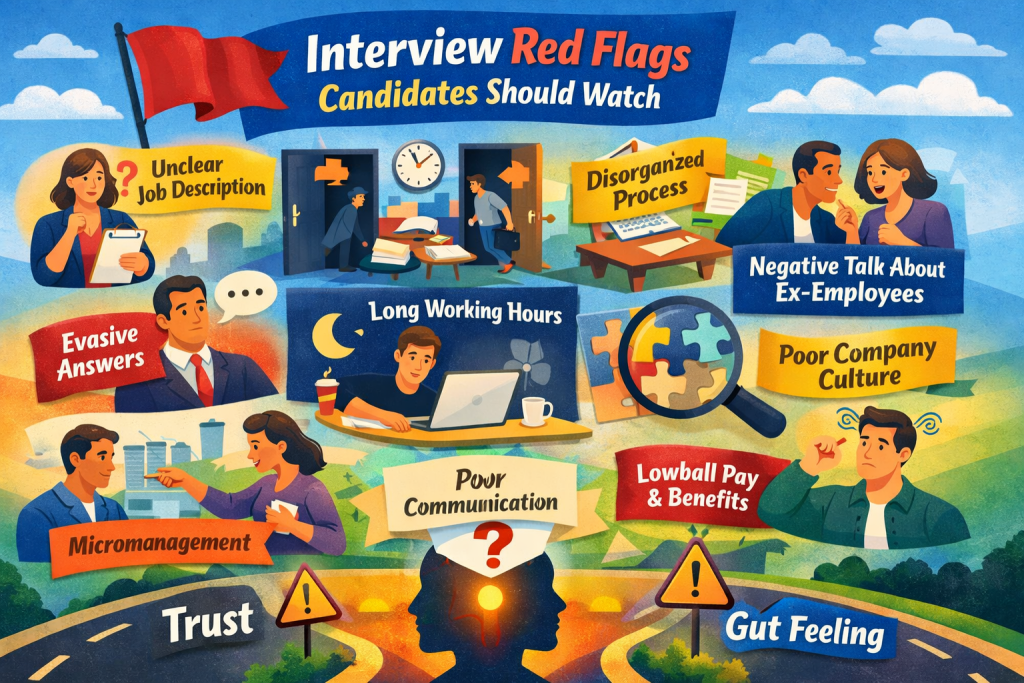
4. Negative Talk About Former Employees
As we know, in an interview, the recruiter notices everything about a candidate. Even if a candidate speaks negatively about their past workplace or employees, it creates a negative impression on the recruiter. Similarly, a candidate should also pay attention to the recruiter’s behavior and values, as it affects their impression of the company.
If a recruiter repeatedly complains openly about their employees or team members, it is a red flag. This behavior is unprofessional and shows how the company may treat its employees.
You should listen carefully to the recruiter and ask neutral questions about how teams work together. If the recruiter keeps making negative comments about their employees, you should think twice before joining that company.
5. Interview Red Flags: Vague or Evasive Answers
Another important red flag for candidates is evasive answers. It’s not only the candidate’s answers that matter; an interview is like a conversation where both the recruiter’s and the candidate’s points are important.
If a recruiter avoids any question or gives vague answers, it is a red flag. This is because avoiding questions usually means the company is hiding information about growth opportunities, work culture, or the team. It could also indicate internal problems or poor management in the company.
You can politely ask for examples or scenarios to get clarity. You can also request the recruiter to explain points again. Additionally, you can research the company on your own through employee reviews on social media or platforms like Glassdoor, so you understand the company well before joining.
Conclusion
Interviews are very important for candidates, whether they are under pressure or experienced professionals. An interview is an opportunity for everyone to boost their career and take it to the next level. But there are some red flags that candidates ignore, which can give a negative impression to the recruiter and lead to rejection.
In this article, we have talked about the interview red flags that candidates should watch out for. If you read this article carefully, you will be able to avoid these red flags easily.
To explore more such blogs, visit here.






Leave a Reply