Introduction
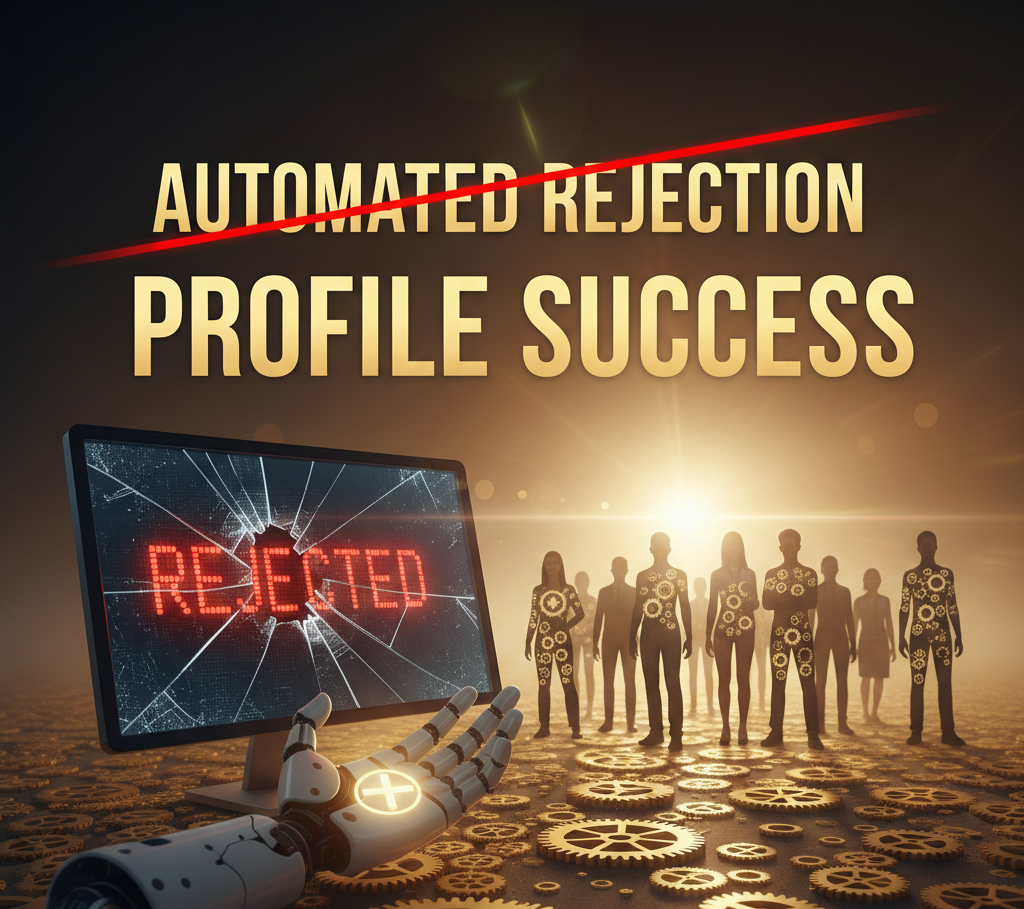
Automated rejection is one of the most frustrating parts of modern job searching. You apply with hope, wait for a response, and then receive a generic rejection email. Sometimes, you do not even get a message. This experience can make candidates rejection doesn’t mean question their skills and confidence. However, automated rejection does not always reflect your true potential. In many cases, it reflects system rules, volume, and timing.
Understanding why automated rejection doesn’t mean profile failure can help you stay focused, improve your approach, and continue applying with clarity. It also helps you stop taking automated outcomes personally.
Automated hiring is built to manage volume, not judge talent
Most companies receive more applications than they can review manually. Even for entry-level roles, hundreds of candidates may apply within a day. Because of this, employers use automation to reduce workload and shortlist faster.
Automated systems are designed to filter. They are not designed to understand your full value. They scan resumes for signals such as keywords, job titles, location, and experience level. If your resume does not match the filters, the system may reject it quickly.
This rejection is often a process outcome, not a talent judgment.
Many rejections happen due to strict filters
Companies set specific conditions inside their ATS. These conditions can reject candidates automatically, even when the profile is strong.
For example, a role may require a specific location, shift availability, or joining timeline. Some applications include knockout questions that instantly remove candidates who answer “no.” In such cases, rejection happens because of rules, not because of capability.
Even minor differences can trigger rejection. A candidate may be suitable, but if they do not meet one strict requirement, the system will not move them forward.
That is why automated rejection doesn’t mean profile failure. It often means you did not match one filter.
Keyword mismatch is common, especially for freshers and switchers
Automation depends heavily on keyword matching. If your resume uses different wording than the job description, the system may rank you lower.
This affects freshers and career switchers the most. Their experience may be relevant, but their job titles and skill language may not match typical patterns. For example, someone with internship projects may be strong, but the ATS may prioritize candidates with direct job titles.
This does not mean your profile is weak. It means your resume needs better alignment and clearer positioning.
Resume formatting issues can reduce visibility
Even a qualified candidate can face rejection if the ATS cannot read the resume properly. Formatting problems can break parsing. That means your skills, experience, and education may not be extracted correctly.
Templates with tables, columns, icons, and text boxes often create these issues. The system may misread content order or skip key sections. As a result, your resume may look incomplete inside the recruiter’s dashboard.
A rejection caused by poor parsing is not a reflection of your ability. It is a technical issue that can be fixed quickly.
Timing and competition matter more than candidates realize
Many candidates apply after a job has already received hundreds of applications. At that stage, recruiters may shortlist early applicants and stop reviewing new ones.
Some systems also auto-reject candidates after a shortlist is filled. This can happen even if your resume is strong.
Hiring is often driven by urgency. Companies may close roles quickly when they find suitable profiles early. So rejection can be a timing issue, not a quality issue.
This is another reason why automated rejection doesn’t mean profile failure. Sometimes, you were simply late in the queue.
Recruiters still adjust decisions manually
Even when automation is used, recruiters often review profiles manually. They may re-rank candidates, reopen applications, or shortlist profiles that the ATS did not prioritize.
However, they can only do this when they have time. If the hiring team is overloaded, they may rely more on automation.
That is why candidates should focus on being visible early. They should also build a resume that performs well in both automation and manual review.
Rejection does not measure your long-term employability
A single rejection is not a full assessment of your career. It is one decision in one system, for one role, at one time.
Even top candidates face rejection because hiring needs change. Budgets shift. Job descriptions get updated. Internal candidates apply. Referrals get prioritized.
Your value does not drop because one company rejected you. What matters is whether you keep improving and applying strategically.
The job market rewards persistence combined with smart execution.
What to do after an automated rejection
The best response is not emotional. It is strategic. You should use rejection as feedback about process, not identity.
Start by improving your resume structure. Use a single-column format with clear headings. Add role-specific skills naturally. Highlight projects and achievements that prove your capability.
Apply early and focus on roles that match your current level. Use LinkedIn to connect with recruiters and hiring teams. When possible, seek referrals to reduce dependence on automated screening.
Also, track your applications. If you notice repeated rejections in a specific role type, adjust your resume and targeting.
Small changes often create big improvements in response rate.
Conclusion
Automated rejection is common, but it is not a final verdict on your career. It often happens due to filters, keyword mismatch, formatting issues, or timing. That is why automated rejection doesn’t mean profile failure. It means the system did not process your application in your favor.
When you focus on clarity, relevance, and strong proof of skills, your chances improve. When you apply early and build professional visibility, you reduce the impact of automation.
To explore better opportunities and apply with confidence, use the best job tool.
Find Your Dream Job Today – Explore Endless Career Opportunities and Secure Your Next Role with Best Job Tool.




Leave a Reply