Introduction
In today’s competitive job market, sending a generic resume is no longer enough. Recruiters and hiring managers are looking for candidates who not only have the right skills and experience but also demonstrate that they understand the company and the role. This is why resume personalization has become a crucial strategy for job seekers.
A personalized resume can significantly increase your chances of getting noticed and landing an interview. In this article, we will discuss effective resume personalization strategies that work and how you can apply them to your own resume.
What is Resume Personalization?
Resume personalization is the process of tailoring your resume for a specific job application. Instead of sending the same resume to multiple employers, you adjust your resume to match the job description, company values, and requirements. This shows the recruiter that you are genuinely interested in the position and have taken the time to understand what the company needs.
A personalized resume makes your application stand out because it directly addresses the skills, experiences, and qualities that the employer is seeking.
Why Resume Personalization is Important?
- Catches Recruiter’s Attention
Recruiters spend only a few seconds scanning each resume. If your resume clearly matches the job description, it is more likely to grab their attention. - Shows Genuine Interest
Personalized resumes demonstrate that you are serious about the job and not just applying to multiple positions randomly. - Highlights Relevant Skills
By focusing on the skills and experiences that matter most to the employer, you increase the chances of being shortlisted for an interview. - Improves Your Chances with ATS
Many companies use Applicant Tracking Systems (ATS) to filter resumes. By including keywords from the job description, your resume is more likely to pass through the system.
Steps to Personalize Your Resume
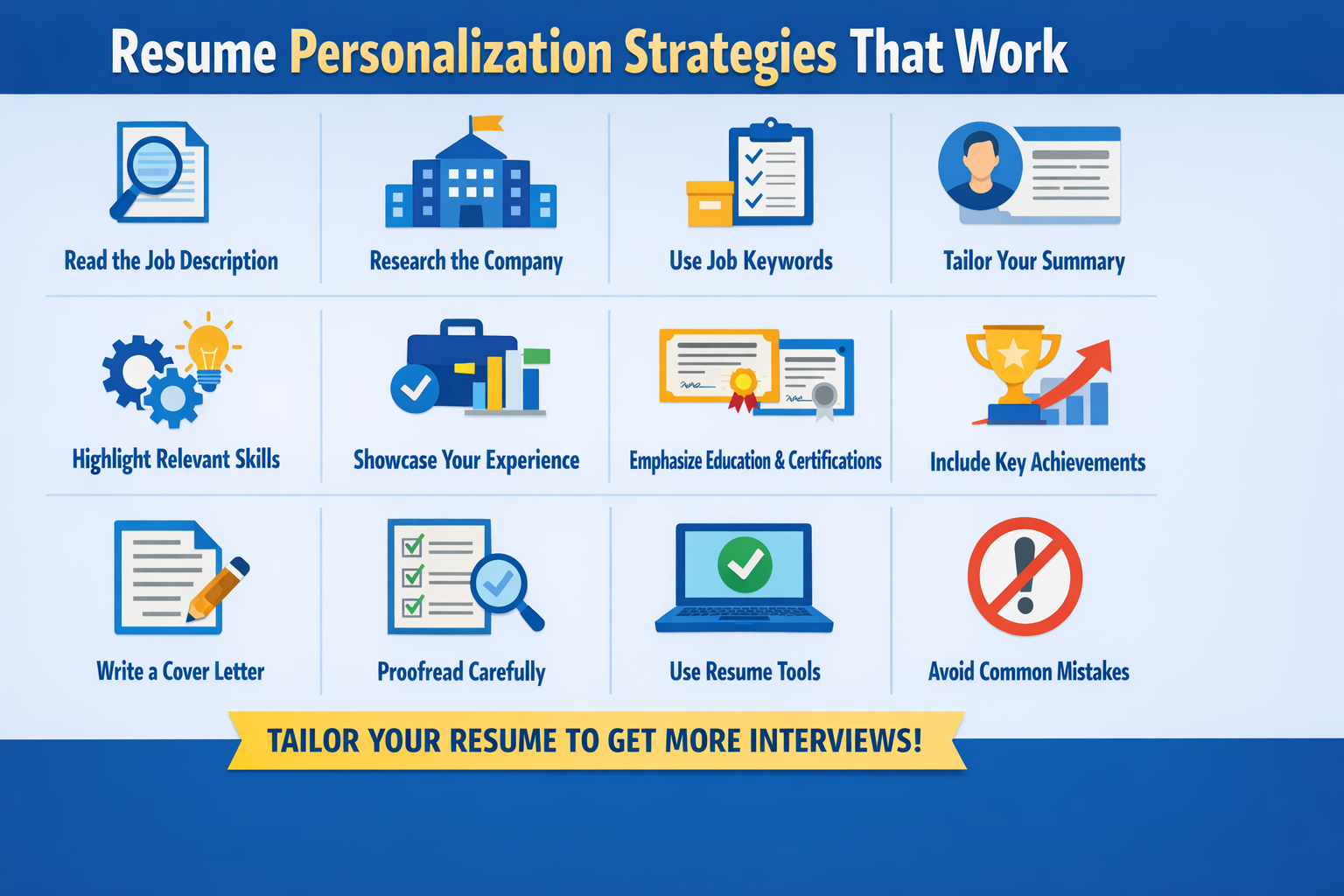
1. Carefully Read the Job Description
The first step in resume personalization is to carefully read the job description. Look for:
- Required skills
- Responsibilities
- Qualifications
- Keywords used
Highlight the words and phrases that appear multiple times. These are the elements that matter most to the employer and should be reflected in your resume.
2. Research the Company for Resume Personalization
Before customizing your resume, learn about the company. Check their website, social media pages, and recent news. Understand their:
- Mission and values
- Products or services
- Company culture
- Goals and achievements
This information helps you tailor your resume to show that you fit well with the company and its values.
3. Use Keywords from the Job Description
Many companies use ATS software to filter resumes based on keywords. Identify the key skills, qualifications, and responsibilities mentioned in the job description. Then, include these keywords naturally in your resume.
For example, if the job description says:
“Looking for a project manager with experience in Agile methodology and strong communication skills.”
Your resume can include:
- “Managed multiple projects using Agile methodology.”
- “Strong communication skills to coordinate with cross-functional teams.”
4. Tailor Your Professional Summary
Your professional summary is the first section recruiters read. Make it specific to the role. Instead of a generic statement, write a summary that shows your experience and skills relevant to the position.
Example of a generic summary:
“Experienced project manager with skills in team management and project planning.”
Personalized summary for a job requiring Agile experience:
“Project manager with 5 years of experience in Agile project management. Skilled in leading cross-functional teams, ensuring timely delivery, and improving process efficiency.”
5. Highlight Relevant Skills for Resume Personalization
Only include the skills that are relevant to the job. For example, if you are applying for a digital marketing role, prioritize skills like SEO, social media marketing, and Google Analytics over unrelated skills like Java programming.
You can organize your skills section into:
- Technical Skills
- Soft Skills
This helps recruiters quickly see that you have the skills they need.
6. Showcase Relevant Experience for Resume Personalization
When describing your work experience, focus on achievements that align with the job requirements. Use action verbs and quantifiable results to show impact.
For example:
“Led a team of 10 developers to deliver a mobile application project two weeks ahead of schedule, improving customer satisfaction by 20%.”
This approach demonstrates not just what you did but the value you added.
7. Customize Education and Certifications
If the job requires specific education or certifications, make sure to highlight them. Place relevant certifications near the top of your resume to make them visible.
For example:
- Certified Scrum Master (CSM)
- Google Analytics Certification
Including relevant certifications can make you stand out from other applicants.
8. Include Achievements and Projects
Achievements and projects provide proof of your skills. Highlight projects that match the job responsibilities. Use numbers, percentages, or time frames to show impact.
Example:
“Developed a social media campaign that increased engagement by 35% in three months.”
For candidates with less work experience, including side projects, internships, or volunteer work can also demonstrate relevant skills.
9. Adjust the Resume Format for Resume Personalization
While content matters most, a clean and organized format can make a big difference. Use headings, bullet points, and sufficient white space to make your resume easy to read.
- Use reverse chronological order for work experience.
- Keep the font professional (Arial, Calibri, or Times New Roman).
- Avoid cluttered designs unless applying for a creative role.
A well-formatted resume improves readability and leaves a positive impression.
10. Write a Personalized Cover Letter
A resume alone is not enough. A personalized cover letter complements your resume and allows you to explain why you are the perfect fit for the role.
Include:
- Why you are interested in the company
- How your experience matches the job requirements
- Specific achievements related to the role
Even a short, personalized cover letter can greatly increase your chances of being noticed.
11. Proofread Carefully for Resume Personalization
Errors in your resume can create a negative impression. Proofread your resume multiple times or ask someone else to review it. Check for:
- Spelling mistakes
- Grammar errors
- Consistency in formatting
A polished, error-free resume shows professionalism.
12. Use Resume Customization Tools
There are tools available that can help you customize your resume for each job. These tools suggest keywords, optimize formatting, and help you highlight relevant skills and experience. Some popular tools include:
- Jobscan
- Resumake
- Zety
Using these tools can save time and ensure your resume is tailored effectively.
Common Mistakes to Avoid in Resume Personalization
Even when personalizing your resume, some mistakes can reduce its impact. Avoid these errors:
- Overloading with Keywords
Don’t just copy all the keywords from the job description. Use them naturally in context. - Making It Too Long
Keep your resume concise. For most professionals, 1–2 pages are ideal. - Neglecting Soft Skills
Soft skills like communication, teamwork, and problem-solving are just as important as technical skills. - Using Generic Summaries
Always personalize your professional summary for each job. Generic summaries are easily ignored. - Ignoring Company Research
A resume that does not reflect the company’s culture and values may appear irrelevant.
Conclusion
Resume personalization is no longer optional—it is essential in today’s competitive job market. A generic resume may get overlooked, but a personalized resume that matches the job description, highlights relevant skills, and demonstrates genuine interest can make a strong impression on recruiters.
By carefully reading the job description, researching the company, using relevant keywords, tailoring your professional summary, and showcasing achievements, you can create a resume that stands out. Remember to format it well, proofread it, and include a personalized cover letter.
Investing time in personalizing your resume is investing in your career. With these strategies, you can significantly improve your chances of landing interviews and getting your dream job.
Read more such blogs here.

Leave a Reply