Introduction
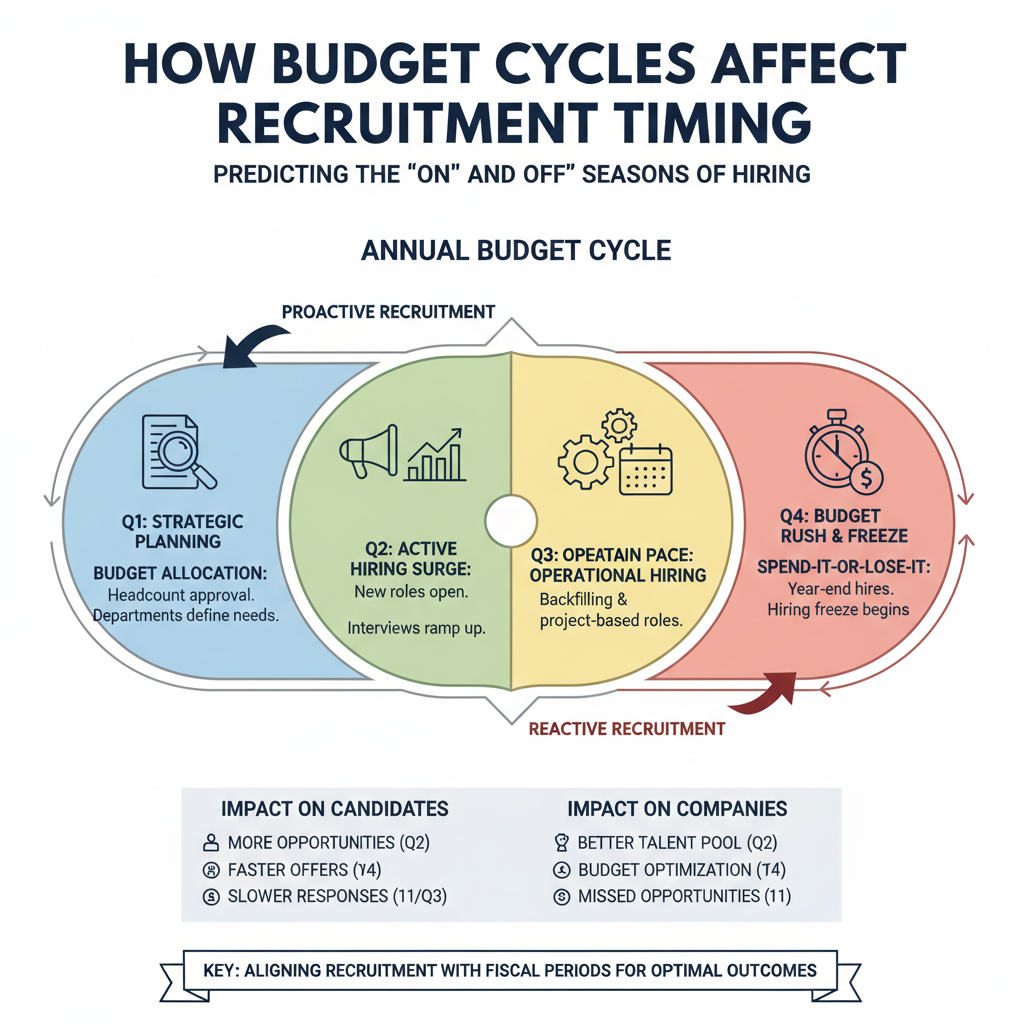
Hiring is not only about finding the right candidate. It is also about getting approval to spend money. That is why recruitment timelines often depend on budgets more than job seekers expect. A company may love your profile, but still delay the process because the budget is not ready. This is exactly how budget cycles affect recruitment timing across industries.
Most companies plan budgets quarterly or yearly. They allocate headcount and salary ranges based on forecasts. Therefore, hiring moves faster when budgets are open and approved. Meanwhile, it slows down when teams are reviewing costs or waiting for sign-off.
Budget approvals decide when a job can officially open
Many job roles exist in planning before they appear online. Teams may discuss hiring for weeks, but the role cannot go live until budget approval is confirmed. This is a common reason candidates hear, “We are interested, but we are waiting for internal approval.”
Also, some roles get approved with strict conditions. The company may approve hiring only if the salary stays within a certain range. In addition, they may restrict location, level, or contract type. That affects how recruiters search and how quickly they can close the role.
So, even if a company needs people urgently, approvals decide the timeline. That is a clear example of how budget cycles affect recruitment timing.
Quarter-start hiring often moves faster than quarter-end
Many companies begin a quarter with clear targets and fresh budgets. That makes hiring easier because headcount plans are already set. Recruiters get active, and managers schedule interviews more easily. Therefore, job seekers often see faster response rates at the start of a quarter.
However, quarter-end hiring behaves differently. Teams become cautious because they want to control spending and finalize reports. Some companies slow down offers until the next quarter. Others rush hiring to use remaining budget. So, hiring speed can change suddenly.
This is how budget cycles affect recruitment timing through the rhythm of quarterly planning and spending control.
Hiring freezes often start as budget protection moves
When budgets feel tight, companies reduce hiring risk. They may announce hiring freezes, slow down new roles, or limit replacements. However, this does not always mean hiring stops completely. It usually means the company is trying to protect cash flow and reduce commitments.
Also, leadership may pause hiring to review priorities. They may decide which roles are essential and which roles can wait. Therefore, recruitment becomes more selective and more focused on business-critical positions.
That is another reason how budget cycles affect recruitment timing, because budget pressure changes what gets approved.
Salary bands and compensation planning shape candidate selection
Budget cycles decide more than hiring speed. They also decide salary flexibility. A company may want a senior candidate, but the budget might only support a mid-level hire. As a result, recruiters adjust expectations and change the profile they target.
In addition, compensation planning influences negotiations. If the company is in a strict budget phase, they may offer less flexibility on salary. Meanwhile, if budgets are open, they may approve stronger offers to close faster.
So, if you feel a company is slow or strict, it may not be personal. It may be a budget cycle effect.
Department-level budgets create uneven hiring patterns
Not every team has the same budget. Some departments get priority because they drive revenue or protect operations. For example, sales, customer success, and security teams may still hire during tight periods. Meanwhile, other teams may pause hiring.
This creates uneven recruitment patterns. Job seekers might see hiring active in one department but frozen in another. Therefore, understanding company priorities helps you apply smarter.
This is how budget cycles affect recruitment timing in a real and visible way. Hiring depends on which team has approved headcount and urgency.
Budget reviews slow down interview scheduling and decision-making
Even after a role is posted, budget reviews can slow the process. A recruiter may shortlist candidates, but the final decision may require financial confirmation. Sometimes leadership re-checks the headcount plan mid-cycle. That creates delays in interview rounds and offer approvals.
Also, managers may hesitate to commit when budgets are uncertain. They may delay final interviews or pause the process temporarily. Therefore, candidates experience longer waiting periods even after performing well.
This is one of the most frustrating parts of job hunting. Still, it is a normal outcome of budget-controlled hiring.
Contract hiring increases when budgets need flexibility
When companies want to reduce risk, they often prefer contract hiring. Contracts help them manage spending without long-term commitments. They can also scale teams up or down quickly. That is why contract roles often rise during strict budget cycles.
In addition, companies may hire freelancers or temporary staff for urgent needs. This keeps work moving while leadership decides long-term hiring plans. For job seekers, this creates a strong opportunity to enter companies during uncertain times.
So, budget cycles do not always reduce hiring. They often change the type of hiring.
What job seekers should do when budget cycles slow hiring
Budget-driven delays can feel discouraging. However, you can still improve your chances with the right strategy. The goal is to stay visible, stay professional, and keep applying consistently.
Here are smart moves that help:
- Apply early when new budgets open and roles go live
- Follow up politely after a few working days
- Stay flexible on start dates and interview timing
- Highlight business impact and measurable results
- Keep multiple applications active to avoid waiting on one role
Also, don’t stop applying if one company slows down. Budget delays are common, but opportunities still exist in other teams and industries.
Final thoughts on how budget cycles affect recruitment timing
Recruitment timing is often controlled by budgets, approvals, and planning cycles. A company may want to hire fast, but financial processes can slow decisions. That is how budget cycles affect recruitment timing and why hiring speed changes throughout the year.
If you want better results, apply strategically, follow up professionally, and stay consistent. The right opportunity can open suddenly when budgets get approved. To find fresh openings quickly and stay ahead of hiring cycles, explore roles daily with the best job tool.
Find Your Dream Job Today – Explore Endless Career Opportunities and Secure Your Next Role with Best Job Tool.






Leave a Reply