Introduction
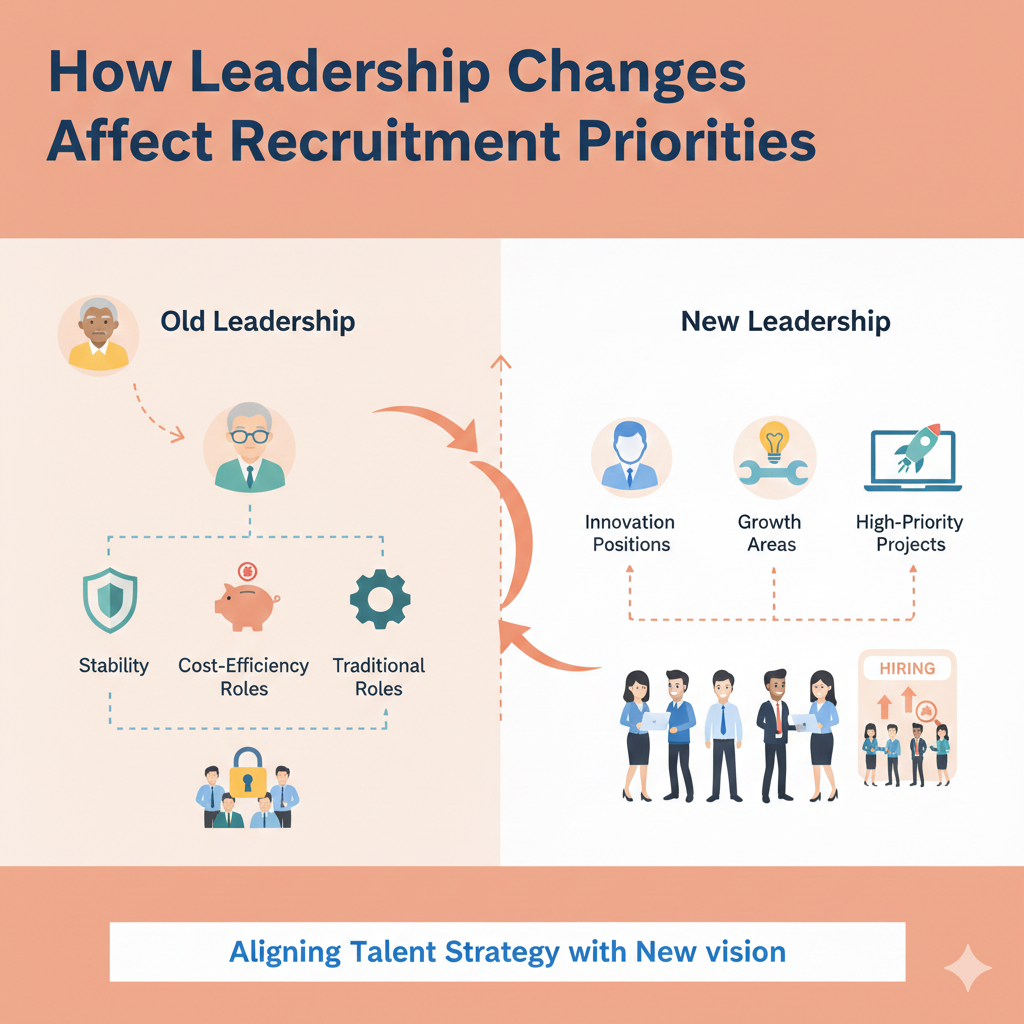
Leadership changes can shift a company’s direction overnight. A new CEO, department head, or HR leader often brings fresh goals, new strategies, and different expectations. As a result, recruitment priorities also change quickly. This is exactly how leadership changes affect recruitment priorities in both small companies and large enterprises.
Sometimes the change is positive and creates new hiring opportunities. However, it can also slow down hiring because the new leadership wants time to evaluate. Meanwhile, teams may feel uncertain, and recruitment may pause for a short period. Still, once the new plan becomes clear, hiring becomes more focused and more intentional.
New leaders redefine business goals and talent needs
Every leader has a different vision. Some focus on rapid growth, while others prioritize stability and cost control. Therefore, recruitment changes depending on what leadership values most. If the new leader wants expansion, hiring increases in sales, product, and customer success. If the leader wants efficiency, hiring may shift toward automation, process improvement, and lean teams.
Also, leadership changes influence which skills are considered “must-have.” For example, one leader may prefer specialists. Another may prefer adaptable generalists who can handle multiple tasks. In addition, leaders may change hiring standards, interview formats, and performance expectations. That is a major reason how leadership changes affect recruitment priorities at every stage of company growth.
Hiring budgets and approvals often get reshaped
When leadership changes, budgets are usually reviewed. New leaders may re-check spending, restructure departments, or pause certain investments. Recruitment is one of the first areas impacted because hiring costs are visible and measurable. Therefore, some roles get delayed while others get fast-tracked.
Also, approvals become stricter during transitions. Hiring managers may need extra sign-offs before posting jobs. Meanwhile, HR teams may receive new instructions on salary bands, headcount limits, and contract vs full-time hiring. This can slow hiring for some roles, but it can also create sudden openings in other areas.
So, leadership shifts don’t always reduce hiring. They simply change what gets priority.
Team structures change and new roles appear
Leadership changes often come with restructuring. A new leader may merge teams, create new departments, or remove overlapping roles. As a result, recruitment priorities shift to match the new structure. For example, if marketing and growth teams combine, hiring may focus on performance marketers and lifecycle specialists.
In addition, restructuring creates new leadership positions. Companies may hire new managers, program leads, or strategy heads. These roles support the new direction and help execute the leader’s vision. Meanwhile, some older roles may become less important, and hiring for them may slow down.
This is a practical example of how leadership changes affect recruitment priorities by changing what the company needs to operate effectively.
Culture shifts influence the type of candidates selected
Leaders don’t just change goals. They also change culture. Some leaders prefer fast execution and high ownership. Others prefer collaboration, stability, and process-driven work. Therefore, recruitment teams adjust candidate evaluation to match the new culture.
Also, hiring criteria may become stricter on soft skills. Communication, accountability, and problem-solving become key filters. In addition, leadership may prioritize candidates who align with new values, such as innovation, customer obsession, or operational excellence.
So, job seekers should understand that culture fit becomes more important during leadership transitions. Companies want people who can adapt and perform in the new environment.
Employer branding and messaging may get updated
New leadership often refreshes the company’s public image. They may update the website, rewrite mission statements, and change how the company presents itself online. As a result, recruitment messaging also evolves. Job descriptions may look different. The tone may become more modern, more aggressive, or more structured.
Also, leaders may change what they highlight in hiring. One leader might promote remote work and flexibility. Another might push for office presence and team collaboration. Therefore, candidates should read job postings carefully and look for signs of updated expectations.
This is another reason how leadership changes affect recruitment priorities because the company’s story influences who applies and who gets selected.
Hiring timelines can slow down before speeding up again
During leadership transitions, uncertainty is normal. HR teams may wait for clarity before pushing hiring forward. Hiring managers may also delay decisions until the new leader confirms priorities. Therefore, recruitment timelines can slow down for a short time.
However, once the leadership plan becomes clear, hiring often speeds up. The company may quickly hire for roles that support the new strategy. This creates waves of hiring rather than steady hiring. So, job seekers should stay consistent and keep applying because the market can change fast.
In addition, follow-ups matter even more during this phase. Recruiters manage shifting requirements, so polite follow-ups help you stay visible.
How job seekers can respond to leadership-driven hiring shifts
Leadership changes can create confusion, but they also create opportunity. Many candidates stop applying when they see uncertainty. However, smart candidates adjust their approach and stay active. This increases their chances of getting noticed.
Here are strong strategies that work well:
- Research the new leader’s background and hiring style
- Align your resume with the company’s new direction
- Highlight adaptability and ownership in your experience
- Stay ready for role changes or updated job requirements
- Follow up professionally because timelines may shift
Also, show stability. Companies value reliable candidates during transitions. If you demonstrate clear communication and consistency, you stand out faster.
Final thoughts on how leadership changes affect recruitment priorities
Leadership transitions reshape hiring in powerful ways. They influence budgets, team structures, culture, and even the skills companies prioritize. That’s why understanding how leadership changes affect recruitment priorities helps both recruiters and job seekers make smarter decisions.
If you’re applying during a leadership change, don’t panic. Stay prepared, stay flexible, and apply strategically. New leadership often brings new hiring waves, and the right timing can unlock strong opportunities. To track openings and stay ahead of fresh hiring updates, explore roles daily using the best job tool.
Find Your Dream Job Today – Explore Endless Career Opportunities and Secure Your Next Role with Best Job Tool.



Leave a Reply