Introduction
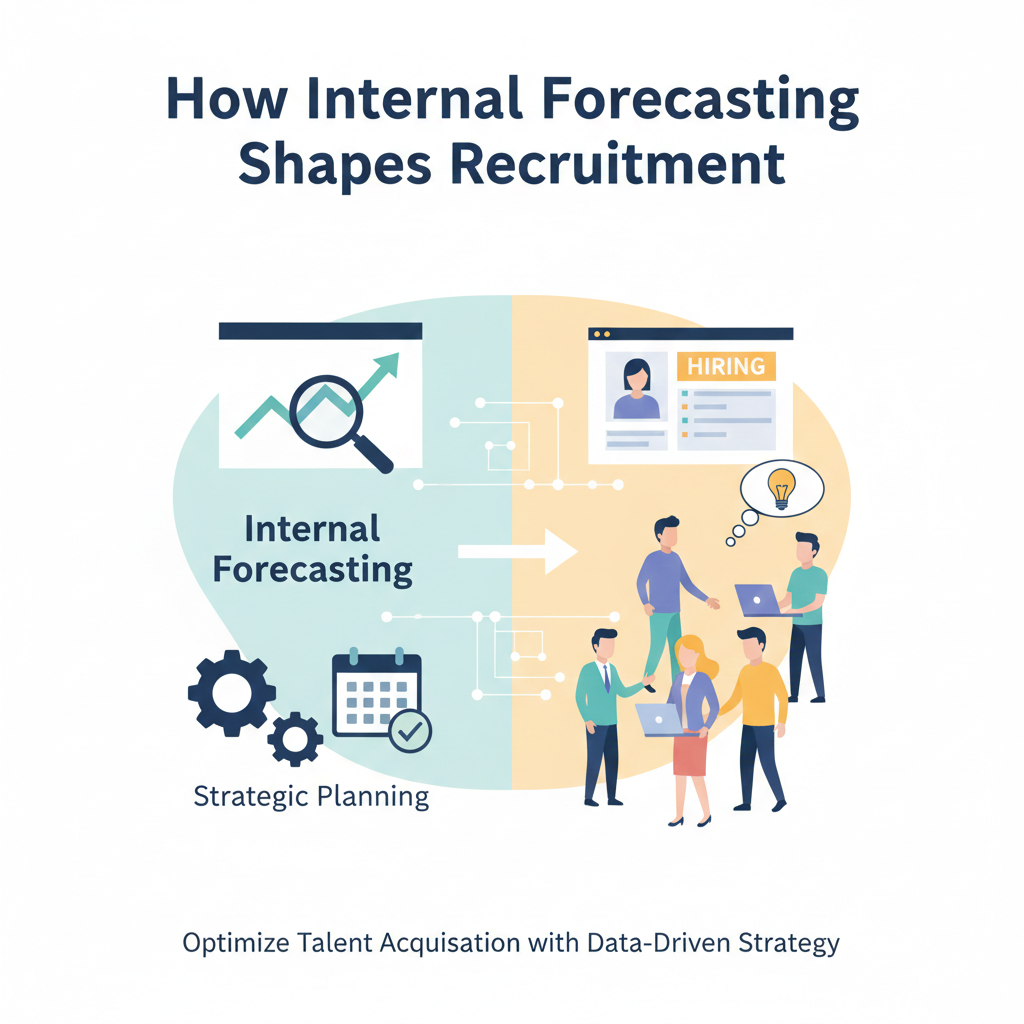
Hiring is not just about filling empty seats. It’s about planning for the future before the pressure hits. That’s why smart companies don’t hire randomly. They hire based on demand, business goals, and upcoming workload. This is exactly how internal forecasting shapes recruitment and turns hiring into a strategic decision instead of a last-minute rush.
Internal forecasting means predicting what the business will need in the coming weeks or months. It includes team capacity, project timelines, customer demand, and even budget movement. Therefore, when forecasting is done correctly, recruitment becomes smoother, faster, and more accurate. It also reduces hiring mistakes because decisions are backed by data, not panic.
What internal forecasting really means for hiring teams
Internal forecasting is basically a company’s way of answering one question: “What talent will we need soon?” It helps leaders estimate how many people they require, what skills are missing, and when new hires should join. Instead of waiting for problems, the organization prepares early.
Also, forecasting connects HR with business strategy. When finance, operations, and department heads share future plans, HR gets clarity. That clarity helps recruiters focus on the right roles. In addition, it prevents overhiring, which can drain budgets and create confusion in teams.
This is how internal forecasting shapes recruitment by turning hiring into a planned process with better direction and fewer surprises.
Forecasting reduces urgent hiring and improves quality
Urgent hiring usually creates weak decisions. When teams are under pressure, they often pick “good enough” candidates instead of the best fit. That leads to higher turnover, poor performance, and extra training costs. However, forecasting reduces this stress because the company already knows what is coming.
When recruiters get time, they can source better talent. They can also screen candidates more carefully. In addition, they can build a pipeline instead of starting from zero. This makes hiring more stable, more professional, and more successful in the long run.
Therefore, internal forecasting doesn’t just speed up hiring. It improves the quality of hiring too.
Workforce planning becomes easier with clear demand signals
Every company has signals that show future hiring needs. Some signals are obvious, while others are hidden in daily operations. Forecasting collects these signals and turns them into clear workforce plans. That’s where recruitment becomes proactive, not reactive.
For example, a company may forecast growth in sales, which means more customer support tickets. That automatically creates demand for support agents. Similarly, new product launches may require more designers, developers, or marketers. When these signals are identified early, recruitment becomes more accurate.
This is a practical example of how internal forecasting shapes recruitment by linking business demand directly to hiring actions.
Budget forecasting controls hiring decisions and timelines
Recruitment is strongly connected to budgets. Even if a manager wants five new hires, finance may approve only two. That’s why forecasting matters. It helps the company understand how much hiring is possible and when it makes sense financially.
Also, budgets decide salary ranges. If forecasting predicts cost pressure, the company might hire junior talent instead of senior roles. In addition, it may shift hiring from full-time to contract positions. These decisions affect recruitment strategies, sourcing methods, and job descriptions.
So, internal forecasting helps HR align hiring goals with financial reality. That alignment saves time and prevents confusion later.
Forecasting improves internal mobility and reduces external hiring
Not every vacancy needs an external candidate. Sometimes the best hire is already inside the company. Forecasting helps organizations identify internal talent gaps early. Then they can plan training, promotions, and role transitions in advance.
This is a major advantage because internal hiring is faster. It also improves employee motivation and retention. People stay longer when they see growth opportunities. Meanwhile, companies save time because internal candidates already understand the culture and systems.
So, another key part of how internal forecasting shapes recruitment is that it supports internal mobility, not just external recruitment.
Better forecasting strengthens employer branding and candidate experience
Candidates notice when companies are disorganized. Late replies, unclear job roles, and sudden interview changes damage trust. However, forecasting makes hiring processes smoother. Recruiters become more prepared, timelines become realistic, and communication becomes consistent.
Also, when hiring is planned, the company can create stronger job descriptions. It can define responsibilities clearly and set expectations properly. That attracts better candidates because people want clarity before they apply.
In addition, forecasting reduces last-minute cancellations. It keeps interview panels ready and decisions faster. That improves the candidate experience and builds a stronger employer brand over time.
Tools and data that support accurate internal forecasting
Forecasting becomes powerful when it’s supported by real data. Many companies now use dashboards, HR analytics, and performance reports to predict hiring needs. They also track workload trends, resignation patterns, and team capacity.
Here are common inputs companies use for forecasting:
- Project pipeline and upcoming client requirements
- Employee attrition trends and retention risks
- Department productivity and workload reports
- Seasonal demand patterns in business operations
- Budget approvals and compensation planning
In addition, hiring data from previous years helps a lot. It shows how long it takes to fill roles and which skills are hardest to find. Therefore, forecasting becomes more accurate with time and experience.
Final thoughts on how internal forecasting shapes recruitment
Hiring becomes easier when companies plan ahead. Internal forecasting gives recruitment teams direction, speed, and confidence. It reduces panic hiring and improves long-term workforce quality. Most importantly, it helps organizations hire the right people at the right time.
Now you clearly understand how internal forecasting shapes recruitment and why it matters for both companies and job seekers. When businesses forecast better, candidates also benefit because job roles become clearer, timelines improve, and opportunities become more stable.
If you’re exploring your next career move, stay ready for upcoming openings and track roles early using the best job tool.
Find Your Dream Job Today – Explore Endless Career Opportunities and Secure Your Next Role with Best Job Tool.


Leave a Reply