Introduction
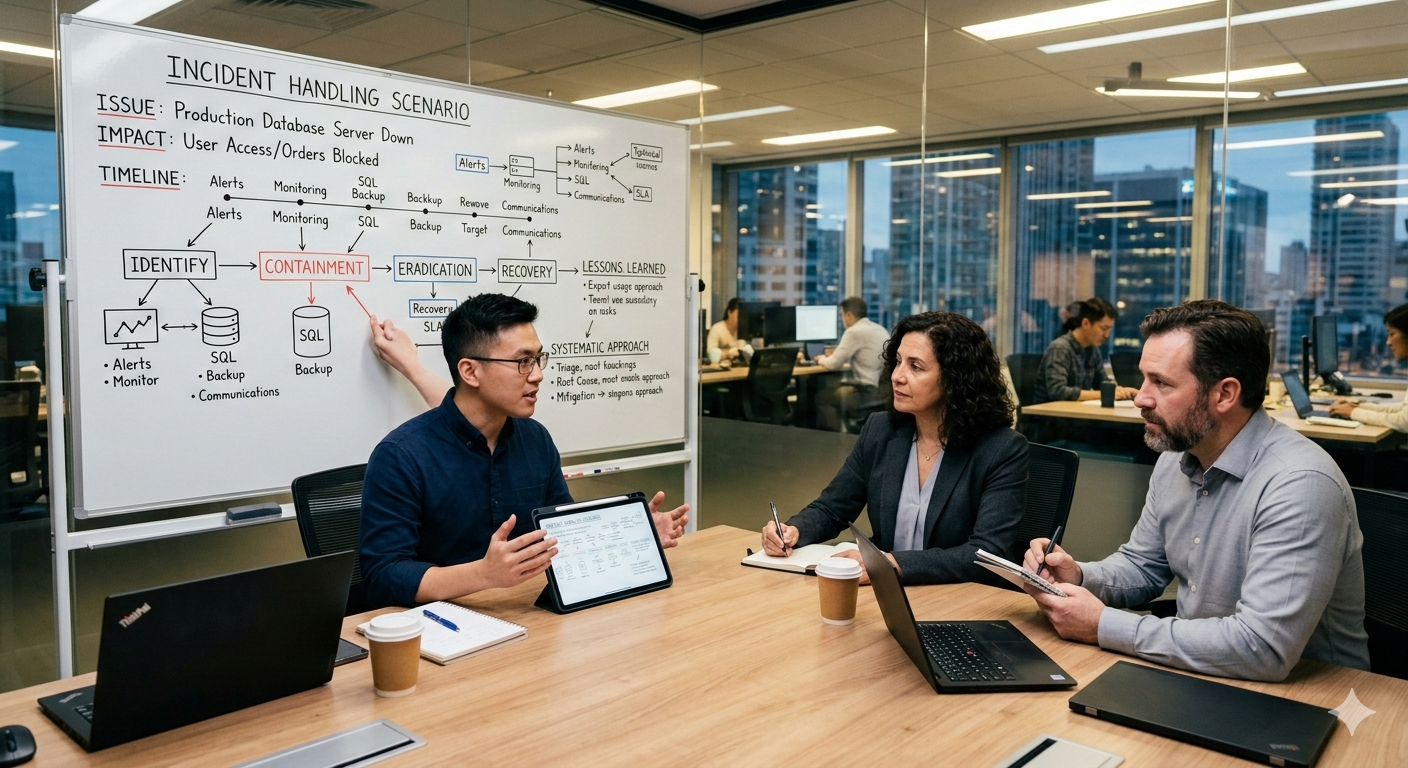
Modern IT environments run critical systems that support businesses, customers, and digital services. Because of this, technical professionals must handle unexpected problems quickly and responsibly. System failures, security alerts, or service disruptions can occur at any time. Therefore, employers want professionals who can manage these situations calmly and effectively. This is exactly why IT interviews focus on incident handling scenarios during technical and behavioral rounds.
Companies do not want candidates who only understand theory. Instead, they want professionals who can react logically during real operational challenges. Incident scenarios help interviewers evaluate how candidates think, prioritize actions, and communicate under pressure.
Incident scenarios test real-world thinking
First, incident-based questions help interviewers evaluate practical thinking. Instead of asking only theoretical questions, recruiters present situations such as server outages, system slowdowns, or failed deployments.
Candidates must explain how they would investigate the issue and restore service. This reveals their troubleshooting approach and analytical thinking. As a result, hiring managers can assess how candidates perform in realistic work situations.
Real-world thinking matters more than memorized answers.
Employers evaluate prioritization skills
Not every technical issue has the same urgency. Some problems affect only a small feature, while others may disrupt entire systems. Therefore, companies need professionals who understand how to prioritize incidents correctly.
During interviews, candidates often explain which actions they would take first. Strong candidates identify critical services, assess business impact, and respond accordingly. This structured prioritization demonstrates operational awareness.
Effective prioritization protects system stability.
Incident handling shows troubleshooting ability
Troubleshooting is a core skill in many IT roles. Whether the position involves development, infrastructure, or cloud operations, professionals must diagnose and resolve technical issues.
Incident scenarios reveal how candidates approach root cause analysis. Interviewers look for logical steps such as checking logs, verifying system dependencies, and isolating possible causes.
This structured troubleshooting process reflects real technical competence.
Communication during incidents is critical
Technical problems rarely involve only engineers. Stakeholders, managers, and sometimes customers require updates during incidents.
Interviewers evaluate how candidates communicate status updates and technical explanations. Professionals who describe clear and calm communication strategies demonstrate maturity and leadership potential.
Good communication prevents confusion during high-pressure situations.
Collaboration across teams becomes necessary
Many incidents require cooperation between development, operations, and security teams. Therefore, employers look for candidates who understand cross-team coordination.
During interviews, candidates may explain how they would involve the correct teams and share relevant information. This collaborative mindset shows readiness for modern IT environments where teamwork is essential.
Coordination improves resolution speed.
Incident scenarios reveal stress management
High-impact technical issues often create stressful situations. Systems may go down unexpectedly, and teams must respond quickly.
Employers want professionals who remain calm and focused instead of reacting emotionally. Incident scenario discussions help interviewers observe whether candidates maintain structured thinking under pressure.
Composure strengthens professional reliability.
Root cause analysis demonstrates long-term thinking
Resolving an incident is only part of the job. Preventing the same issue from happening again is equally important.
Interviewers look for candidates who mention root cause analysis and preventive measures. Professionals who explain documentation updates, monitoring improvements, or configuration fixes show long-term thinking.
Preventive thinking improves system resilience.
Incident experience indicates operational maturity
Candidates with previous incident-handling experience often provide detailed and structured answers. They describe detection methods, investigation steps, and communication strategies clearly.
Such responses indicate operational maturity and real workplace exposure. Employers often prefer candidates who have handled incidents before because they require less training.
Experience increases hiring confidence.
Leadership potential appears in crisis management
Professionals who manage incidents effectively often gain leadership responsibilities over time. Incident managers, technical leads, and operations heads frequently emerge from engineers who demonstrate strong crisis management skills.
During interviews, candidates who display accountability and coordination skills signal leadership potential. Companies recognize these traits as valuable for long-term growth.
Crisis management reveals future leaders.
Conclusion
Technical knowledge remains important in IT roles, but the ability to handle unexpected challenges matters even more. That is precisely why IT interviews focus on incident handling scenarios during hiring processes.
These scenarios help employers evaluate troubleshooting ability, prioritization, communication, and decision-making under pressure. Candidates who demonstrate structured thinking and calm problem-solving stand out strongly in interviews. Developing incident-handling skills not only improves interview performance but also strengthens long-term career growth in technical environments. To explore IT opportunities that value real-world problem-solving and operational expertise, use the best job tool to discover roles aligned with your technical strengths.
Find Your Dream Job Today – Explore Endless Career Opportunities and Secure Your Next Role with Best Job Tool.


Leave a Reply