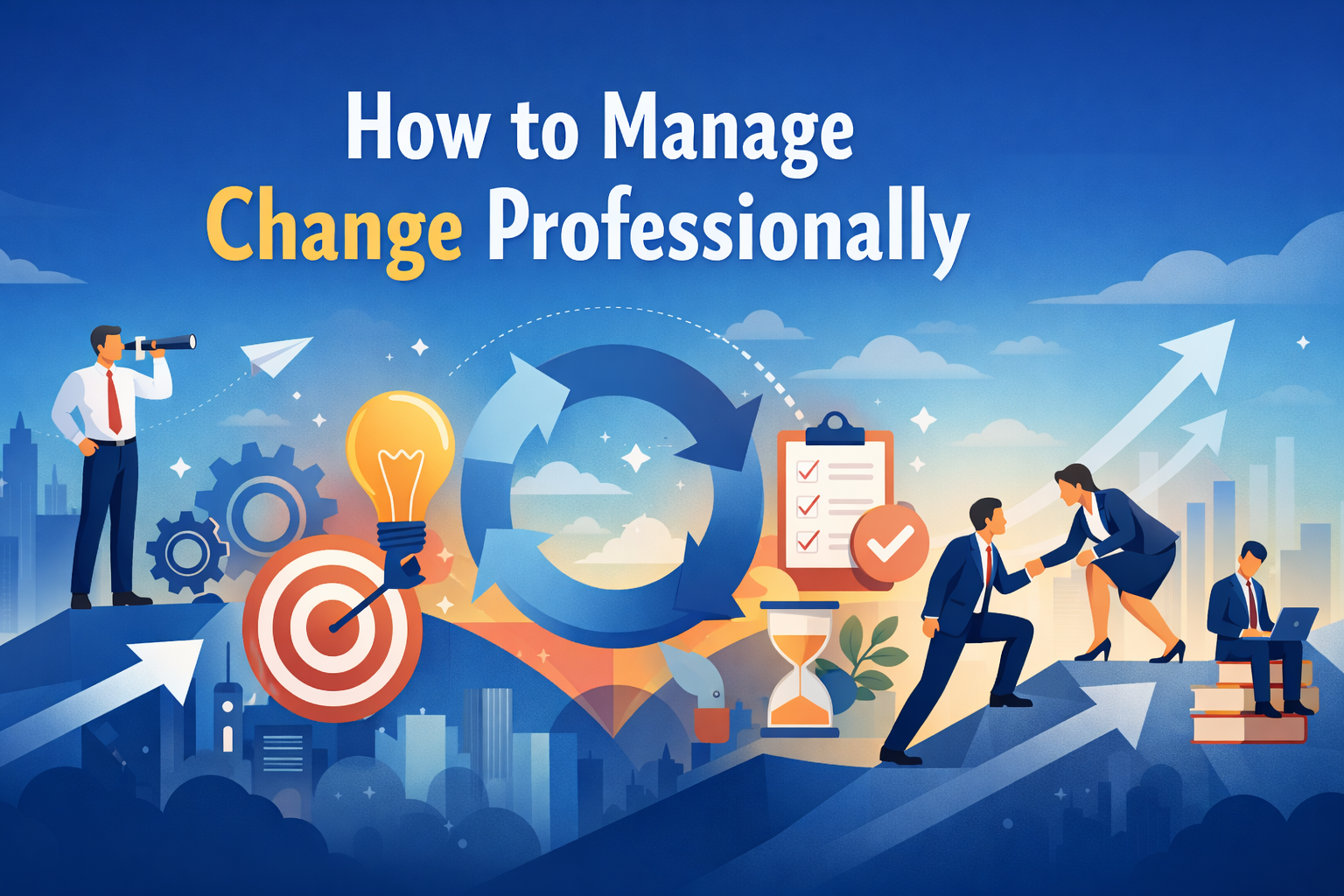
Introduction
In today’s time change has become very normal for everyone because technology is evolving rapidly. Whether it is in a company or in a role, new roles, new tools, new technology, or even change of place — all this has become normal now.
In such a situation, if a person does not manage situation, they fall behind in the crowd and stop their own growth. That is why managing change matters a lot in now a days.
Every person should be adaptable so that they can grow themselves and also help the company grow. And today in this article, we are going to understand how you can manage change professionally.
How to Manage Change Professionally?
1. Preparing Yourself Mentally and Emotionally to Manage Change
Change is not just a physical shift; it is also a mental and emotional adjustment. Feeling anxiety, irritation, or resistance is normal, especially when you are coming out of your comfort zone. That is why, first, you need to accept the change.
Developing a positive mindset and realistic expectations is very important. Everything will not look perfect from the first day, and that is absolutely normal. Give yourself time, keep patience, and appreciate small achievements. This will help reduce stress and build confidence through emotional preparation.
2. Updating Your Professional Skills
Refreshing some professional skills to manage change is also important. Communication skills matter because you need more face-to-face interaction. Focus on clear speaking, active listening, and professional body language.
Team collaboration, meeting etiquette, and time management skills are also helpful to increase visibility in the office. Professionalism and attitude are most important. When you update your skills, the office transition becomes an opportunity for career growth.
3. Organizing Your Workspace to Manage Change
The office workplace has a direct impact on your productivity and focus. Keeping your desk clean, organized, and comfortable makes work easier. Keep only important items in your workspace to reduce distractions.
Personal touches like a notebook, planner, or water bottle can make your workspace functional and positive. Focusing on chair height, screen level, and lighting is important for physical comfort. When your workspace is well organized, adapting to any change becomes smoother.
4. Health and Well-Being Considerations
Ignoring health and well-being during the change is a common mistake. Daily commuting, long sitting hours, and increased workload can impact both physical and mental health; that is why making self-care a priority is important.
Follow healthy eating habits, maintain proper water intake, and include regular movement in your day. Taking short breaks and doing light stretching during office hours helps you feel relaxed. For mental well-being, practice stress-management techniques such as deep breathing or mindfulness. When you focus on your health, changes become more sustainable and positive.

5. Focus on What You Can Control to Manage Change
Many people overthink and take stress about things without even talking about them. They worry about things in which they have no role and no control, like “What if I don’t get selected?” or “What if I fail?”
The truth is, you cannot control the outcome. It depends on the different conditions. That is why you should focus only on the things that are in your control, such as your skills, preparation, effort, and consistency.
If you focus more on these things, you will automatically take every action with full preparation and confidence. When your actions are good, the chances of getting good results also increase.
6. Accept That Change Is Normal
The most effective way to manage change is to accept that changes are normal. Change is present in everything, whether doing a job, or doing business. But when you start overthinking this change, it turns into stress.
That is why it is important to understand that you are not alone. All people face changes in their professional and personal life. But even after feeling this way, they are able to build a good career. So this is completely normal.
If we consider change as normal, we can handle it more easily. When we do not take too much pressure from change, we can manage it smoothly.
7. Communicate to Manage Change
If you ever feel that you are very stressed and continuously thinking about changes, and the more you think, the more demotivated and pressured you feel, then there is a very effective and easy solution — talk to someone.
You should talk to someone who inspires you. You can talk to your parents, mentor, collogues, or manager. Share your stress and your career concerns with them.
When you share your thoughts, you understand many new things. You get different perspectives from the other person. Because of this, your stress related to change naturally starts decreasing.
8. Be Adaptable
In modern roles, adaptability is very important because things keep changing every day, such as new roles, new technology, new tools, and new systems. If a person gets scared of these changes, they will not be able to do their work properly, and the company will also not grow.
That is why a person should always be ready for changes. Whether the change is small or big, they should accept it and be willing to adapt and grow.
For more information, read “Why adaptability matters in modern roles”.
Conclusion
Change is not something you can stop, but it is something you can manage. The way you respond to change defines your professionalism more than the change itself. When you stay calm, think logically, upgrade your skills, and focus on solutions, you turn uncertainty into opportunity.
Professionals are not those who avoid change — they are the ones who adapt quickly, learn continuously, and maintain a positive attitude. Every change, whether small or big, builds resilience and prepares you for bigger responsibilities in the future.
If you learn to manage change wisely, you don’t just survive in your career — you grow confidently and consistently.
You can read more such blogs with the Best Job Tool.





Leave a Reply