Introduction
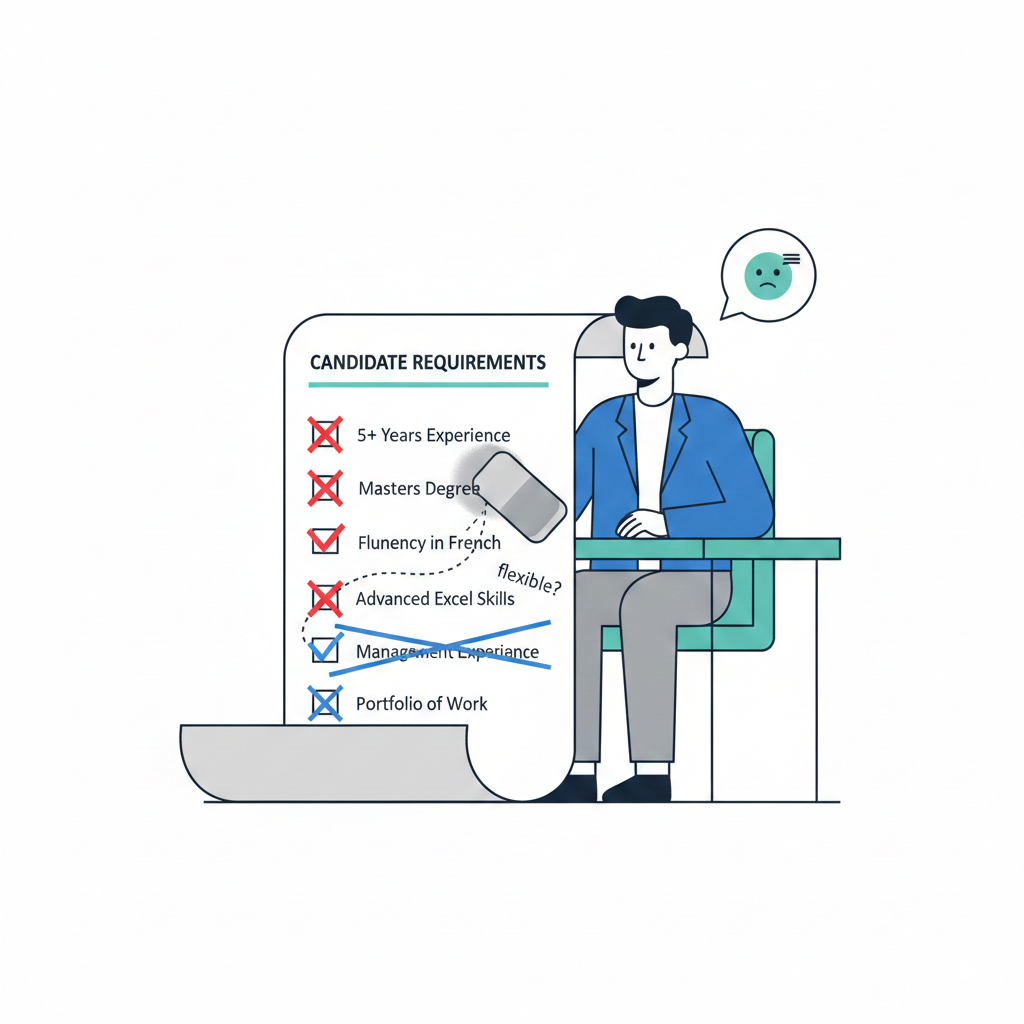
Job descriptions often appear rigid and final when they are first published. They list specific skills, years of experience, tools, and qualifications as if every requirement is non-negotiable. Many candidates read these lists and decide they are not a fit, even when they are capable of performing the role. In reality, hiring rarely stays that rigid from start to finish. Expectations evolve as the process unfolds. That is how hiring managers compromise on requirements later, not because standards drop, but because real-world conditions reshape priorities.
Hiring is a dynamic process influenced by talent availability, business urgency, and deeper understanding gained during interviews. What begins as an ideal checklist gradually turns into a practical decision about who can succeed in the role.
Why job requirements start as ideal scenarios
Most job requirements are written as an ideal picture of success. Hiring managers try to capture everything they believe would make the role easier, faster, or more effective. They include preferred tools, years of experience, industry exposure, and personality traits to align expectations internally. At this stage, the list reflects aspiration more than reality. Managers are describing what they would like, not what they strictly need. As long as the role is theoretical, there is no pressure to prioritize.
How the candidate pool changes expectations
As applications arrive, hiring managers see the real talent landscape. They may notice that very few candidates meet every listed requirement. Some skills appear rarely together. Others are outdated or less relevant than expected. This exposure forces managers to ask more practical questions. They begin identifying which skills are truly essential and which can be learned on the job. This realization is a key part of how hiring managers compromise on requirements later in the process.
Time pressure reshapes priorities
Hiring almost always happens under time pressure. Teams are short-staffed, projects are delayed, and workloads increase. As weeks pass without a hire, the cost of waiting becomes clear. Managers shift focus from perfection to progress. They begin valuing candidates who can start contributing quickly, even if they lack some listed skills. Learning ability, attitude, and reliability gain importance. Time pressure does not eliminate standards, but it changes what matters most.
Interviews reveal deeper strengths than resumes
Resumes show credentials, but interviews reveal capability. During interviews, hiring managers often discover qualities they could not list in a job description. Problem-solving ability, communication style, judgment, and adaptability become visible. Sometimes these qualities outweigh missing technical skills. Managers realize that certain listed requirements were only proxies for deeper traits. Once those traits appear directly, the proxy becomes less important. This discovery is another reason how hiring managers compromise on requirements later without feeling they are taking a risk.
Strong candidates redefine value
Occasionally, a candidate shifts the entire hiring conversation. They may lack one or two formal requirements but demonstrate exceptional thinking, ownership, or potential. Hiring managers start asking whether the missing skills are truly critical or simply convenient. If learning those skills is realistic, compromise becomes logical. This is not settling. It is recalibrating value based on evidence rather than checklists.
Learning potential overtakes experience thresholds
Years of experience are commonly listed as firm requirements. In practice, they are often the first to soften. Hiring managers increasingly recognize that learning speed matters more than tenure. A motivated candidate with fewer years can outperform a stagnant one with many. When managers see fast learners who ask the right questions and adapt quickly, experience thresholds lose importance. This shift explains why compromise often happens quietly during later interview stages.
Team fit influences flexibility
Hiring managers do not hire in isolation. They hire into teams. Cultural alignment, collaboration style, and communication patterns matter deeply. A candidate who fits the team well reduces friction and onboarding risk. Managers may compromise on technical requirements to protect team dynamics. They understand that skills can be taught, but behavior is harder to change. Team fit often tips the scale when requirements are reconsidered.
Harmony supports long-term performance.
Budget realities force adjustments
Compensation budgets also influence requirement flexibility. A role advertised with senior-level expectations may not attract senior candidates within budget. Instead of restarting the process, managers adjust expectations. They may accept less experience in exchange for potential and growth. This financial reality is common but rarely discussed openly. It is another practical reason why requirements evolve during hiring.
Why compromise does not mean lowering standards
Compromise often sounds negative, but it is not about lowering quality. It is about redefining what quality looks like. Hiring managers still aim for strong hires who can succeed and grow. They simply move away from rigid credentials toward real capability. The standard remains high, but the measurement changes. This distinction is central to understanding how hiring managers compromise on requirements later while still protecting performance.
What this means for candidates
Many capable candidates remove themselves too early because they do not meet every requirement. Understanding that flexibility exists can change how candidates approach job applications. Meeting core requirements and showing learning ability often matters more than ticking every box. Candidates who communicate adaptability, problem-solving, and impact position themselves well when compromise decisions arise.
Conclusion
Hiring is not a fixed checklist exercise. It is an evolving decision shaped by market reality, time pressure, and human insight. What begins as a strict list of requirements gradually transforms into a practical evaluation of who can succeed. That is how hiring managers compromise on requirements later without sacrificing quality or outcomes.
For candidates, this understanding reduces unnecessary self-rejection. For employers, it highlights the value of clarity and flexibility. To explore opportunities where potential, learning, and real-world impact matter more than rigid criteria, use the best job tool to discover roles designed for growth.
Find Your Dream Job Today – Explore Endless Career Opportunities and Secure Your Next Role with Best Job Tool.






Leave a Reply