Introduction
We often think that professionals must have never made any mistakes and that they built their careers smoothly. But that’s not true. Professionals also make many skill learning mistakes and learn from them. Making mistakes is completely normal—and even important—because it helps us learn and improve ourselves.
Skill learning is very important for everyone, and during the process of learning new skills, professionals make many mistakes. Today, we are going to talk about those skill-learning mistakes so that you can avoid making them.
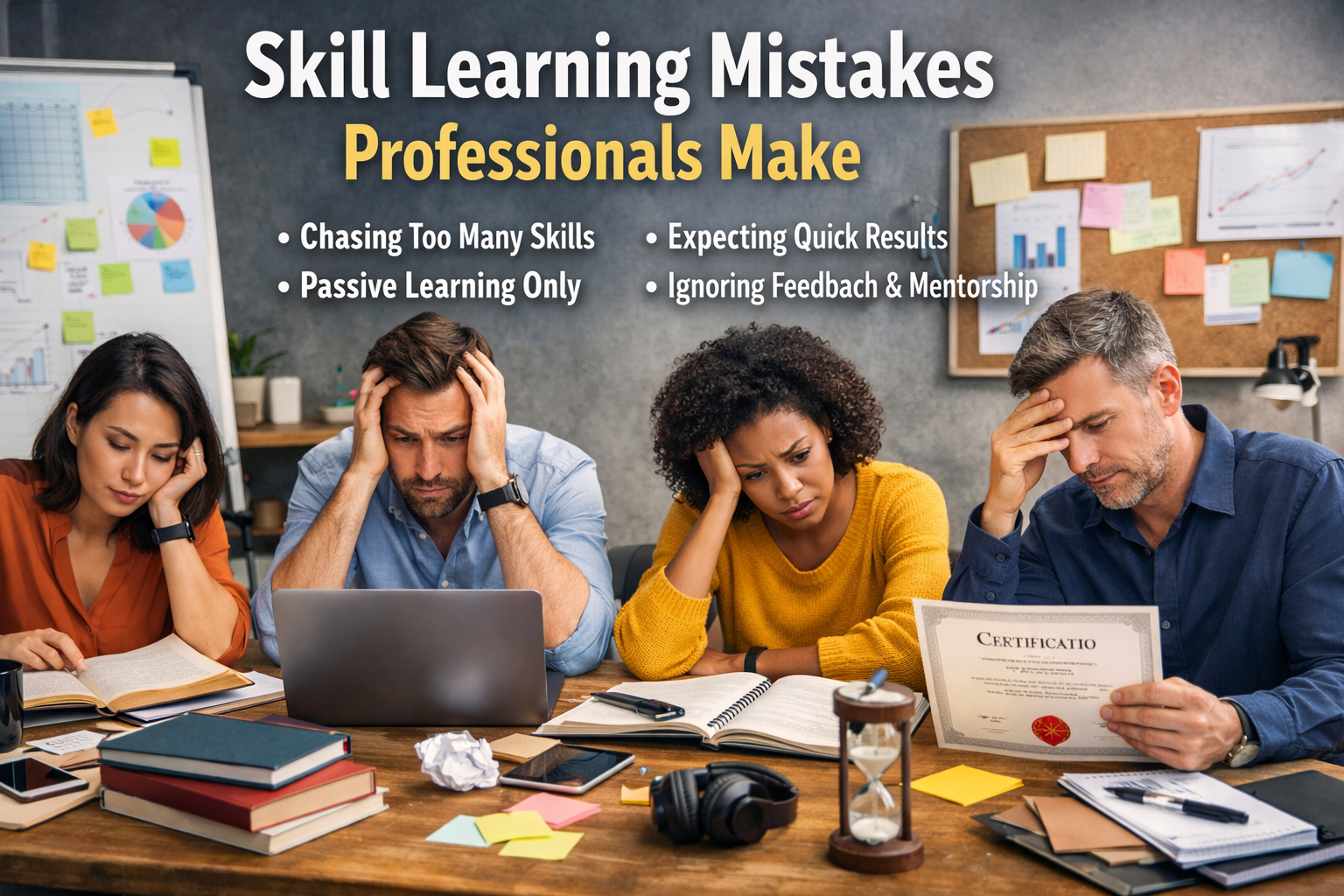
Skill Learning Mistakes Professionals Make
1. Learning Too Many Skills at the Same Time
Many professionals think that learning many skills at the same time is a smart move, but in reality, it is not. Instead, it is a big mistake.
When you try to learn many skills at once, you are not able to prepare properly in any one skill because your focus gets divided. Sometimes, professionals even get confused between skills, which slows down their growth. Learning multiple skills is a good thing, but learning them all at the same time is a mistake. Learning one skill at a time, step by step, is the best approach.
2. Consuming Content Without Practicing
If you are only listening to or understanding things but not applying them anywhere or practicing them, then that learning becomes useless. Slowly, you start forgetting whatever you have learned, and all the time and effort you invested in learning gets wasted. This is exactly what many professionals do—they only consume content but don’t practice it, and later they regret it.
3. Expecting Quick Results is a Skill Learning Mistake
Expecting quick results is also a skill-learning mistake that many professionals make. Everything has its own time frame. If you are learning or doing something new, you need to wait and have some patience to see good results. But some professionals want instant results while learning or applying a skill. They lack patience, and because of this mindset, they often get disappointed and give up too early.
4. Learning Without a Clear Plan
In today’s time, many young professionals start their careers without clear goals. They just know that they want a job but they do not know the direction, what to achieve, or how to grow.
Setting career goals is important because clarity gives direction. When you know in which field you have to go, at what position you want to reach, and what efforts you need then only you can shape your career confidently.
You need to divide your goals into two parts one short-term and another long-term;
- Short-term goals
Short-term goals are the goals that can be achieved in a year such as learning a specific skill, doing an internship, or completing a certification. - Long-term goals
Long-term goals are the goals that can be completed within 5 to 10 years such as reaching a leadership position, starting a business, or creating a strong personal brand.
If you do not have this clarity then you can feel confused and dissatisfied easily. That’s why set your goals in starting. Understand your interests and strengths and create a career road map on the basis of that. When you have a clear goal then your decisions will be smarter and your career growth will also be consistent.
5. Not Applying Skills in Real Work
If you are only listening to or understanding things but not applying them anywhere or practicing them, then that learning becomes useless. Slowly, you start forgetting whatever you have learned, and all the time and effort you invested in learning gets wasted. This is exactly what many professionals do—they only consume content but don’t practice it, and later they regret it.
6. Depending Only on Certificates is a Skill Learning Mistake
The big mistake in today’s time is ignoring skill development. Everyone focuses more on a degree because they think their career is set if they get a good degree. But this is not a reality because a degree is just an entry ticket, the main work is of skills and experience.
If you want to build your career, then you should learn practical and updated skills such as the use of digital tools, improving communication skills, and developing leadership qualities. All these skills make you a confident and capable professional.
7. Comparing Skill Progress With Others is a Skill Learning Mistake
Every person is different. Everyone has their own likes and dislikes, different goals, and unique career journeys. However, many professionals start comparing their career journey with others, which is a big mistake. This comparison leads to demotivation and often prevents them from building a successful career.
8. Not Updating Skills Regularly is a Skill Learning Mistake
Today’s job market is a fast one. New tools, software, and technology are introduced every month. If you do not update your skills then you will be outdated easily. That’s why learning new skills and improving older ones is a necessity in today’s time.
Now recruiters prefer those candidates who have a learning attitude. The people who are ready to understand, adapt, and grow with new trends get more opportunities.
That’s why if you want to make your career strong in long-term, then do not stop yourself from learning. Regularly take new courses, attend workshops, and make a habit of self learning.
9. Ignoring Feedback and Mentorship
Many professionals ignore feedback in their starting phase. When a boss or a senior gives some suggestions then people think that as criticism. But actually, constructive feedback is a shortcut to growth.
If you take feedback positively then you can identify your mistakes quickly and improve them. This habit makes you better in every role. People who accept their weaknesses and work on them become successful and confident in their careers.
Also having a mentor is very valuable. A mentor is a person who guides with their experience whether taking the right career decisions handling office politics or building self confidence. You can avoid those mistakes that can harm your career through their guidance.
That’s why you should not avoid feedback instead make it the tool for your improvement. Also, find a mentor in your professional circle which can give you honest advice.
Read “Career Planning Mistakes Professionals Regret”.
Conclusion
Skill learning is not about how many courses you complete or how fast you learn, but about how well you learn and apply those skills. Many professionals struggle not because they lack talent, but because they follow the wrong learning approach. Mistakes like learning too many skills at once, avoiding practice, expecting quick results, or depending only on certificates slow down real growth.
When professionals focus on one skill at a time, build strong fundamentals, practice consistently, and apply what they learn in real work, skill development becomes effective and meaningful. Avoiding these common skill learning mistakes helps professionals grow with confidence, stay relevant in their careers, and create long-term success.
To explore more such blogs, visit here.


Leave a Reply