Introduction
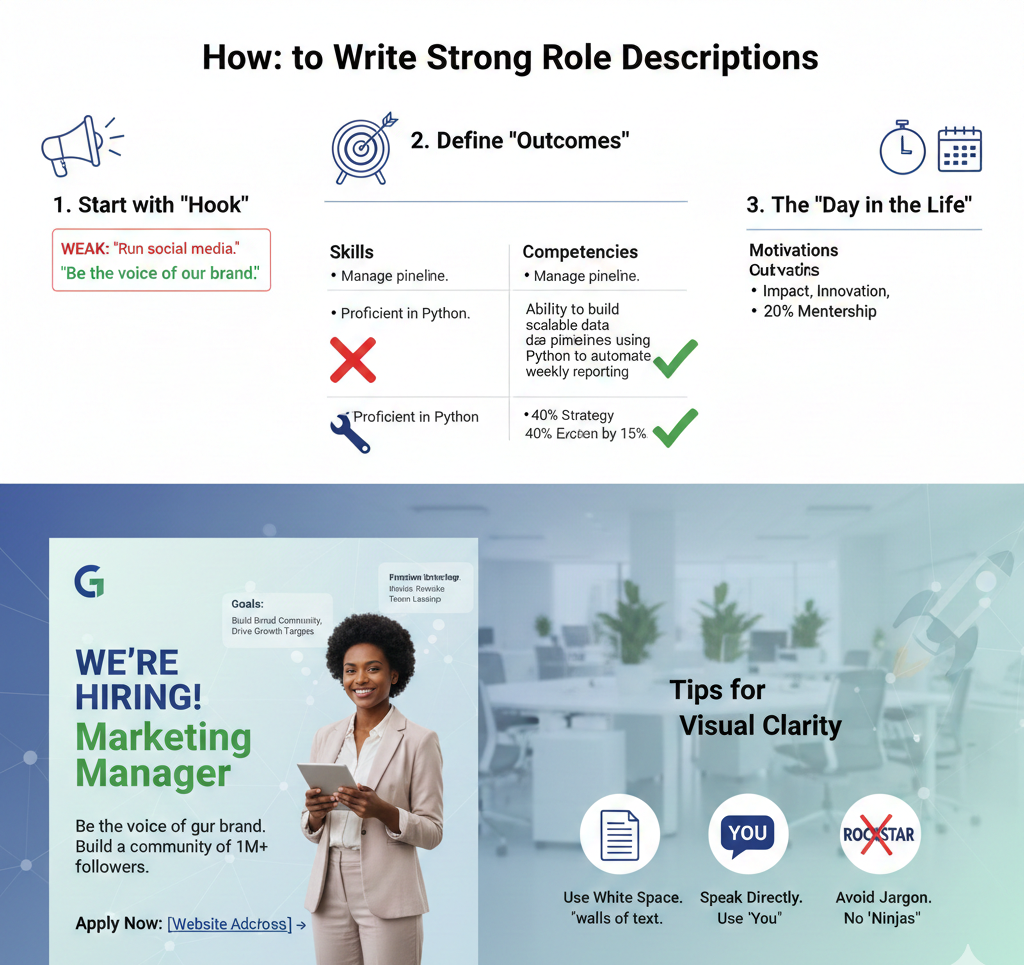
A resume is not just a list of job titles. It is a proof document. Recruiters want to understand How to Write Strong Role Descriptions what you actually did, how you did it, and what results you delivered. That is why role descriptions matter so much. A weak role description makes even a strong profile look average. A strong role description creates clarity, confidence, and credibility.
Learning how to write strong role descriptions helps you improve ATS visibility and recruiter trust. It also makes interviews easier because your resume becomes a clear story, not a confusing summary.
A strong role description does not mean writing long paragraphs. It means writing meaningful details in a structured way.
What recruiters expect from role descriptions
Recruiters scan resumes quickly. They do not have time to decode unclear wording. They want role descriptions that answer key questions in seconds.
They want to know your scope. They want to know your tools. They want to know your impact. They also want to know whether your work matches the role they are hiring for.
If your role description feels generic, recruiters assume your work was generic. If your role description feels specific, they trust your experience more.
This is why strong role descriptions are a major shortlisting factor.
Start with clarity, not complexity
Many candidates try to sound impressive by using heavy language. That often reduces clarity. Professional role descriptions should be simple, direct, and easy to scan.
Use short lines. Use active voice. Keep the meaning clear.
Avoid phrases like “responsible for” in every bullet. Instead, start with action words like managed, created, improved, supported, coordinated, analyzed, or delivered.
This makes your role description stronger instantly. It also improves readability for ATS and humans.
Focus on outcomes, not only tasks
A task shows what you did. An outcome shows why it mattered. Recruiters care about outcomes because outcomes show value.
Instead of writing that you handled a process, explain what improved because of your work. Mention time saved, quality improved, errors reduced, or performance increased.
Even if you do not have exact numbers, you can still show impact clearly. For example, you can mention faster turnaround, smoother coordination, or improved reporting accuracy.
This shift makes your role description more credible and more memorable.
Use role-specific keywords naturally
ATS tools and recruiters both search for keywords. These keywords include job titles, tools, and skill terms. A strong role description includes these terms naturally inside your work examples.
For example, if the role requires Excel, include how you used Excel for reporting or tracking. If the role requires client communication, include how you handled stakeholders or resolved queries.
Do not force keywords. Do not copy the job description. Instead, match the language of the role in an honest way.
This improves relevance without making your resume look artificial.
Add context to show scope and complexity
Many role descriptions fail because they lack context. Without How to Write Strong Role Descriptions context, recruiters cannot understand your level of responsibility.
Add small details that show scope. Mention the type of work, the team environment, or the business impact. Mention whether you supported internal teams or external clients.
You can also mention what type of data, tools, or workflow you handled. These details help recruiters visualize your work.
Context makes the role feel real. It also helps your profile stand out.
Keep bullet points sharp and structured
Role descriptions should be easy to scan. That is why bullet points work better than long paragraphs. However, the bullet points must be strong.
Each bullet should focus on one idea. Keep it short. Keep it clear.
A professional role description usually includes a mix of execution, collaboration, and improvement points. It shows what you delivered, who you worked with, and how you improved outcomes.
Avoid repeating the same line in different words. Recruiters notice repetition quickly.
When your bullets are sharp, your resume looks stronger.
Show growth inside the role
Recruiters like candidates who grow. Even in the same job title, your responsibilities may increase over time.
If you took on new tasks, mention them. If you handled bigger projects later, include that. If you supported junior teammates, highlight it professionally.
This shows progression. It also shows that your manager trusted you more over time.
Growth signals increase shortlisting because they suggest long-term potential.
Make role descriptions easy to verify in interviews
A strong role description should help you in interviews, not create pressure. That is why honesty is important.
Only write what you can explain. Only mention tools you actually used. Only claim outcomes you can defend with examples.
Recruiters often ask follow-up questions based on your resume. If your role description is clear and real, you will answer confidently.
This increases interview performance and reduces stress.
Conclusion
Strong role descriptions make your resume clear, credible, and recruiter-friendly. They help you stand out in automated screening and manual review. When you focus on outcomes, role keywords, and structured bullet points, your resume becomes stronger immediately.
If you want better shortlisting results, start improving how you describe your work. Clear role descriptions can change your job search faster than most people expect.
To explore better roles and apply with confidence, use the best job tool.
Find Your Dream Job Today – Explore Endless Career Opportunities and Secure Your Next Role with Best Job Tool.




Leave a Reply