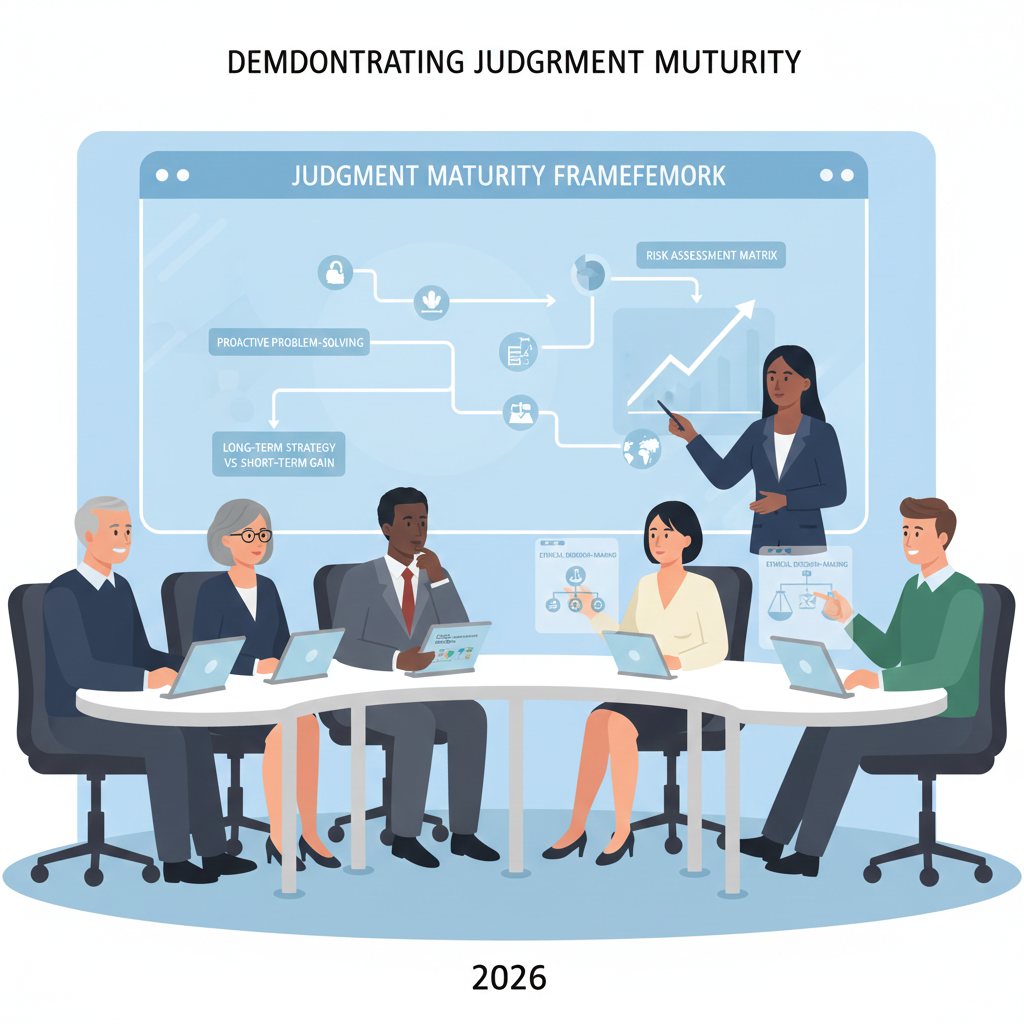
Introduction
Skills get attention, but judgment gets trust. Hiring managers can teach tools, processes, and systems. However, they cannot easily teach maturity in decision-making. That is why judgment maturity is a major hiring signal, especially for roles with responsibility.
So, what does it actually mean? And more importantly, how candidates demonstrate judgment maturity in interviews, resumes, and real workplace situations can decide whether they get selected.
Judgment maturity is the ability to think clearly, choose wisely, and act responsibly. It shows up in small moments. It also shows up under pressure.
In this blog, we will break down the strongest signs of judgment maturity and how recruiters recognize them.
Judgment maturity means thinking beyond the obvious answer
A mature candidate does not jump to the first solution. Instead, they pause and consider the full situation. They think about risks, timelines, and people impact.
For example, when given a problem, they don’t only ask, “How do I fix this fast?” They also ask, “What happens next if I choose this option?”
That mindset matters because workplaces are complex. A quick fix can create bigger problems later. Therefore, hiring managers prefer candidates who can see the bigger picture.
This is a key reason how candidates demonstrate judgment maturity becomes clear during real discussions, not only technical tests.
They ask clarifying questions before taking action
Strong judgment starts with strong understanding. Mature candidates don’t assume. They ask questions to reduce confusion.
For example, they may ask:
- “What is the deadline and priority?”
- “Who will be impacted by this change?”
- “Do we have any constraints or approvals?”
These questions show responsibility. They also show the candidate cares about doing it right, not just doing it quickly.
Meanwhile, candidates with weak judgment often rush. They may create errors because they didn’t confirm expectations.
So yes, questions are not a weakness. They are a maturity signal.
They balance speed with accuracy
Every company wants speed. However, speed without accuracy can destroy trust. Mature candidates understand that balance.
They know when to move fast. They also know when to slow down and double-check.
For example, they may say:
“I can deliver a quick version today, but I’ll validate the data first.”
That statement shows they understand risk. It also shows they respect quality.
This is another strong example of how candidates demonstrate judgment maturity in a practical way.
They take ownership of outcomes, not just tasks
Judgment maturity includes accountability. Mature candidates don’t say, “I just followed instructions.” They take responsibility for what happened.
If a mistake occurs, they don’t panic or blame. Instead, they explain what they learned and what they changed.
For example:
“I missed a detail in the requirements. After that, I started confirming expectations in writing.”
This shows growth. It also shows reliability.
Hiring managers trust candidates who can own outcomes. Because those candidates become dependable team members.
They consider trade-offs and communicate them clearly
Every decision has a trade-off. Mature candidates understand that. They don’t pretend every option is perfect.
They communicate trade-offs honestly. They also explain why they chose a certain path.
For example:
“I chose this approach because it was faster, but it had less flexibility.”
That is a powerful signal. It shows the candidate can think like a decision-maker.
This is one of the clearest ways how candidates demonstrate judgment maturity during interviews. It proves they are not guessing.
They show emotional control during disagreement
Judgment maturity is not only logical. It is emotional too. When a candidate stays calm under disagreement, it shows stability.
Mature candidates don’t get defensive. They listen. They respond respectfully. They focus on solving the issue.
For example, they might say:
“I understand your perspective. Here’s why I suggested this option.”
This approach builds trust. It also shows leadership potential.
Meanwhile, emotional reactions often create conflict. Hiring managers avoid that risk.
Therefore, calm communication is a strong maturity signal.
They know when to escalate and when to solve independently
A mature candidate understands responsibility boundaries. They don’t escalate everything. However, they also don’t hide problems.
They know when an issue is high-risk. They also know when it is safe to handle alone.
For example:
“I fixed the issue quickly, but I informed the manager because it affected customer experience.”
That is smart judgment. It shows awareness and professionalism.
This is another reason how candidates demonstrate judgment maturity matters. It reduces risk for the company.
They make decisions with ethics and long-term thinking
Judgment maturity also includes values. Mature candidates don’t chase short-term wins that damage trust later.
They respect privacy, fairness, and honesty. They avoid shortcuts that could harm customers or the company.
For example, they may say:
“I could have rushed it, but I followed compliance rules to avoid future issues.”
Hiring managers love this mindset. Because it protects the business.
Long-term thinking shows maturity. It also signals leadership readiness.
Conclusion: judgment maturity makes candidates safer hires
Judgment maturity is one of the strongest signals recruiters look for. It shows a candidate can handle responsibility, make balanced decisions, and work with stability under pressure.
Now you understand how candidates demonstrate judgment maturity through clarity, accountability, communication, and ethical thinking. These signals build trust faster than technical skills alone.
If you want better job opportunities, strengthen your decision-making habits. Then present them clearly in interviews and resumes. Also, explore the best job tool to find roles that match your potential and growth.
Find Your Dream Job Today – Explore Endless Career Opportunities and Secure Your Next Role with Best Job Tool.




Leave a Reply