Introduction
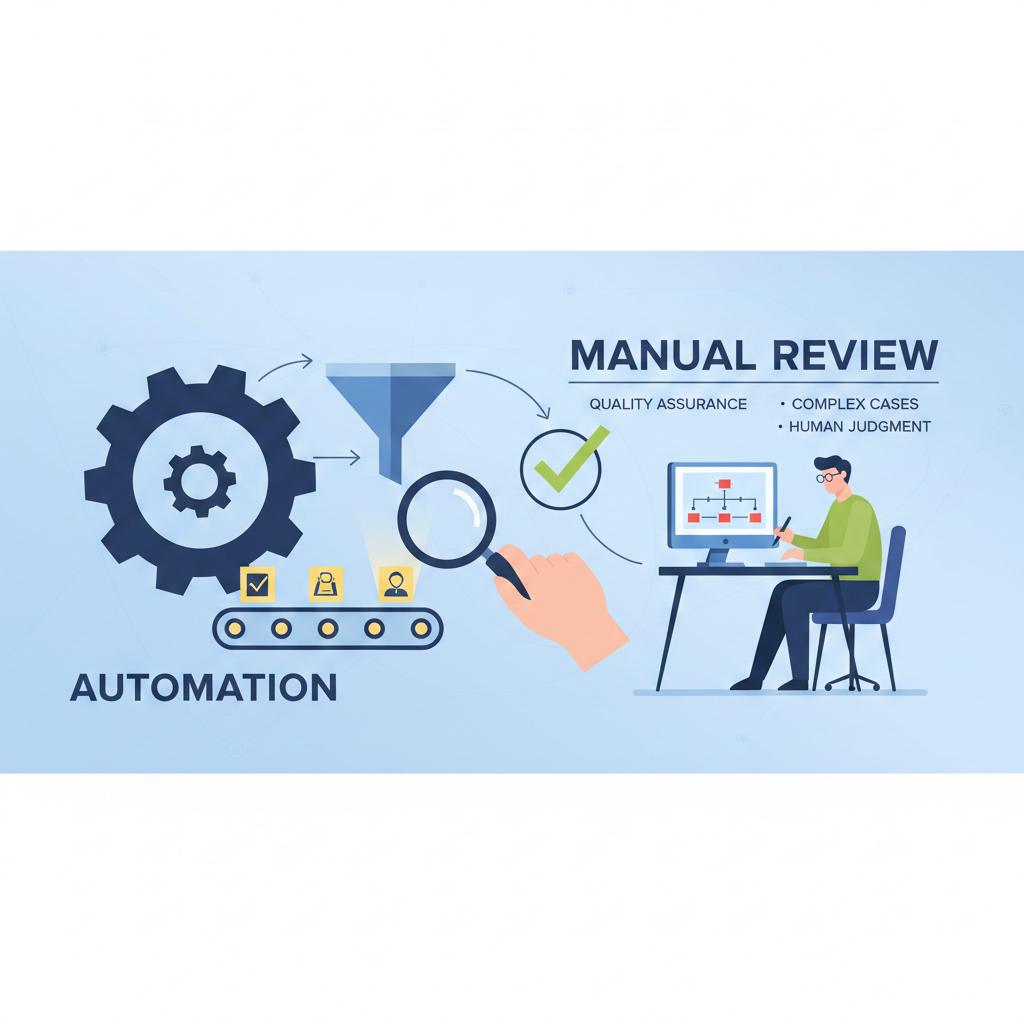
Automation has transformed recruitment. Companies now use ATS platforms, AI screening, and auto-filters to manage large volumes of applications. This shift has made hiring faster and more structured. However, automation does not replace human judgment. That is why manual review still matters after automation, especially when employers need the right person, not just the right keywords.
Many candidates assume that once a resume passes automated screening, selection becomes automatic. In reality, automation only supports the process. Final decisions still depend on human evaluation. Recruiters and hiring managers review profiles to confirm credibility, assess relevance, and reduce hiring risk.
Understanding this balance helps job seekers build stronger applications. It also helps them focus on what actually drives interview shortlisting.
Automation filters volume, but it cannot confirm quality
Automation exists because recruiters receive too many applications. A single job post can attract hundreds or even thousands of candidates. ATS filters and screening rules help reduce the list quickly.
However, automation cannot measure depth of experience. It can detect keywords, job titles, and basic alignment. It cannot accurately judge problem-solving, decision-making, or long-term potential.
This is where manual review becomes critical. Recruiters check whether the candidate truly matches the role. They validate the quality behind the resume content. They also confirm whether the profile is consistent and realistic.
Automation speeds up hiring. Manual review protects hiring quality.
Recruiters evaluate clarity and communication
A resume is more than information. It is also a communication document. Even when automation extracts details correctly, recruiters still assess how clearly the candidate presents their experience.
Manual review helps recruiters evaluate whether your resume is structured logically. It shows whether your points are easy to understand. It also indicates whether you can communicate professionally.
Strong candidates often lose opportunities because their resumes are unclear. Weak summaries, confusing timelines, and generic descriptions reduce trust. Automation may not reject such resumes, but humans often will.
Clear writing improves credibility and increases interview chances.
Hiring managers prioritize role-specific fit
Recruiters shortlist candidates, but hiring managers decide who gets hired. Managers care about practical fit, not only keyword matching.
A candidate can score well in automated screening and still fail manual review if their experience does not align with daily job requirements. For example, someone may list tools like Excel, SQL, or project management, but their actual work may not match the complexity needed.
Manual review helps identify whether the candidate can handle real tasks. It also helps managers assess if the candidate’s background fits the team’s workflow, expectations, and working style.
This is a major reason why manual review still matters after automation.
Humans detect context that automation misses
Automation reads patterns. Humans understand context. That difference changes everything.
A career switcher may have strong transferable skills, but their job title may look unrelated. A fresher may have limited experience, but excellent projects and certifications. A candidate may have a career gap, but a strong reason and clear learning progress.
Automation may not score these profiles correctly. Manual review gives them a fair chance. Recruiters can interpret the story, connect skills to outcomes, and evaluate potential.
Context is often the difference between rejection and selection.
Manual review reduces false positives from keyword matching
Automation can create false positives. These are candidates who rank high because they match keywords, but they are not actually qualified.
For example, a resume may include many technical terms without proof. It may look aligned on paper but fail in real skill assessment. Recruiters manually review such profiles to avoid wasting interview time.
They look for evidence of skills through achievements, outcomes, and project details. They check whether the resume reflects real capability or keyword-heavy writing.
Manual review improves shortlisting quality and saves time later in the process.
Soft skills and professionalism require human judgment
Automation cannot accurately measure attitude, ownership, and professionalism. These qualities are often critical for team success.
Recruiters look for signs of maturity in resume language. They notice whether the candidate takes responsibility for results. They also observe whether the resume feels confident without being exaggerated.
Even small details influence perception. Poor formatting, careless grammar, and unclear job descriptions can signal low attention to detail. A well-written resume can signal discipline and professionalism.
These signals matter more than many candidates realize.
Companies make strategic choices beyond rankings
ATS rankings are not fixed decisions. Recruiters often adjust priorities based on business needs.
For example, a company may prioritize immediate joiners, specific domain experience, or candidates from certain locations. They may also balance experience levels within the team. In these cases, manual review allows recruiters to shortlist strategically.
This explains why some candidates with lower ATS rankings still get interviews. It also explains why some high-ranking candidates never receive a call.
Hiring decisions are not purely technical. They are practical and business-driven.
What candidates should do to win manual review
If you want better results, optimize for both automation and human review. Your resume should be readable, structured, and achievement-focused.
Use a clean format with clear headings. Keep your bullet points specific. Mention outcomes and measurable impact where possible. Align your resume with the role requirements, but avoid copying job descriptions.
Also, build credibility through projects, certifications, and practical work examples. Make your LinkedIn profile consistent with your resume. Follow up professionally after applying.
These actions improve your chances once a recruiter opens your profile.
Conclusion
Automation helps companies handle hiring volume, but it cannot replace judgment. That is why manual review still matters after automation. Humans evaluate clarity, credibility, context, and role fit. They also protect the hiring process from false positives and poor matches.
Candidates who focus only on ATS tactics often miss the bigger picture. The best approach is to create a strong, readable resume that proves your skills and communicates value clearly.
To explore better roles and apply confidently, use the best job tool.
Find Your Dream Job Today – Explore Endless Career Opportunities and Secure Your Next Role with Best Job Tool.



Leave a Reply