Introduction
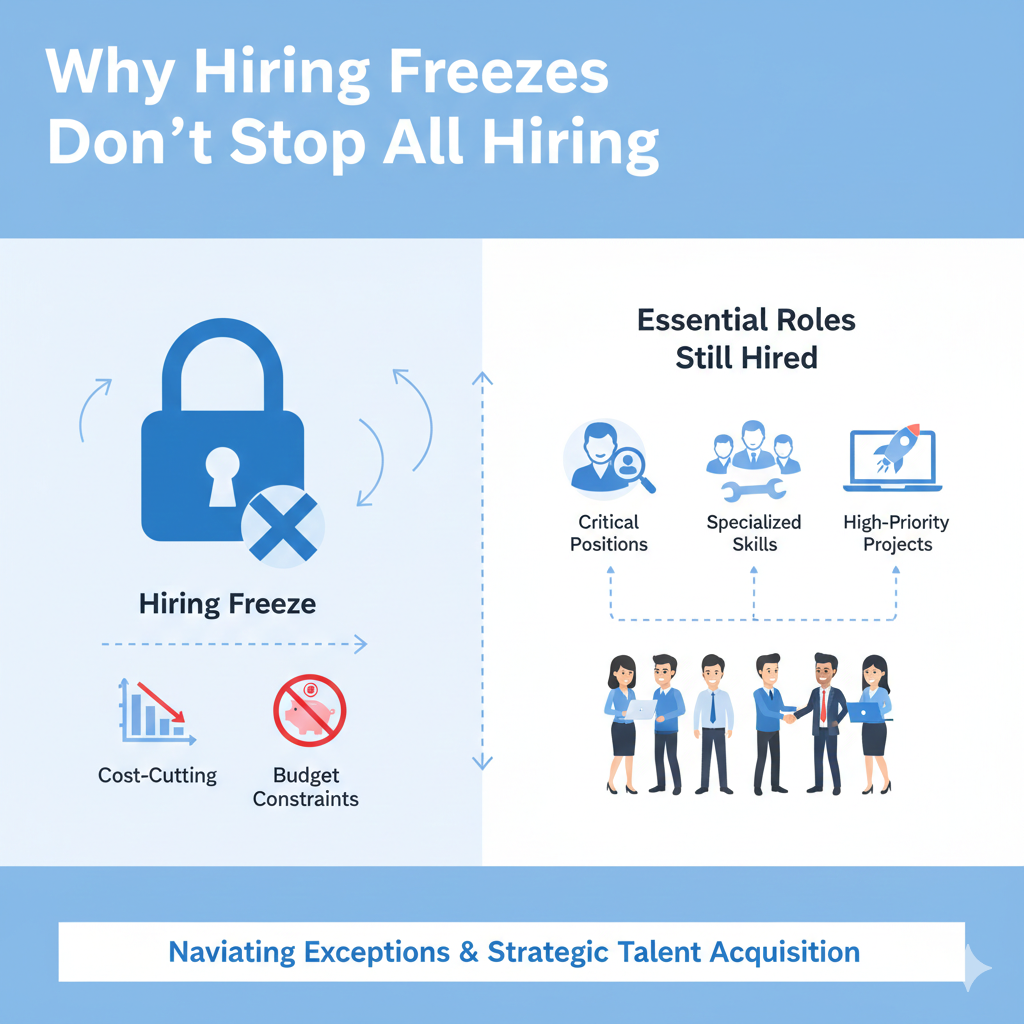
A hiring freeze sounds like a full stop. It feels like companies are not hiring anyone at all. However, that’s rarely the complete truth. Most organizations use hiring freezes as a way to control spending, reduce risk, and slow down expansion. Still, they often continue hiring in specific areas. That is exactly why hiring freezes don’t stop all hiring, even when the headlines say otherwise.
Also, companies still need to function. Projects continue, customers still need support, and critical teams cannot stay understaffed. Therefore, a hiring freeze usually means “pause on non-essential hiring,” not “no hiring forever.” If you understand this difference, you can apply smarter and stay confident during slow market phases.
What a hiring freeze actually means inside a company
Hiring freezes come in different forms. Some are strict, while others are flexible. In many cases, the company stops hiring for new roles but still replaces people who leave. Sometimes they pause hiring only for certain departments like marketing or sales. Meanwhile, roles tied to operations and revenue may remain open.
In addition, many companies announce a freeze publicly, but they keep hiring quietly through internal approvals. They may also slow down the hiring process instead of fully stopping it. So, the job market may look silent from outside, but activity still happens behind the scenes.
This is a key reason why hiring freezes don’t stop all hiring. The business still has priorities, and those priorities decide what stays open.
Critical roles still get filled during freezes
Even during cost-cutting periods, companies cannot afford major gaps in essential roles. If a critical position becomes vacant, the organization may approve hiring quickly. This is especially common in roles that directly impact business continuity.
For example, companies often keep hiring for security, compliance, finance controls, and key operations roles. Also, customer support roles may remain active because service quality affects retention. Meanwhile, some technical roles stay open if they support revenue or product stability.
So, while the company may freeze “growth hiring,” it still hires for survival and stability. That’s a practical explanation of why hiring freezes don’t stop all hiring.
Backfills happen even when new hiring is paused
A lot of job seekers miss this point. Hiring freezes usually target new headcount. But backfills are different. Backfills mean replacing someone who resigned, moved internally, or got promoted. If the role is important, the company fills it even during a freeze.
Also, many teams operate with minimum staffing. So, losing one person can hurt delivery timelines. Therefore, leaders often request approval to hire replacements. In many cases, HR allows it because it prevents bigger losses later.
This is why you may still see job postings even when a company announces a freeze. They may not be expanding, but they are maintaining.
Revenue-generating teams often stay active
During uncertain times, companies focus on revenue. They invest in areas that bring money in or protect existing income. That means hiring may continue in sales, account management, partnerships, and customer success, depending on the business model.
In addition, companies may hire roles that improve conversion rates or reduce churn. Even a small improvement can create big results. So, leadership approves hiring where the impact is clear and measurable.
That’s another reason why hiring freezes don’t stop all hiring. The company still needs growth, but it becomes selective and strategic.
Contract, freelance, and temporary hiring increases
When companies want flexibility, they avoid long-term commitments. That’s why many organizations shift from full-time hiring to contract hiring during freezes. It helps them control budgets while still getting work done.
Also, contract hiring allows teams to meet deadlines without increasing permanent headcount. In addition, companies can test talent before offering full-time roles later. This creates hidden opportunities for job seekers who stay open to different work formats.
So, even if full-time roles reduce, contract roles may rise. Therefore, smart candidates expand their search instead of stopping.
Internal hiring and transfers keep moving forward
Hiring freezes don’t always block internal movement. In fact, internal hiring often becomes more common. Companies prefer shifting employees into new roles instead of hiring externally. It saves onboarding time and reduces hiring costs.
Also, internal transfers protect employee morale. People feel more secure when they see career growth options. Meanwhile, teams fill gaps without going through long recruitment cycles.
So, when external roles reduce, internal roles can increase. This is also why hiring freezes don’t stop all hiring, because the company still needs talent movement to stay balanced.
How job seekers can still win during hiring freezes
A hiring freeze can feel frustrating. However, it can also be a great time to stand out. Many candidates stop applying, which reduces competition in certain areas. Therefore, consistent applicants often get better visibility.
Here are smart moves that work during freeze periods:
- Focus on roles labeled urgent, replacement, or immediate joiner
- Apply early, because shortlists form faster than usual
- Target industries still growing, like healthcare, logistics, and security
- Customize your resume for business impact and measurable results
- Build recruiter relationships and follow up professionally
In addition, highlight stability in your profile. Companies value dependable candidates during uncertain times. If you show reliability, strong communication, and readiness, you increase your chances quickly.
Final thoughts on why hiring freezes don’t stop all hiring
Hiring freezes can slow the job market, but they rarely shut it down completely. Companies still hire for critical roles, replacements, revenue needs, and flexible contracts. They also shift people internally to keep teams running. That’s the real reason why hiring freezes don’t stop all hiring, even when the market looks quiet.
So, don’t pause your career plans. Instead, adjust your strategy and stay consistent. Look for the roles that remain active, apply with purpose, and keep your profile ready. If you want to find fresh openings faster and track hiring activity daily, use the best job tool to stay ahead.
Find Your Dream Job Today – Explore Endless Career Opportunities and Secure Your Next Role with Best Job Tool.




Leave a Reply