Introduction
An ownership mindset is the ability to take full responsibility for your work, actions, and results, regardless of your role or position. It goes beyond completing assigned tasks and focuses on caring about outcomes and long-term impact. In today’s competitive professional environment, people who show ownership are trusted more, valued higher, and given greater opportunities.
Developing an ownership mindset helps you become proactive, accountable, and confident, making you a stronger contributor both at work and in personal life.
What Is an Ownership Mindset?
Ownership means taking responsibility for your whole work and staying accountable for the outcomes. When you show ownership, you actively work toward achieving the results of your tasks.
Some examples are:
- If you have any project or task, you ensure to deliver quality work within the deadline.
- If you face any problem, you do not blame anyone; you focus on finding a solution.
- You follow up to ensure the work is done properly.
It means showing accountability as well as initiative. This quality tells employers that you are a trusted and responsible employee.
Employers now prefer those candidates who not only follow instructions but also identify problems on their own and find solutions. But why?
To identify the reason, read our blog on “Why employers look for initiative and ownership”.
How to Develop Ownership Mindset?
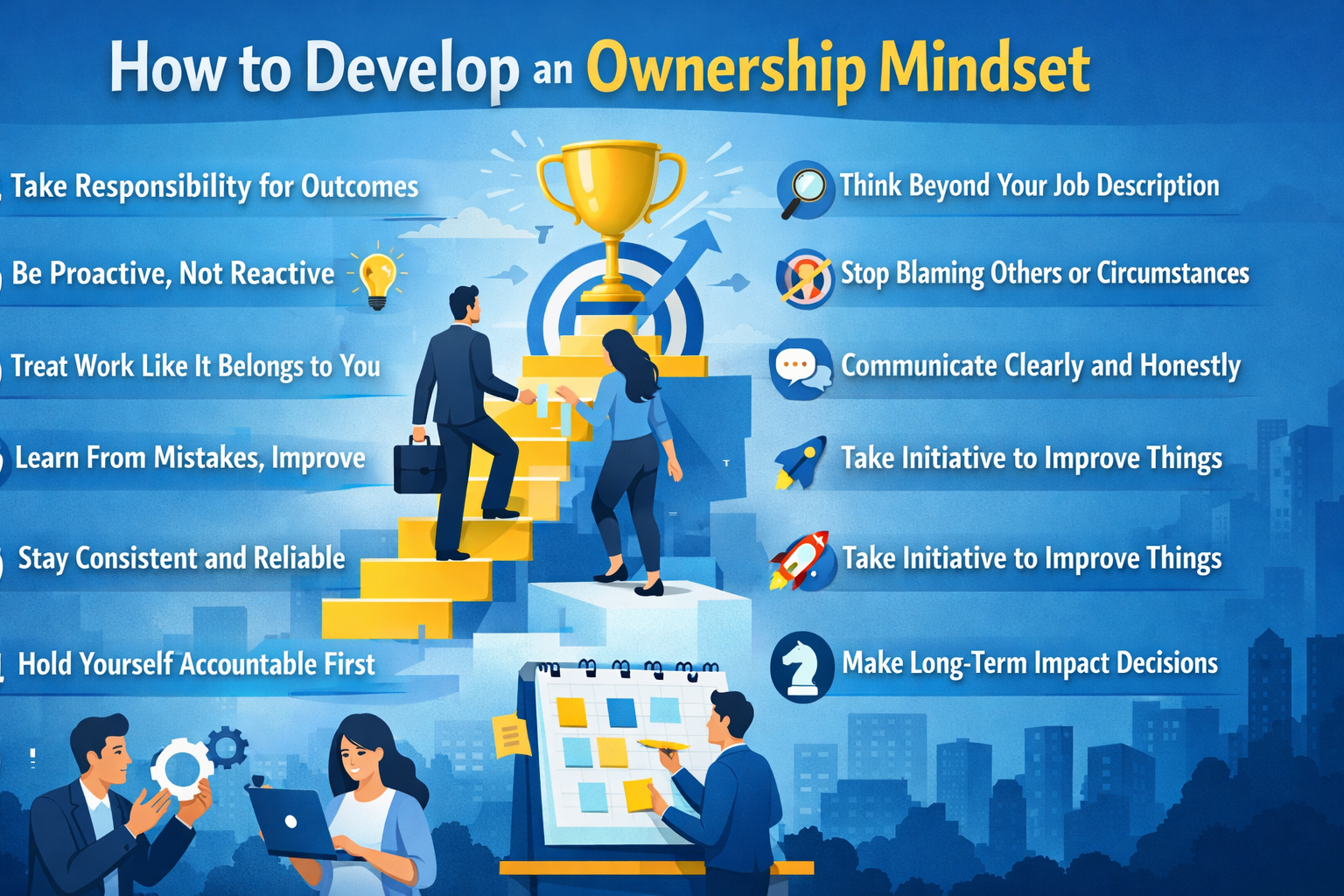
1. Take Responsibility for Outcomes, Not Just Effort
Ownership becomes strong. Then you think about the final result. When you think about the overall outcome of team or organization, then you take your work more seriously. In this mindset, you start understanding how your contribution will impact the project or team performance. You try to help and find solutions whether the problem is with any other part of the situation. This approach develops ownership naturally and makes you a reliable team member.
2. Build Ownership Mindset Through Consistency
Ownership does not build by just showing effort only. It develops with consistency. When you complete your work regularly on time, respect deadlines, and keep your promises, then people start trusting on you. Sometimes putting extra effort is good, but being dependable daily is a real sign of ownership. Consistency proves that you are not just motivated, but are also disciplined. Slowly, this habit makes your personal brand strong and establishes you as a responsible individual.
3. Be Proactive, Not Reactive to Build Ownership Mindset
Proactive means taking action without waiting for problems or instructions. Ownership mindset people take initiative on their own by understanding the situation. If you notice any possible issue earlier and suggest solutions, then it is a strong sign of ownership. Proactive behavior shows that you think for better results instead of just completing work. Slowly, this habit makes you confident, dependable, and leadership ready.
4. Stop Blaming External Factors
The important part of ownership is accepting your mistakes without any excuses or fear. Mistakes can happen from anyone, but people who have the ownership mindset, they focus on learning from mistakes instead of avoiding or hiding it. When you can say about your mistakes openly, then it shows your maturity and confidence. By accepting mistakes, you build trust because people know that you find solutions instead of running from problems. Accepting mistakes without fear leads you emotionally strong and grow on his mentally.
5. Make Decisions With Long-Term Impact in Mind
Ownership becomes strong when you take responsibility of taking decisions. Waiting for approval for every small thing makes you dependent, and taking informed decisions makes you confident. Good decision does not mean every decision should be perfect. It means you try to select best choice by understanding the situation and on the basis of available information. When you accept the outcomes of your decision, whether it should be positive or negative, then you build ownership. With time, this skill makes you more responsible and growth-oriented.
6. Start With Small Responsibilities to Develop Ownership Mindset
The most natural way of developing ownership is starting from a small responsibility. Not everyone gets bigger decisions or major projects in the starting, but completing given tasks with sincerity and commitment shows your ownership mindset. When you complete a small task without any time reminder, maintain quality, and take responsibility of end result, then people slowly start trusting on you. These small efforts become the foundation of bigger responsibilities in future.
Common Mistakes to Avoid
1. Taking Initiative Without Alignment → Chaos
Taking initiative is very important, but starting work without alignment can create problems for the organization. If you work without understanding the goals of the team or manager, it may happen that your solution or idea does not match the actual needs, which can increase confusion and unnecessary work. Always ensure that your actions align with the goals of the team and project.
2. Trying to Own Everything → Burnout
Showing initiative is also important, but do not try to complete every task on your own; otherwise, you may become stressed or overburdened. Taking responsibility for every task is unrealistic and can affect your productivity. Smart ownership means prioritizing important tasks and helping others at the time of need.
3. Blaming the Team for Failures
Ownership means being accountable for your work. If you openly accept mistakes and propose solutions, your credibility and trustworthiness increase. On the other hand, a blaming culture reduces trust and negatively impacts your professional growth.
4. Starting Tasks but Not Finishing Them
Showing initiative is only effective when you demonstrate it from the start to the completion of a task. If you start a task but do not finish it, you hurt your reliability and credibility. Employers value employees who show start-to-finish ownership and consistently deliver results.
Conclusion
Developing an ownership mindset is not about having a higher position or title; it is about taking responsibility for actions, decisions, and outcomes. When you start treating your work as your own, you naturally become more proactive, reliable, and solution-oriented.
Ownership builds trust, strengthens confidence, and sets you apart as someone who can be depended on. By practicing small habits like accountability, clear communication, and continuous improvement, you can gradually develop a strong ownership mindset that supports long-term personal and professional growth.
Read more such blogs here.




Leave a Reply