Introduction
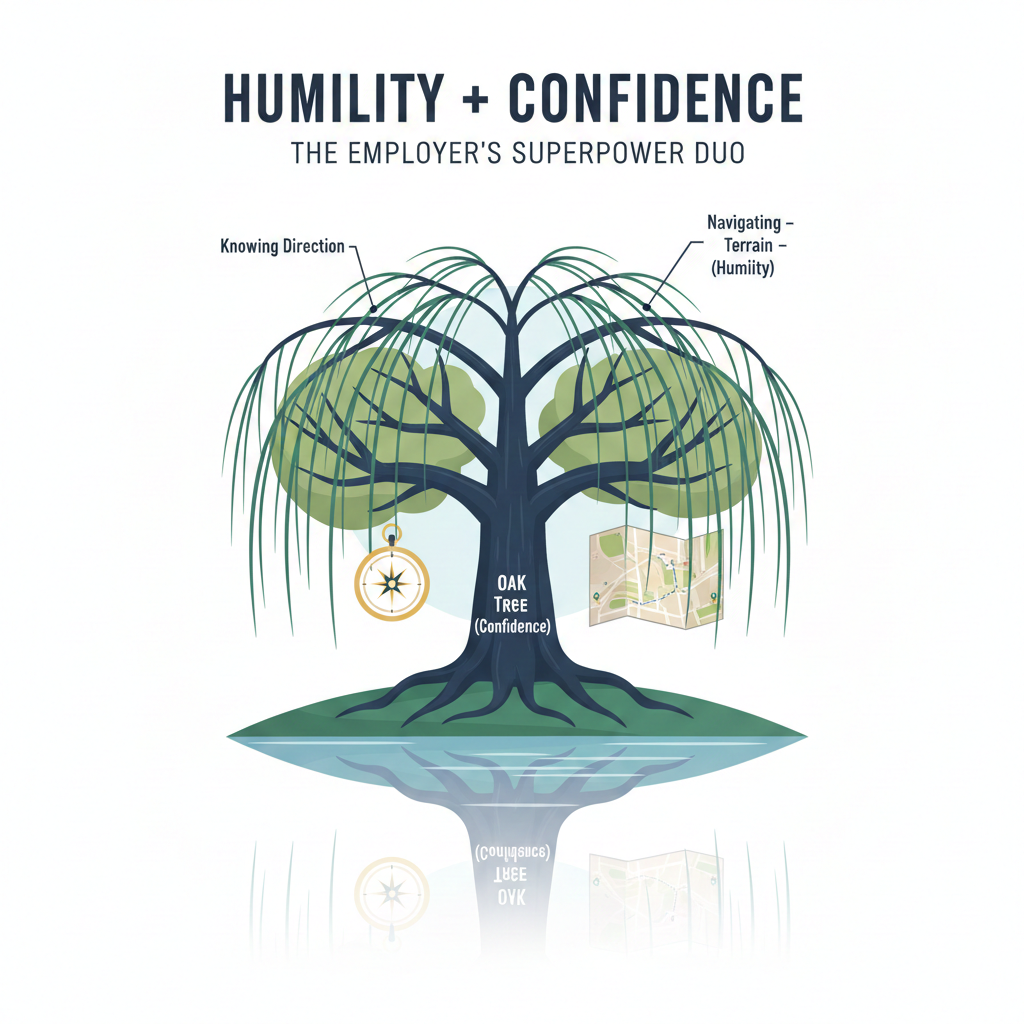
In today’s workplace, employers look beyond technical skills. They assess mindset, attitude, and adaptability just as closely. One quality stands out consistently: the balance between humility and confidence.
Confidence alone can feel arrogant. Humility alone can feel uncertain. However, when combined, they create a professional employers trust. This balance signals maturity, self-awareness, and leadership potential.
The modern workplace demands balance
Work environments have changed rapidly. Teams are more collaborative, diverse, and fast-moving. Because of this, extreme personality traits rarely succeed long term.
Employers value professionals who speak up without dominating. They also appreciate those who accept feedback without defensiveness. Humility combined with confidence allows this balance naturally.
Confident yet humble employees strengthen teams instead of competing within them.
Confidence shows capability and ownership
Confidence reassures employers that you can handle responsibility. It shows belief in your skills and decisions. More importantly, it signals readiness to take ownership of outcomes.
Confident professionals communicate clearly. They present ideas without hesitation. They also make decisions without constant approval.
However, confidence works best when grounded in reality. Employers prefer confidence backed by effort, not ego.
Humility signals growth and coachability
Humility tells employers you are open to learning. It shows you understand that no one knows everything. This trait matters deeply in fast-changing industries.
Humble professionals listen carefully. They ask questions instead of pretending to know answers. They accept mistakes and improve quickly.
From an employer’s perspective, humility reduces risk. It makes training easier and teamwork smoother.
Why employers value humility combined with confidence
Employers want people who trust themselves without dismissing others. That is exactly why employers value humility combined with confidence in hiring decisions.
This combination creates reliability. Confident humility shows emotional intelligence. It also reflects leadership readiness, even in junior roles.
Hiring managers often notice this trait during interviews. Candidates who explain achievements without exaggeration stand out. They appear credible and grounded.
How this trait improves teamwork and culture
Teams function best when members respect each other. Humble confidence encourages healthy discussion rather than silent agreement or aggressive debate.
Such professionals credit team success openly. At the same time, they take responsibility during failures. This behavior builds trust quickly.
Employers know that strong culture protects performance. Employees with this mindset help maintain that culture daily.
Leadership potential starts with this balance
Leadership today is less about authority and more about influence. Leaders must inspire without intimidating. They must guide without controlling.
Humble confidence forms the foundation of modern leadership. It allows leaders to admit uncertainty while still providing direction.
Because of this, employers often promote professionals who show this balance early. They see long-term potential beyond current roles.
How candidates can demonstrate it during hiring
Many candidates unknowingly lean too far in one direction. Some oversell themselves. Others downplay achievements excessively.
To show humble confidence, speak honestly about impact. Share results while acknowledging collaboration. Avoid absolute statements about being the best.
This approach signals self-belief without arrogance. It aligns perfectly with what employers seek.
Why this trait matters long after hiring
The value of humble confidence does not stop after onboarding. It influences promotions, feedback cycles, and leadership trust.
Employees who combine both traits adapt better during change. They stay calm under pressure. They also support peers instead of competing destructively.
That is why employers value humility combined with confidence not only during hiring, but throughout a career.
Conclusion
Skills may get you shortlisted, but mindset sustains growth. Employers look for professionals who trust their abilities while staying open to learning.
That is why employers value humility combined with confidence in today’s competitive job market. This balance builds trust, teamwork, and leadership potential.
If you want to grow in the right environment, choose companies that value mindset as much as skills. Use the best job tool to find roles where growth, respect, and opportunity align.
Find Your Dream Job Today – Explore Endless Career Opportunities and Secure Your Next Role with Best Job Tool.




Leave a Reply