Introduction
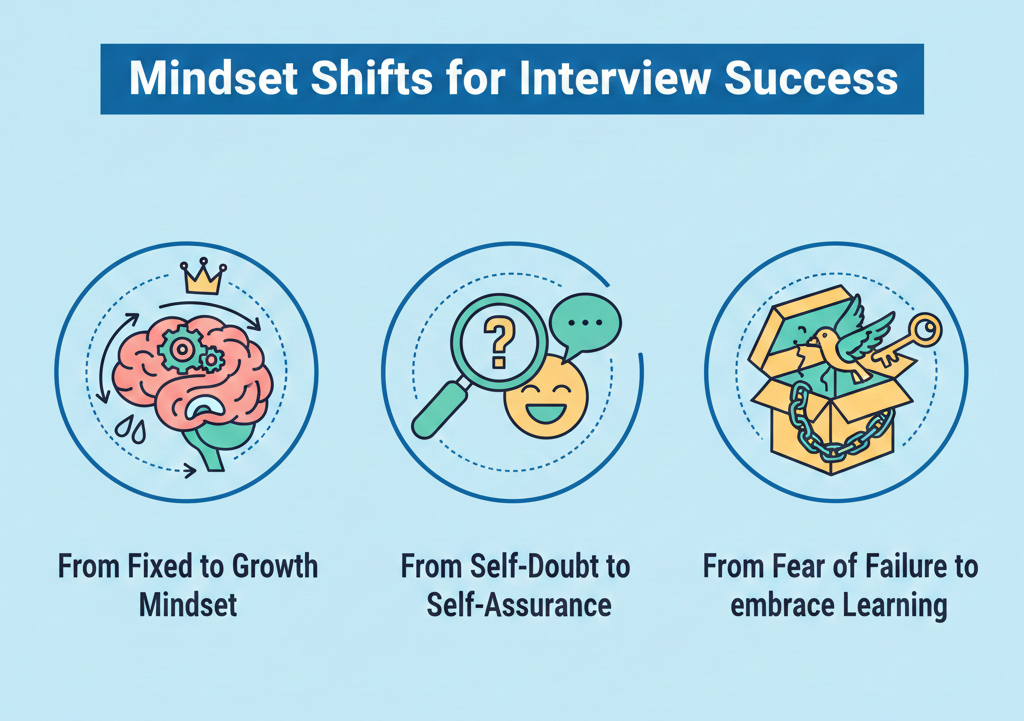
Interviews are not just about answering questions correctly. They are about how you think, react, and communicate under pressure. That is why understanding the mindset shifts required to succeed in interviews is as important as preparing your resume or practicing answers.
Many capable candidates struggle in interviews because they approach them with fear, self-doubt, or unrealistic expectations. These mental barriers affect clarity, confidence, and performance. When your mindset improves, your communication naturally becomes stronger.
This blog explains the most important mindset shifts required to succeed in interviews and how they directly impact your results.
Shifting from approval-seeking to value-focused thinking
Many candidates enter interviews hoping to impress or gain approval. This mindset creates nervousness and hesitation. It also leads to overthinking every response.
Successful candidates shift their focus to value-sharing. They concentrate on how their skills, experience, and thinking can help the organization. This change reduces pressure and increases confidence.
When you focus on contribution instead of validation, interviews feel more controlled and professional.
Replacing fear with curiosity and interest
Fear limits thinking and communication. It causes rushed answers and shallow responses. Curiosity, on the other hand, encourages engagement and clarity.
Approaching interviews with curiosity helps you listen actively and respond thoughtfully. You become more present instead of anxious. Recruiters sense this calmness immediately.
This shift turns interviews into meaningful conversations rather than stressful events. Curiosity is one of the most effective mindset shifts required to succeed in interviews.
Moving away from perfection and choosing clarity
Many candidates believe they must give perfect answers. This belief increases pressure and disrupts flow. In reality, interviewers value clarity more than flawless responses.
Clear explanations show understanding and honesty. They help interviewers follow your thought process easily. Mistakes become less intimidating when clarity leads the conversation.
Letting go of perfection allows your real personality and strengths to show.
Viewing interviews as conversations instead of exams
Treating interviews like exams creates fear and rigidity. Candidates focus only on correct answers rather than meaningful dialogue.
When you view interviews as conversations, communication becomes natural. You engage, ask thoughtful questions, and respond with confidence. This creates balance and mutual respect.
Interviewers prefer candidates who can communicate comfortably. This mindset shift improves connection and trust.
Accepting uncertainty without losing confidence
No candidate knows everything. Interviewers understand this reality. What matters is how you handle uncertainty.
Confident candidates acknowledge gaps honestly and explain how they learn or adapt. This response shows maturity and accountability.
Accepting uncertainty removes fear. It allows you to stay composed and credible throughout the interview.
Letting go of past interview failures
Previous interview failures often create mental blocks. Candidates carry disappointment into new opportunities. This affects confidence and energy.
Each interview is a new experience with different people and expectations. Treating it as a fresh start helps reset your mindset.
Learning from the past without reliving it strengthens resilience. This shift is essential for consistent improvement.
Taking ownership of your professional story
Some candidates rely heavily on resumes or understate their achievements. Others struggle to connect experiences with outcomes.
Owning your story means explaining what you did, why it mattered, and what you learned. This approach creates clarity and impact.
When you take control of your narrative, interviewers understand your value more easily.
Seeing rejection as feedback rather than failure
Rejection is part of the job search process. However, many candidates take it personally. This mindset damages confidence over time.
Viewing rejection as feedback changes everything. Each experience becomes a lesson rather than a setback. Growth replaces frustration.
Resilience is one of the most important mindset shifts required to succeed in interviews and long-term careers.
Conclusion
Interviews reward mindset as much as preparation. That is why understanding the mindset shifts required to succeed in interviews can transform your performance completely.
When you replace fear with confidence, perfection with clarity, and pressure with curiosity, interviews become opportunities instead of obstacles. Growth follows naturally.
To apply these mindset shifts in real opportunities, explore roles using the best job tool and align your preparation with the right positions.
Find Your Dream Job Today – Explore Endless Career Opportunities and Secure Your Next Role with Best Job Tool.




Leave a Reply