Introduction
Interviews can be stressful, especially when you’re hit with a question you never saw coming. No matter how well you prepare, there will always be moments when an interviewer asks unexpected interview questions, tricky, or completely unexpected. And that’s exactly where most candidates panic.
But the truth is—unexpected questions aren’t meant to scare you. They’re designed to see how you think, how you react under pressure, and how confidently you handle surprises. With a few practical techniques and the right mindset, you can stay calm, think clearly, and turn even the toughest questions into opportunities to shine.
This article will help you understand simple, effective strategies to handle unexpected questions with confidence and clarity—just like a pro.
Techniques to Answer Unexpected Interview Questions
1. Stay Calm and Take a Pause at Unexpected Interview Questions
Be calm during the technical interview because if you stay calm, you will perform better. To stay calm, you should do breathing exercises before the interview and practice solving problems under pressure.
2. Use the STAR Method for Unexpected Interview Questions
- S – Situation
- T – Task
- A – Action
- R – Result
You can give structured answers to interview questions with the use of the STAR method.
Basically, STAR means Situation, Task, Action, and Result.
In a Situation, you have to explain the context or problem, the Task means what is your role or responsibility. The third one is Action, which means what steps you took to solve the problem, and the last one is Result, in which you have to share the outcome or learning.
This method makes your answers concise, clear, and impactful, and the interviewer can easily understand how you will perform in real situations.
If you want to practice and examples of interviews, then platforms like Best Job Tool provide you with tips and guides for mock interviews, which helps to improve soft skills and communication.
3. Ask for Clarification at Unexpected Interview Questions
First, you need to understand the question, then plan the answer in your mind, and only after that should you start attempting the question. This step-by-step process is the right way to solve any problem. However, many candidates jump straight into coding without planning their solution, which makes it difficult for them to solve the question correctly. If you want to pass a technical interview, you must learn to break problems into smaller steps and follow a clear problem-solving method.
For example:
- Read the question
- Understand constraints
- Think of approach
- Write pseudocode
- Code
- Test + debug
When stuck:
- Ask clarifying questions
- Break the problem into smaller parts
- Start with brute force
- Think out loud
- Stay positive
Interviewers appreciate structured thinking more than a perfect answer.
4. Think Out Loud
The stressful moment of a technical interview is when you solve a question and suddenly you stay silent. Silence increases panic more at the time of the interview because you start overthinking and the interviewer does not understand how you are approaching.
That’s why the most powerful technique is explaining your thought process. This technique helps your brain to stay calm because you are expressing your steps instead of getting stuck in your head and secondly, interviewers get clarity that you are breaking down the problem whether your solution is perfect or not. Whenever you read a question then do not start coding immediately firstly think then explain.
Say things like:
- “First, I’m thinking to try the brute force method…”
- “Next, I’ll try to optimize this part…”
- “Let me check the edge cases…”
When you talk through your process, you feel calmer, and the interviewer understands your direction.
5. Use a Relevant Example
Even without formal work experience, you can show employers what you’re capable of through projects, assignments, or personal initiatives. This demonstrates practical application of your skills and your ability to deliver results.
How to Highlight:
- Personal Projects: Examples include building a website, creating graphics, writing a blog, or developing a small app.
- Academic Work: Mention college or school projects that are relevant to the role. For instance, a marketing campaign project or a data analysis assignment.
- Competitions & Challenges: Participating in hackathons, design contests, or writing competitions adds credibility.
- Freelance or Volunteer Work: Even small freelance gigs or volunteer contributions count as experience.
Tip: Whenever possible, share links, screenshots, or portfolios. This gives employers concrete proof of your abilities and shows initiative.
6. Pivot to Your Strength
If you face a question you’re unsure about, you can gently steer your answer toward something you do know well. This technique allows you to stay confident while still giving a meaningful response. For example, you can say:
“I haven’t dealt with that exact situation, but here’s how I handled a similar challenge…”
This approach helps you highlight your strengths, experience, and problem-solving abilities — without sounding like you’re avoiding the question. Interviewers appreciate candidates who can stay calm, think smartly, and use their strengths to provide valuable insights even in unfamiliar situations.
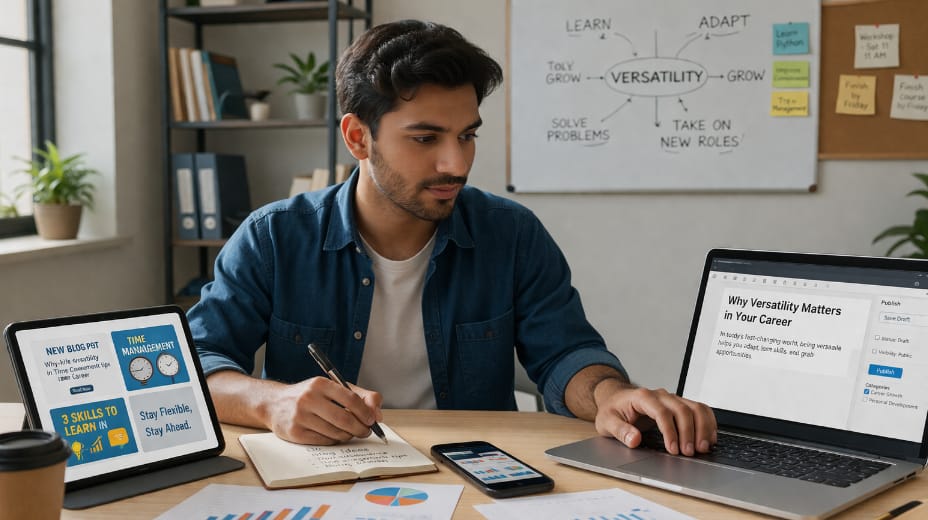
7. Highlight Your Learning Ability
Even if you don’t have formal work experience, demonstrating that you are eager and capable of learning can make a strong impression on employers. A willingness to learn shows adaptability, growth mindset, and motivation—all qualities companies value highly.
Employers value candidates who are eager and quick learners.
- Mention certifications, online courses, or workshops you’ve completed
- Highlight self-taught skills
Tip: Frame it as: “Though I haven’t worked in X yet, I have learned Y skill and applied it in Z context.”
8. Don’t Be Afraid to Admit You Don’t Know
Sometimes interviewers ask questions that you genuinely don’t know the answer to — and that’s completely okay. Instead of giving a wrong or confusing response, it’s better to be honest and admit it confidently. The key is how you say it. A professional way to respond is:
“I’m not entirely sure about this, but here’s how I would find the answer…”
This shows honesty, humility, and problem-solving ability. It also tells the interviewer that you don’t panic when faced with uncertainty and that you are willing to learn. Employers value candidates who can admit gaps while showing curiosity and a strong willingness to grow.
9. Stay Positive, Even With Challenging Questions
Challenging or unexpected interview questions can feel intimidating, but staying positive makes a strong impression. Instead of showing frustration, confusion, or stress, maintain a calm and confident attitude. Smile gently, take a breath, and approach the question with curiosity rather than fear.
Positivity shows that you can handle pressure, stay composed in difficult situations, and think clearly even when the conversation becomes tough. Employers love candidates who remain solution-focused and optimistic because these qualities translate into better teamwork, problem-solving, and leadership on the job.
10. Practice With Real-Life Random Questions
Giving an interview is an important part of our career. Interview questions can be confusing sometimes, whether you are a fresher or an experienced one. To remove this confusion and nervousness, you need to be prepared for it before the interview. Here are Common questions that are asked in an interview and their best answer which help interviewers understand your background and personality.
Examples:
Tell me about yourself – “I’m a graduate in [Your Field] with a passion for [Your Interest, e.g., digital marketing]. Over the past year, I’ve worked on projects that improved my skills in [Key Skill]. I’m now looking for an opportunity to apply my skills in a dynamic organization like yours.”
Why should we hire you? – “I believe my skills match your job requirements perfectly. I’m a quick learner, detail-oriented, and always eager to take on new challenges. I’m confident I can contribute to your team’s goals and add value from day one.”
Tell me about a time you faced a challenge at work.
“In my internship, I had to complete a report with limited data. (Situation) I gathered additional information from team members and online sources. (Task) I stayed late to ensure accuracy. (Action) The final report was well-received and used in the final presentation.
What are your strengths and weaknesses? – “My strength is strong communication — I can clearly convey ideas and work well in a team. My weakness was public speaking, but I’ve been actively working on it by attending workshops and practicing regularly.”
Describe a time when you worked under pressure.
“During college exams, I also had a project deadline. I made a clear schedule, divided my time efficiently, and stayed focused. I submitted the project on time and performed well in exams too.”
Where do you see yourself in 5 years?
“In five years, I aim to take on more responsibility, lead projects, and grow as a professional in this field. I want to continuously learn and help the organization achieve its long-term goals.”
For more interview tips, read our detailed guide on “Interview Preparation: QUESTIONS and How to Answer them”.
Conclusion
Handling unexpected interview questions is less about having all the right answers and more about showing confidence, calmness, and the ability to think clearly under pressure. When you stay positive, admit what you don’t know, structure your thoughts, and respond with honesty, you demonstrate maturity and strong problem-solving skills.
These qualities leave a lasting impression on interviewers. With regular practice and the right mindset, you can turn even the toughest questions into moments that highlight your strengths and professionalism.


Leave a Reply