
Introduction
A panel interview is an interview in which three to five recruiters examine or assess a single candidate together. It may sound difficult, and it often feels challenging because you have to impress multiple recruiters at the same time. Sometimes, it even seems impossible to pass such an interview, but it becomes very easy if you prepare well and follow a proper plan.
This article will tell you how you can prepare for panel interviews. It covers topics such as understanding the panel structure, practicing multi-person eye contact, preparing smart questions, and much more.
What are Panel Interviews?
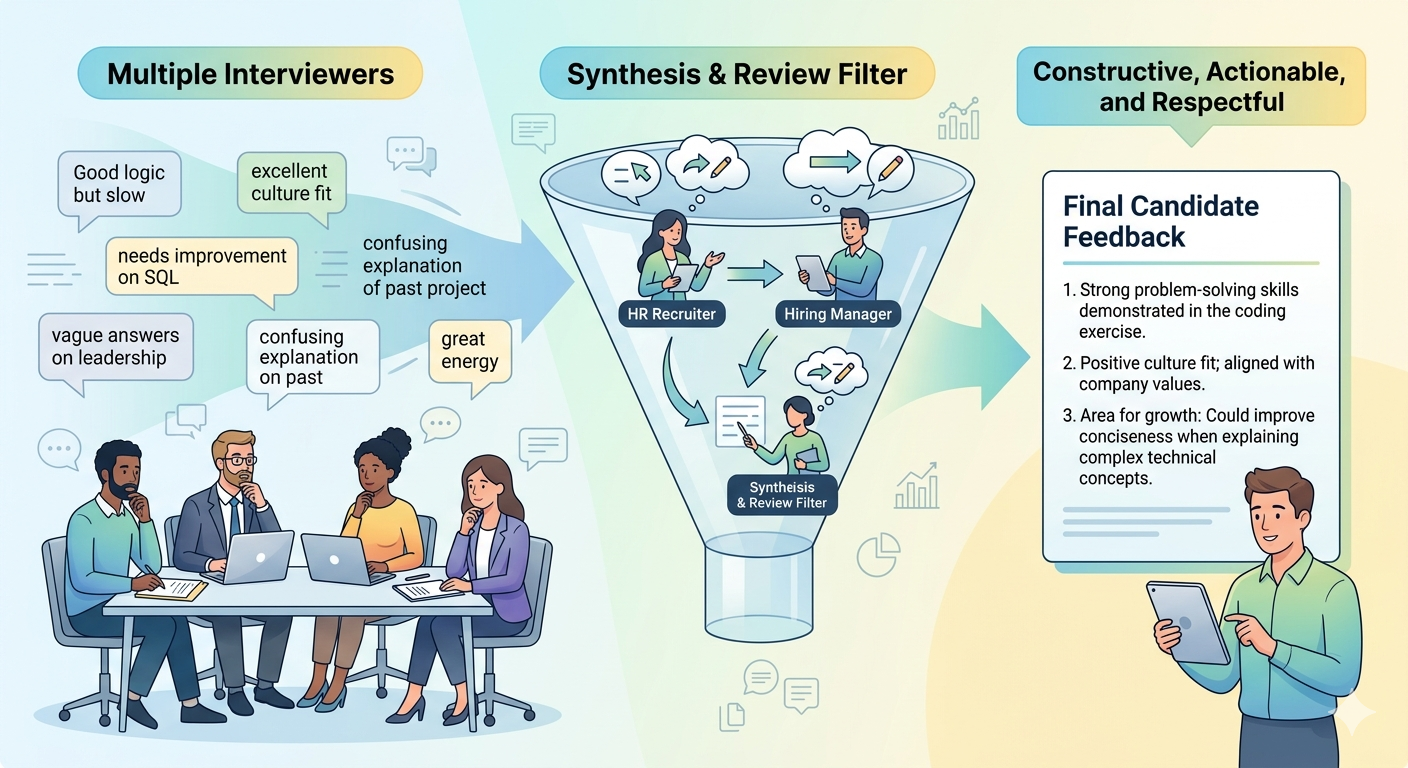
A panel interview is an interview in which instead of a single person 3 or 5 recruiters take your interview. These individuals are typically from various departments, such as the HR team, lead managers, and occasionally senior team members.
The main purpose of this interview is to:
- Check your skills through different angles.
- Judge teamwork and communication.
- See whether you can handle pressure or not.
- To check whether you can fit into the culture of the company or not.
In short, in a panel interview you have to impress multiple interviewers at the same time which is why it is slightly challenging, but it can become a very strong opportunity with proper preparation.
How to Prepare for Panel Interviews?
1. Understand the Panel Structure
Before the interview, it is very important to understand which people will be present on the panel. Mostly the HR, team lead, manager, and senior team members are present in the panel.
You should also know the role of every person, there area of expertise, and what they can evaluate from you in the interview. When you have this clarity then you can tailor your answers according to their expectations through which your impression becomes stronger.
2. Practice Multi-Person Eye Contact in Panel Interviews
In a panel interview making eye contact with just one person is not enough. You have to balance the eye contact with multiple people. The best way to maintain multi-person eye contact is when any member asks a question then start giving an answer by making eye contact with that person, in between make eye contact with other members also, and while ending your answer again make eye contact with the same person who asked the question.
Through this, you stay confident, professional, inclusive, and create a positive impression.
3. Prepare a Strong Introduction
Your introduction sets the tone for the entire panel interview, so it needs to be clear, confident, and concise. A strong introduction should include:
- Your name and background
- Your key skills and strengths
- A quick summary of your experience or achievements
- The value you can bring to the role or company
Keep it short—about 20–30 seconds—because panel interviews are usually fast-paced. A well-prepared introduction helps you start with confidence and creates a positive first impression on every panel member.
4. Prepare for Mixed Types of Questions
Giving an interview is an important part of our career. Interview questions can be confusing sometimes, whether you are a fresher or an experienced one. To remove this confusion and nervousness, you need to be prepared for it before the interview.
These help interviewers understand your background and personality.
General HR Questions
Tell me about yourself – “I’m a graduate in [Your Field] with a passion for [Your Interest, e.g., digital marketing]. Over the past year, I’ve worked on projects that improved my skills in [Key Skill]. I’m now looking for an opportunity to apply my skills in a dynamic organization like yours.”
Why should we hire you? – “I believe my skills match your job requirements perfectly. I’m a quick learner, detail-oriented, and always eager to take on new challenges. I’m confident I can contribute to your team’s goals and add value from day one.”
What are your strengths and weaknesses? – “My strength is strong communication — I can clearly convey ideas and work well in a team. My weakness was public speaking, but I’ve been actively working on it by attending workshops and practicing regularly.”
Where do you see yourself in 5 years?
“In five years, I aim to take on more responsibility, lead projects, and grow as a professional in this field. I want to continuously learn and help the organization achieve its long-term goals.”
Why do you want to work with us?
“I admire your company’s work culture and innovation in the industry. I’ve read about your recent projects, and I’m excited about the opportunity to contribute and grow with your team.”
Behavioral Questions
Use the STAR method (Situation, Task, Action, Result) to answer these.
Tell me about a time you faced a challenge at work.
“In my internship, I had to complete a report with limited data. (Situation) I gathered additional information from team members and online sources. (Task) I stayed late to ensure accuracy. (Action) The final report was well-received and used in the final presentation.
Describe a time when you worked under pressure.
“During college exams, I also had a project deadline. I made a clear schedule, divided my time efficiently, and stayed focused. I submitted the project on time and performed well in exams too.”
Give an example of when you worked in a team.
“During a group project, I handled the research part. We divided tasks based on strengths, regularly communicated, and helped each other. The project received top grades.”
Situational Questions
These test your problem-solving and decision-making skills.
What would you do if your manager gave you negative feedback?
“I would listen carefully, try to understand their expectations, and work on the feedback constructively. Feedback helps me grow and improve my performance.”
How would you handle a disagreement with a teammate?
“I’d try to understand their point of view, discuss the issue calmly, and find a solution that works for both. I believe communication is key to resolving conflicts.”
What would you do if you missed a deadline?
“I’d immediately inform my manager, explain the reason, and propose a realistic new timeline. I’d also analyze what caused the delay and make sure it doesn’t happen again.”
Role-Specific/Technical Questions
These depend on the job you’re applying for.
What tools do you use for project management?
“I’ve used tools like Trello and Asana to track tasks, set deadlines, and collaborate with team members efficiently.”
Explain the difference between SEO and SEM.
“SEO is about improving organic visibility in search engines, while SEM includes paid ads to increase visibility. SEO is long-term; SEM gives faster results through ads.”
Salary & Availability Questions
What are your salary expectations?
“I’m open to discussing salary based on the responsibilities of the role and industry standards. I’m confident we can agree on a fair amount.”
When can you start working with us?
“I can join immediately”
or
“I’ll need [X days/weeks] to serve my notice period at my current job.”
Are you open to relocation or remote work?
“Yes, I’m open to both. I’m flexible and willing to work where I can be most effective.”
5. Use the “Explain Your Thought Process” Technique
The stressful moment of a panel interview is when you solve a question and suddenly you stay silent. Silence increases panic more at the time of the interview because you start overthinking and the interviewer does not understand how you are approaching.
That’s why the most powerful technique is explaining your thought process. This technique helps your brain to stay calm because you are expressing your steps instead of getting stuck in your head and secondly, interviewers get clarity that you are breaking down the problem whether your solution is perfect or not. Whenever you hear a question then do not start coding immediately firstly think then explain.
Say things like:
- “First, I’m thinking to try the brute force method…”
- “Next, I’ll try to optimize this part…”
- “Let me check the edge cases…”
When you talk through your process, you feel calmer, and the interviewer understands your direction.
6. Stay Calm Even If They Take Turns Asking Questions
Be calm during the penal interview because if you stay calm, you will perform better. To stay calm, you should do breathing exercises before the interview and practice answering questions under pressure.
If you want to know the experience of getting job from others then visit here.
7. Research the Company Deeply
Researching about the company is important for every interview because the employer is not meeting you personally in the office. They have to trust only in your answers and in the interview.
- Firstly, you need to check the website and blog of the company. See which type of services are provided by them, their vision, and which values are important to them.
- Follow the social media pages of the company, such as LinkedIn or Twitter. Through this, you can understand their culture and communication style.
- If possible, read reviews of the company on Glassdoor or Indeed. Through this, you will get to know the company’s behavior with employees.
- Read the job description line by line. Link every skill and requirement with your experience.
This shows seriousness and preparation.
8. Ask Questions at the End of Panel Interviews
An interview is not just a one-sided process; in fact, it’s a conversation. When you ask questions of the interviewer, it shows your genuineness and interest in the role. And you get a better idea about the role and work culture. It creates a professional impression which is why we have to ask one to two questions at the end of the interview. Sample questions that you can ask are,
- Can you tell me what a typical day in this role looks like?
- What are the main goals or expectations for someone in this position?
- How is success measured for this role?
- What are the biggest challenges someone in this position might face?
- Are there opportunities for learning, growth, or career development?
- How would you describe the company culture?
- Is there any training provided for new joiners?
- What are the next steps in the interview process?
- What do you enjoy most about working here?
- What does the team structure look like, and who will I be working closely with?
These are the 10 sample questions, you can also ask these questions if you are going for an interview.
9. Learn How to Handle Unknown Questions in Panel Interviews
First, you need to understand the question, then plan the answer in your mind, and only after that you should start attempting the question. This step-by-step process is the right way to solve any problem. However, many candidates jump straight into answering without planning their solution, which makes it difficult for them to answer the question correctly. If you want to pass a panel interview, you must learn to break problems into smaller steps and follow a clear problem-solving method.
When stuck:
- Ask clarifying questions
- Break the problem into smaller parts
- Start with brute force
- Think out loud
- Stay positive
Interviewers appreciate structured thinking more than a perfect answer.
10. Stay Professionally Engaging
Pay attention to your body language. Make eye contact, smile slightly, and avoid unnecessary hand gestures. Sit straight, and be confident. Even if a question is difficult, stay calm and polite. Avoid negative comments about past experiences. Poor body language can lead to rejection. Never badmouth a previous company or boss. It makes you look unprofessional, no matter how bad the experience was. Don’t bring up salary or benefits at the start of the interview. Wait until the employer does or until later rounds. Your goal is to impress the entire panel.
So:
- Smile naturally
- Keep your posture open
- Nod when others speak
- Show active listening
People skills matter as much as technical skills.
11. Follow-Up Smartly After Panel Interview
Your work does not end with the end of the interview.
- Send a thank you email within 24 hours.
- Mention highlights of the interview to feel personal.
- Highlight your interests and skills again.
Example: “Thank you for today’s conversation. I love to know about your communication strategy. I am excited to support the goals of your team through my content strategy and collaboration skills”.
An interview is your first chance to prove yourself as a strong candidate. Not only technical knowledge but also communication style, discipline, and adaptability are judged.
Every step is equally important, whether researching about the company, practicing interview answers, asking smart questions, or following up. If you take these seriously then you will leave a strong impression in your interview..
Conclusion
Panel interviews may feel challenging, but with structured preparation, they become an opportunity to showcase teamwork, communication, and confidence. When you understand who the panelists are, maintain calm body language, answer clearly, and engage all members respectfully, you stand out as a strong and professional candidate. The key is to stay confident, prepare deeply, and treat the panel as a friendly conversation — not a judgment.
Want to explore more such blogs? Read here.

Leave a Reply